
Sniper-7 Momentum: High-Precision Protocols for Intraday Velocity
Mastering the Clinical Entry and The Physics of Trend Exhaustion
- The Sniper-7 Philosophy: Precision Over Frequency
- The 7-Period Technical Framework
- Momentum Ignition: Entering the Kill Zone
- Detecting V-Bottoms and Apex Reversals
- Multi-Timeframe Fractal Confirmation
- The 1.5R Risk Architecture
- The Behavioral Discipline of the Wait
- Institutional Execution and Liquidity Maps
Financial markets within the intraday horizon are often characterized by noise, micro-vibrations, and algorithmic "stop-hunting." For the active trader, the challenge is not finding a trend, but finding an entry point that offers a high mathematical expectancy with a tight enough risk parameters to allow for meaningful position sizing. The Sniper-7 Momentum strategy is a technical architecture designed to solve this problem. It ignores the broad market drift and focuses exclusively on high-conviction "Ignition Events" where price velocity reaches a critical threshold of inertia.
The "Sniper" name is not marketing hyperbole; it refers to the operational mindset of waiting for a specific set of convergent variables to align before taking action. Unlike traditional trend-following, which often enters "late" into a mature move, the Sniper-7 logic targets the exact moment a trend transition occurs. By utilizing a specific 7-period mathematical framework, the practitioner identifies the exhaustion of one side of the market and the rapid entry of the other. This guide provides a clinical deconstruction of the Sniper-7 methodology, from indicator calibration to the psychology of the long wait.
The Sniper-7 Philosophy: Precision Over Frequency
Most retail traders suffer from over-trading, attempting to extract profit from every minor price fluctuation. The Sniper-7 approach rejects this high-turnover model. It operates on the principle that structural alpha is only present during brief windows of "Uncontested Price Discovery." These windows occur when a significant participant (institutional capital) enters the market, creating a directional burst that overwhelms current liquidity.
A Sniper-7 operator treats capital like ammunition. You do not fire into the "Chop" of a sideways market. You wait for the price to reach an extreme, consolidate momentarily, and then erupt. Success in this discipline is defined by your Win Rate to Drawdown ratio. Because the entries are so precise, the stop-loss levels can be kept tight, allowing the trader to capitalize on the "Meat of the Move" with surgical efficiency.
The 7-Period Technical Framework
To capture high-speed momentum, our indicators must be responsive without being erratic. The Sniper-7 framework utilizes three primary mathematical components, all calibrated to the 7-period lookback. This specific number is chosen because it captures the "Micro-Trend" within the intraday session without the lag associated with the standard 14 or 20-period settings.
The 7-Period RSI
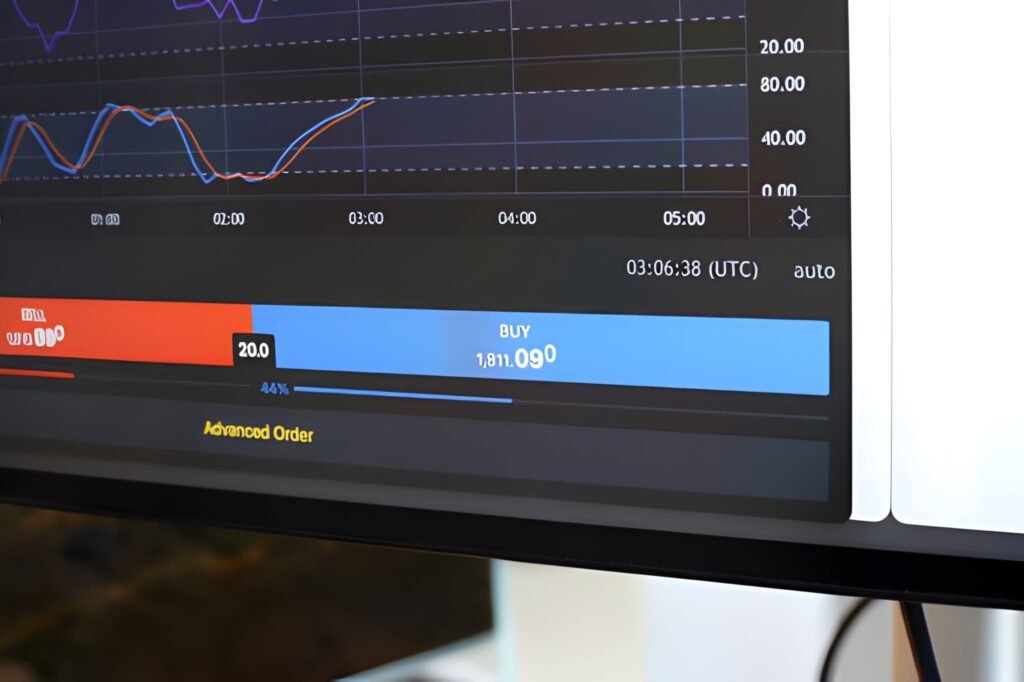
The Relative Strength Index at 7 periods is the primary "Oscillation Sensor." We look for price to enter the "Kill Zone"—above 70 or below 30—to signal that the current micro-trend is reaching a point of saturation.
The 7-Period EMA
The Exponential Moving Average at 7 periods acts as our "Gravity Line." In a true momentum move, price will "Pin" itself above (or below) this line. A close on the opposite side of the 7-EMA is our primary exit trigger.
Relative Volume (7-MA)
Momentum requires fuel. We compare the current 1-minute or 5-minute volume to the 7-period average. We only enter a "Sniper" trade if the volume is at least 150% of the recent average.
Momentum Ignition: Entering the Kill Zone
The entry signal for Sniper-7 is a two-step process of **Exhaustion and Ignition**. We do not buy just because a stock is rising; we buy because it has just finished a "Washout" and has turned with explosive force. The setup usually forms at key technical levels—previous day highs, whole dollar amounts, or VWAP touches.
We wait for the 7-period RSI to dip below 30 (for a long setup) while the price is testing a support zone. This signifies that the short-term sellers have reached a point of climax. At this stage, the Sniper-7 trader is watching the "Tape" (Time & Sales) for a slowing of red prints and the appearance of large institutional buy blocks.
The actual entry is triggered when price crosses back above the 7-period EMA on high relative volume while the RSI is exiting the oversold zone. This confirms that the momentum has shifted from downward exhaustion to upward expansion. The entry is a market-if-touched order placed 2 cents above the "Ignition Candle."
Detecting V-Bottoms and Apex Reversals
Sniper-7 is particularly effective at capturing Apex Reversals. These are V-shaped patterns where a stock falls vertically, hits a liquidity floor, and rebounds with equal velocity. These moves are the result of "Short Squeezes" or "Margin Call Liquidations." To the untrained eye, these look like falling knives. To the Sniper-7 trader, they are the highest-conviction opportunities in the market.
The "Spring" Calculation:
A Sniper-7 Apex move is confirmed when the distance between the price and its 7-period EMA reaches a "Volatility Extension" of 3 standard deviations. When the price is this far "stretched" from its mean, the subsequent snap-back is often violent. We look for a "Reversal Doji" or a "Hammer" candle to form at this extreme. The moment the following candle breaches the high of that doji, the momentum ignition is confirmed and the trade is live.
Multi-Timeframe Fractal Confirmation
Precision requires context. A Sniper-7 signal on a 1-minute chart is noise if the 1-hour trend is moving against you. We utilize Fractal Alignment to ensure we are not "Sniping" into a headwind. The strategy requires a "Top-Down" filter before the lower-timeframe execution is permitted.
| Timeframe | Role in Sniper-7 | Required Condition |
|---|---|---|
| 60-Minute | Trend Architecture | Price must be above the 20-day SMA for Long setups. |
| 15-Minute | Liquidity Map | Identify "High Volume Nodes" to set profit targets. |
| 5-Minute | Momentum Context | RSI(7) should be sloping in the direction of the trade. |
| 1-Minute | Execution Trigger | The 7-EMA Cross on 2x Relative Volume. |
The 1.5R Risk Architecture
Because the Sniper-7 entry occurs at the pivot point, we can utilize extremely tight stop-losses. Our standard protocol is to place the stop-loss exactly 1 cent below the "Ignition Candle's" low. In a true momentum move, the price should never return to that level. If it does, the thesis is dead, and we exit immediately to preserve capital.
The Behavioral Discipline of the Wait
The greatest barrier to success with the Sniper-7 strategy is Impatience. On a typical trading day, a stock might only offer 1 or 2 true Sniper-7 setups. A trader who is used to active scalping will find the downtime agonizing. This leads to "Signal Drift," where the trader begins to take "Sniper-ish" trades that don't meet the full criteria.
Success requires the psychological profile of an apex predator. You must be comfortable watching the market move for three hours without taking a single trade. You must understand that your profit is not a function of the hours you spend clicking your mouse, but a function of the quality of the moments you choose to engage. When the Sniper-7 setup arrives, it happens fast; your job is to be mentally ready for the 10 seconds of action that follow 2 hours of silence.
Institutional Execution and Liquidity Maps
Execution in a Sniper-7 trade must be clinical. We do not use "Market Orders" during the ignition phase, as the spread can widen, destroying your Reward-to-Risk ratio. Instead, we use Limit Orders placed at the "Ask" plus 2 cents. This ensures we are filled even if the stock is moving fast, while capping our slippage.
We also utilize "Liquidity Maps" to set our exits. We look at the Level 2 order book for "Sellers' Walls"—large blocks of sell orders at psychological levels (e.g., $50.00). We set our profit targets 2 cents below these walls. By exiting right before the major resistance, we ensure our order is filled before the "smart money" begins to front-run the reversal. In Sniper-7, the goal is to be the first one in and the first one out.
Ultimately, Sniper-7 Momentum trading is the discipline of participating only when the mathematical evidence of a trend is overwhelming. It is the fusion of 7-period responsiveness, fractal confirmation, and iron-clad risk management. By mastering the art of the wait and the precision of the ignition cross, the trader transforms intraday volatility into a systematic, high-accuracy engine for wealth creation. Remember: the Sniper doesn't need to be right often—they just need to be right with conviction.


