
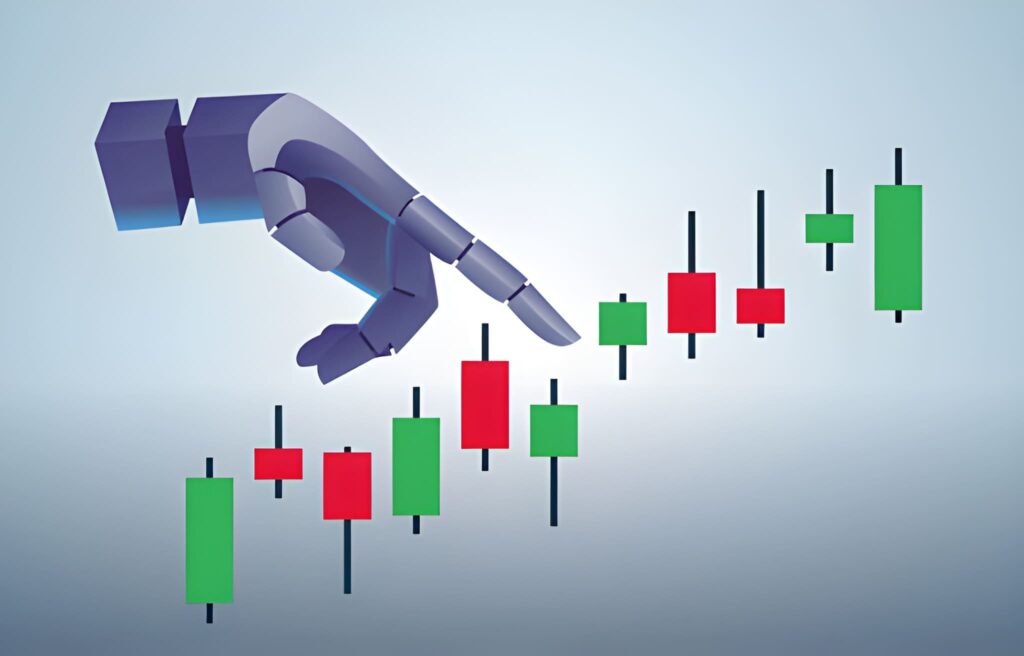
Riding the Wave: The Architecture of Trend Following Algorithmic Trading
Decoding the Systematic Pursuit of Momentum in Global Markets
The Trend-Following Philosophy
In the vast ocean of financial data, trend following stands as one of the oldest and most robust strategies ever devised. Unlike fundamental analysis, which seeks to determine what an asset is "worth," trend following focuses exclusively on what the market is doing. The core tenet is deceptively simple: markets that are moving in a specific direction are more likely to continue in that direction than to reverse immediately.
This approach does not attempt to predict the future or identify "tops" and "bottoms." Instead, it seeks to capture the "meat" of a market move. As an algorithmic discipline, it requires an almost robotic adherence to rules. A trend-following system will often endure a series of small, controlled losses while waiting for the single, massive move that compensates for all prior expenses. This is often described as "buying high and selling higher."
Technical Pillars of Momentum
To automate the identification of a trend, algorithms rely on specific mathematical filters. These indicators smooth out "market noise"—the random price fluctuations that occur minute-by-minute—to reveal the underlying trajectory of the asset.
This is the quintessential trend signal. An algorithm tracks a fast moving average (e.g., 50-day) and a slow moving average (e.g., 200-day). When the fast average crosses above the slow average, the system initiates a "Long" position. This indicates that short-term momentum is accelerating faster than the long-term historical norm.
Developed by Richard Donchian, this indicator tracks the highest high and the lowest low over a set period (usually 20 days). An algorithm triggers a buy order when the price breaks above the 20-day high. This "Breakout" strategy assumes that a new high is a sign of overwhelming buying pressure that will sustain itself.
While moving averages show direction, the ADX measures strength. An ADX value above 25 suggests a strong trend is present, while a value below 20 indicates a sideways, range-bound market. Algorithms use the ADX as a "gatekeeper" to prevent taking trades in choppy, non-trending environments.
The Mathematics of Signal Generation
To understand the "science" of these systems, we must look at the underlying calculations. Consider the Simple Moving Average (SMA). It is the arithmetic mean of price over a specific number of periods. For an algorithm, this is the baseline for all decisions.
SMA_Value = SumOfPrices / 50
// Exponential Moving Average (EMA) - Giving more weight to recent data Multiplier = 2 / (TimePeriods + 1)
EMA_Today = (Price_Today - EMA_Yesterday) * Multiplier + EMA_Yesterday
Most institutional trend-following algorithms prefer the EMA because it reacts more quickly to sudden price shifts. By weighting recent data more heavily, the algorithm can exit a failing trend or enter a burgeoning one several days faster than a simple average would allow. This speed, however, comes with a trade-off: it increases the risk of "whipsaws"—false signals that reverse shortly after entry.
Defensive Engineering and Stops
A trend-following algorithm without a stop-loss is a recipe for catastrophic failure. Because these systems are designed to "let winners run," they must also "cut losers fast." The most sophisticated systems use Volatility-Adjusted Stops.
The Trailing Stop Logic
As the trade moves into profit, the algorithm "trails" the stop. For example, if you buy a stock at 100 dollars and it moves to 120 dollars, the algorithm might move the exit trigger to 110 dollars. This ensures that even if the trend reverses suddenly, a portion of the open profit is locked in. This is the "ratchet effect" that characterizes professional systematic trading.
The institutional standard for position sizing to prevent "ruin."
The ratio required to maintain profitability with low win rates.
The mathematical basis for dynamic stop-loss placement.
The Systematic Advantage
Why do we use algorithms for trend following? Because humans are biologically ill-equipped for the task. Following a trend requires two things that are painful for the human brain: admitting you are wrong quickly (small losses) and resisting the urge to take profits too early (patience).
Humans often suffer from "Disposition Bias"—the tendency to sell winners to lock in a "sure thing" while holding onto losers in the hope they will break even. An algorithm has no such ego. It will hold a winning trade for six months if the trend persists, and it will close a losing trade the millisecond the mathematical threshold is breached. This discipline is the source of the "Alpha" in systematic momentum strategies.
Trend vs. Mean Reversion
It is helpful to contrast trend following with its primary rival: mean reversion. While trend followers bet that the current direction will continue, mean reversion traders bet that prices will return to an average level.
| Feature | Trend Following (Momentum) | Mean Reversion (Value) |
|---|---|---|
| Market Philosophy | "The trend is your friend." | "What goes up must come down." |
| Win Rate | Low (30% to 50%) | High (60% to 80%) |
| Profit Profile | "Lumpy" (Huge wins, many small losses) | Consistent (Small wins, rare huge losses) |
| Worst Environment | Sideways/Range-bound markets | Strong, runaway breakout trends |
| Ideal Indicator | Moving Average, Donchian Channel | RSI, Bollinger Bands |
Multi-Asset Implementation
A single-asset trend following system is risky. If that specific stock or commodity goes sideways for a year, the algorithm will suffer "death by a thousand cuts" through small losses. To mitigate this, professional managers apply the same algorithm across 50 to 100 different markets simultaneously—Gold, Oil, S&P 500, Japanese Yen, Wheat, and Treasury Bonds.
By diversifying across assets that are not correlated, the manager ensures that even if the stock market is stagnant, there might be a massive trend in Crude Oil or the Euro. This "Global Macro" approach is the secret behind the success of firms like AQR Capital Management or Man AHL. They aren't predicting which market will move; they are simply casting a wide enough net to catch whichever market decides to trend.
The Future of Momentum
The landscape of trend following is shifting. As more algorithms enter the market, "crowding" occurs. When everyone sees the same signal, the trend can become fragile and prone to violent corrections. Modern trend followers are now integrating "Alternative Data"—such as credit card transactions or shipping manifests—to identify trends before they are visible in the price action alone.
Furthermore, machine learning models are being used to dynamically adjust the look-back periods of moving averages. Instead of a fixed 50-day average, the AI might determine that in the current high-volatility regime, a 38-day average is more statistically relevant. Despite these high-tech additions, the fundamental core remains the same: identify the direction of the crowd, join it early, and exit before the crowd realizes the party is over.


