
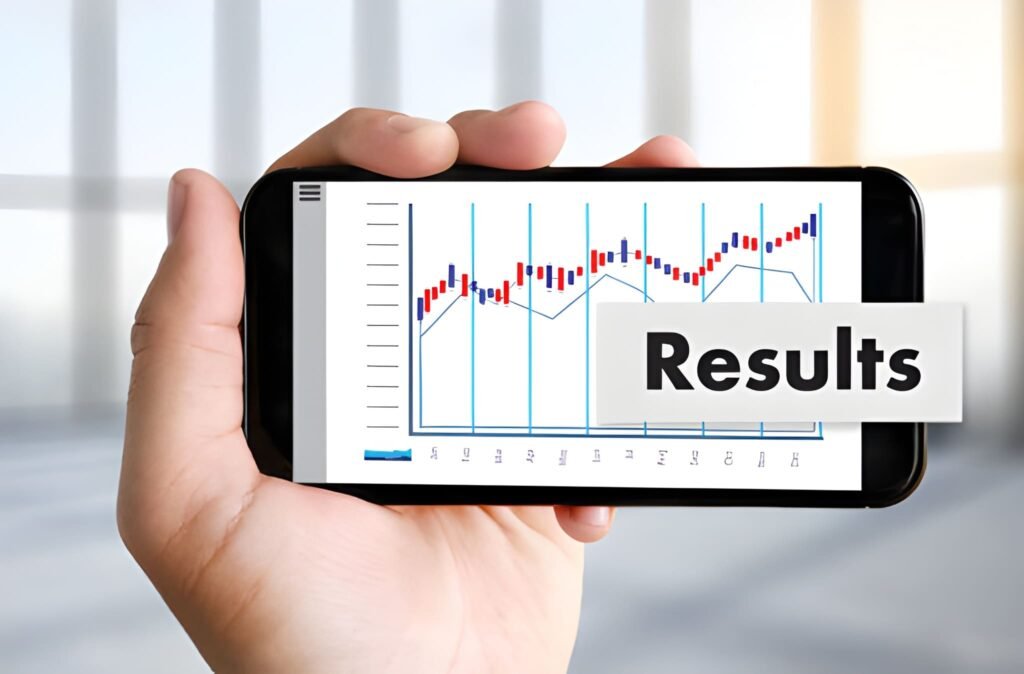
Financial literature and internet marketing often depict algorithmic trading as a frictionless path to wealth. We see charts of perfectly ascending equity lines, often the result of backtests conducted on historical data with idealized settings. However, the professional reality of algorithmic trading is far more nuanced. When an algorithm transitions from a simulation to a live exchange, it encounters a host of environmental variables that can erode performance. To understand actual results, an investor must look beyond the gross percentage return and examine the statistical health, survivability, and logistical hurdles of these automated systems.
- 1. The Backtest vs. Live Performance Gap
- 2. Statistical Reality: Win Rates and Expectancy
- 3. Execution Friction: The Silent Yield Killers
- 4. Institutional vs. Retail Result Disparity
- 5. Understanding Drawdowns and Recovery Time
- 6. Real-World Case Studies: Successes and Failures
- 7. Benchmarking: What Is a Good Result?
- 8. The Sustainability of Algorithmic Alpha
1. The Backtest vs. Live Performance Gap
The first truth every quantitative researcher learns is that a backtest is a representation of what would have happened in the past under specific assumptions. Actual results in live markets frequently diverge from these simulations by a margin of 20% to 50%. This discrepancy is often caused by Selection Bias and Look-Ahead Bias. Developers naturally gravitate toward parameters that performed best in the past, a process known as curve-fitting. While the backtest looks spectacular, it essentially memorizes the noise of the past rather than identifying a repeatable signal for the future.
In the real world, the live market does not offer the same liquidity as a historical database. In a backtest, you can theoretically buy 10,000 shares at the closing price. In reality, your own buy order might push the price higher before it is fully filled. This slippage means the average entry price is slightly worse than the model predicted. Over thousands of trades, these small fractions of a percent accumulate into a significant performance drag that the backtest usually fails to capture accurately.
2. Statistical Reality: Win Rates and Expectancy
A common misconception is that a high win rate is synonymous with a high-performing algorithm. In reality, some of the world most profitable trend-following algorithms have win rates as low as 35% to 45%. Actual results are determined by the Expectancy—the average amount you win or lose per dollar risked. A bot that wins 90% of the time but loses 10 dollars for every 1 dollar it wins is a losing system. Conversely, a bot that wins 30% of the time but wins 5 dollars for every 1 dollar it loses is a powerhouse.
3. Execution Friction: The Silent Yield Killers
The gap between theoretical and actual results is usually filled by three types of friction: commission, slippage, and latency. For high-frequency strategies, these costs can consume more than 100% of the projected gross profit. Even for swing trading algorithms, the cumulative impact is massive. Actual results must be reported Net of All Fees to be meaningful.
4. Institutional vs. Retail Result Disparity
There is a vast gulf between the results of institutional firms like Renaissance Technologies and individual retail traders. Institutional firms spend millions on infrastructure to reduce latency and access dark pools of liquidity. Their results are often characterized by extreme consistency. For instance, Virtu Financial, a major HFT firm, once reported having only one losing day over a period of 1,238 trading days. This level of performance is impossible for retail traders who are using standard internet connections and retail brokerage APIs.
Retail results are typically more volatile. Because retail traders cannot compete on speed, they must compete on Strategy Design and Niche Selection. Successful retail quants often find success in less crowded markets, such as specific mid-cap stocks or less liquid currency pairs, where the predatory algorithms of the major banks are less active. Real-world retail results often show a broader standard deviation, meaning higher highs and lower lows compared to the steady, smoothed returns of the institutional giants.
5. Understanding Drawdowns and Recovery Time
Actual results are rarely linear. Every algorithm, no matter how sophisticated, will undergo a Drawdown—a peak-to-trough decline in account value. The true measure of a bot's quality is not its performance during a bull market, but how it behaves during its worst period. A result of 20% annual return is meaningless if it required a 50% drawdown to achieve it. Most institutional investors will abandon a strategy if the drawdown exceeds a predefined multiple of its expected return.
Mathematical recovery is non-linear. If an algorithm loses 10% of its capital, it needs an 11.1% gain to get back to even. If it loses 25%, it needs a 33% gain. If it loses 50%, it needs a 100% gain just to reach its starting point. This is why actual results focus heavily on Capital Preservation. A strategy with smaller, controlled losses will almost always outperform a "volatile winner" over the long term because it avoids the deep holes that are mathematically difficult to climb out of.
6. Real-World Case Studies: Successes and Failures
History provides stark examples of how algorithmic results can surprise both the upside and the downside. Examining these events helps ground an investor's expectations in the reality of market physics.
7. Benchmarking: What Is a Good Result?
To evaluate if an algorithm is truly successful, its results must be compared against a relevant benchmark. If the S&P 500 returns 15% in a year and your algorithm returns 12%, you have underperformed on a relative basis, even though you are profitable. Professional results are often measured by the Sharpe Ratio (return per unit of risk) and the Sortino Ratio (return per unit of downside risk).
| Sharpe Ratio Range | Result Classification | Expectation |
|---|---|---|
| Under 1.0 | Sub-optimal | Risk is too high for the reward; consider indexing. |
| 1.0 to 2.0 | Professional Grade | The standard for successful hedge funds. |
| 2.0 to 3.0 | Exceptional | Highly efficient strategy with smooth equity growth. |
| Above 3.0 | Suspicious / Statistical Outlier | Often indicates overfitting or lack of transaction costs. |
8. The Sustainability of Algorithmic Alpha
The final reality of algorithmic trading results is Alpha Decay. A profitable strategy is essentially an exploit of a market inefficiency. As more capital flows into that strategy, the inefficiency is traded away, and the returns diminish. Actual results over a five-year period will almost always show a downward slope in effectiveness unless the algorithm is constantly updated.
Sustainability in the real world comes from Adaptability. The most successful algorithms are not static sets of rules; they are frameworks that can adjust their parameters based on market volatility and regime changes. Results are not something you "achieve" once; they are something you must actively maintain through rigorous monitoring and constant innovation. The market is an evolving organism, and your results will only remain positive as long as your code evolves faster than the competition.
In conclusion, actual algorithmic trading results are far more complex than a simple percentage. They are a product of mathematical expectancy, execution efficiency, and psychological resilience during drawdowns. By maintaining a realistic view of these factors, an investor can transition from being a spectator of marketing hype to a disciplined operator of automated systems. Success in this arena is not about finding a "magic" bot, but about building a robust, cost-aware system that respects the laws of market probability.
As you review your own results or those of a potential investment, always ask for the "Net" performance, the maximum drawdown, and the out-of-sample validation. In the world of quantitative finance, the numbers don't lie, but they often require an expert eye to tell the whole truth.


