- Market Microstructure Fundamentals
- Momentum: High-Velocity Execution
- Mean Reversion: The Statistical Snap
- Breakout and Volume Profile Analysis
- The Gap and Go Framework
- Institutional Scalping Techniques
- The Mathematics of Risk Management
- Cognitive Biases and Performance
- Hardware and Technical Requirements
- The Professional Path Forward
Intraday trading sits at the intersection of psychology, mathematical probability, and lightning-fast execution. Unlike the passive investor who relies on the long-term upward trajectory of the economy, the day trader operates in the noise of the daily session. Success here requires a radical shift in perspective: you are no longer an owner of companies, but a manager of risk and a hunter of liquidity imbalances. This comprehensive exploration details the specific methodologies that professional traders use to navigate volatile intraday price action.
Market Microstructure Fundamentals
To trade successfully within a single day, you must understand the environment. The market is not just a collection of tickers and charts; it is a Central Limit Order Book (CLOB). Every price move is the result of market orders eating through resting limit orders. When a large institutional buyer needs to acquire 100,000 shares, their aggressive buying creates an imbalance that day traders can identify and exploit.
Liquidity acts as the fuel for price movement. During the first hour of trading—the "Opening Range"—liquidity is highest, as overnight orders are processed and news is priced in. Professional traders focus heavily on this period because the volatility provides enough "range" to make meaningful profits. Without range, even a 100% win rate would fail to cover commission costs and slippage.
Momentum: High-Velocity Execution
Momentum trading is perhaps the most popular intraday strategy. It relies on identifying a stock that is already moving and jumping on board for a slice of the remaining move. The logic follows Newton’s First Law of Motion: a stock in a strong trend is more likely to continue in that direction than to reverse immediately.
Successful momentum trading requires a strict "catalyst" requirement. A stock moving up for no reason is dangerous; a stock moving up because of a positive earnings report, a FDA approval, or a major contract win is a momentum candidate. This fundamental "reason" provides the conviction needed for other participants to keep buying throughout the day.
Mean Reversion: The Statistical Snap
Mean reversion is the antithesis of momentum. It operates on the principle that price movement is often an overreaction. When news hits, humans tend to panic or become overly euphoric, pushing prices to levels that are statistically unsustainable in the short term. Mean reversion traders bet that the price will snap back to its historical average or "mean."
Traders utilize tools like the Relative Strength Index (RSI) and Bollinger Bands to quantify when a stock is "stretched." For instance, an RSI reading above 80 on a 5-minute chart suggests a stock is extremely overbought. If this coincides with the stock hitting the upper Bollinger Band (usually 2 standard deviations from the mean), the probability of a short-term pullback increases significantly.
This strategy requires a "contrarian" mindset. You are buying when everyone else is selling in a panic, and selling when everyone else is buying in a frenzy. It is mathematically robust but psychologically taxing, as you are effectively standing in front of a moving train and betting it will stop and reverse.
Breakout and Volume Profile Analysis
Breakout strategies focus on "consolidation zones." Prices often move in boxes; they stay within a range as buyers and sellers agree on a temporary value. A breakout occurs when new information enters the market, causing the price to leave that box. The goal is to enter the trade the moment the "ceiling" (resistance) or "floor" (support) breaks.
The Volume Profile Edge
Volume Profile is an advanced charting study that shows trading activity over a specified time period at specified price levels. Unlike traditional volume (which shows volume by time), Volume Profile shows volume by price. It reveals the "Point of Control" (POC)—the price where the most trading occurred. A breakout that moves price away from a high-volume POC into a "Low Volume Node" often results in very fast price movement because there is little historical resistance in that zone.
The Gap and Go Framework
The "Gap and Go" is a specific morning strategy. Every morning at 9:30 AM EST, certain stocks open at a price significantly different from their previous close. This creates an immediate imbalance. If a stock gaps up 5% on heavy volume and then breaks the high of its first 5 minutes of trading, it is a "Gap and Go" setup.
1. Scan for stocks with > 3% gap.
2. Filter for stocks with Relative Volume (RVOL) > 2.0 (trading twice its normal volume).
3. Identify "Room to Run": Look for the next resistance on the daily chart.
4. Target Profit = Entry + (Range * 2)
5. Stop Loss = Entry - (Range * 1)
This strategy is highly efficient for traders who only want to work the first hour of the market. It capitalizes on the massive liquidity and volatility present during the market open, allowing for high-conviction trades that resolve quickly.
Institutional Scalping Techniques
Scalping is the most granular form of trading. Scalpers are not looking for trends; they are looking for "ticks." They might buy 5,000 shares of a stock and sell it 10 seconds later for a 2-cent profit. While 2 cents sounds negligible, on 5,000 shares, that is a $100 profit.
Institutional scalpers utilize "Level II" and "Time and Sales" (the tape). Level II shows the depth of the market—every limit order waiting to be filled. By watching the tape, a trader can see the actual transactions occurring. If they see thousands of shares being bought at the "ask" price with no movement at the "bid," they know aggressive buyers are present and will scalp a quick long position.
The Mathematics of Risk Management
Trading is a game of numbers. If you have a strategy that wins 50% of the time, you can still become wealthy if your average win is twice the size of your average loss. This is known as the Risk-to-Reward (R:R) ratio. Professional traders rarely accept a trade with an R:R of less than 1:2.
Position Sizing Formula
To calculate how many shares to buy, use this simple text-based formula:
Example:
Account Risk: $200
Entry: $50.00
Stop Loss: $49.50 (Risk per share = $0.50)
Shares to Buy: $200 / $0.50 = 400 Shares
Cognitive Biases and Performance
The greatest obstacle to intraday success is the human brain. We are biologically programmed to be terrible traders. Two specific biases destroy most accounts:
Loss Aversion: The pain of losing $1,000 is twice as potent as the joy of winning $1,000. This causes traders to hold onto losing positions, hoping they will "come back to even," which often leads to a total account wipeout.
Recency Bias: Traders tend to overweight their most recent trades. If they had three losses in a row, they might hesitate on the fourth trade—even if it is a perfect setup. Conversely, after three wins, they might become overconfident and over-leverage, leading to a catastrophic loss.
Hardware and Technical Requirements
You cannot compete with high-frequency algorithms using a basic laptop and public Wi-Fi. Professional intraday trading requires a specific technical stack:
- Direct Market Access (DMA): A broker that sends your orders directly to the exchanges (NASDAQ, NYSE) rather than through a middleman. This ensures the fastest execution and best pricing.
- Low Latency Fiber: A wired internet connection with a low "ping" to the exchange servers. In day trading, milliseconds matter.
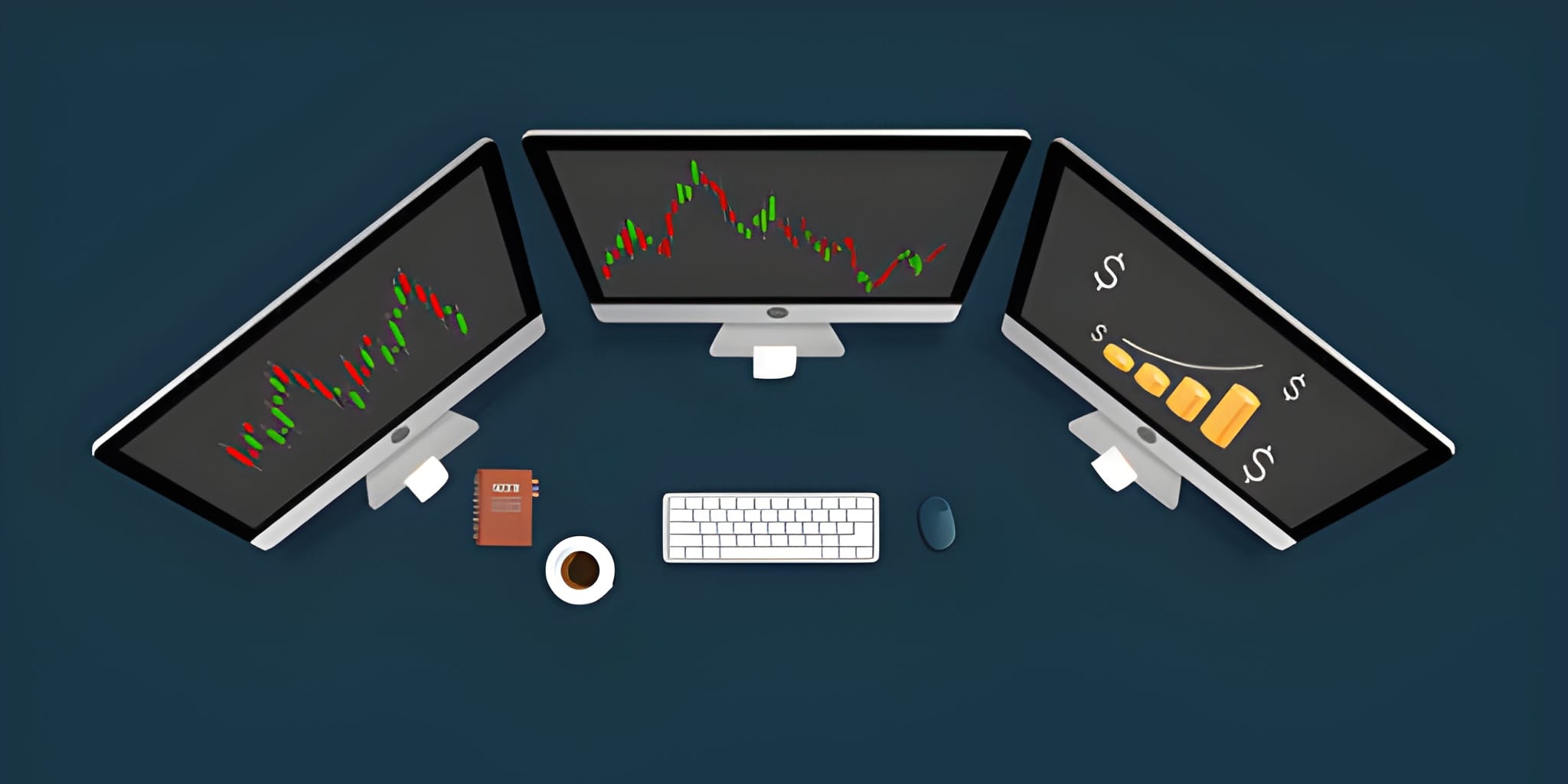
- Multi-Monitor Setup: At least two to four monitors. You need to view the 1-minute chart, 5-minute chart, Daily chart, Level II, and a market scanner simultaneously.
Comparison of Core Strategies
| Strategy Name | Optimal Timeframe | Required Indicators | Risk Profile |
|---|---|---|---|
| Momentum | 1 min / 5 min | VWAP, Volume, MACD | Moderate |
| Mean Reversion | 5 min / 15 min | RSI, Bollinger Bands | Moderate/High |
| Gap and Go | 1 min / 2 min | Pre-market High, RVOL | High |
| Scalping | Tick charts | Level II, Time & Sales | Low (per trade) |
The Professional Path Forward
Becoming a professional intraday trader is not about finding a secret indicator; it is about developing a "statistical edge" and having the discipline to execute it thousands of times without emotional interference. Most traders fail within the first year because they treat the market like a casino rather than a business. To succeed, you must document every trade in a journal, analyze your mistakes, and constantly refine your process.
The strategies outlined here—momentum, mean reversion, breakouts, and gaps—provide a structural framework. However, the market is dynamic. A strategy that works in a high-volatility "bear market" may fail in a low-volatility "bull market." The ultimate skill of the intraday trader is adaptability—the ability to recognize the current market regime and apply the correct tool for the job. Continuous education and rigorous risk management remain the only sustainable paths to long-term profitability in the world's most competitive arena.