Professional Discipline: The Definitive Guide to Day Trading
Architecture of the Intraday Edge and Systematic Risk ManagementKnowledge Framework
Hide NavigatorThe Professional Trading Standard
In the earlier epochs of finance, day trading was defined by physical presence on exchange floors. Today, it is a digital discipline defined by Information Processing. To succeed in the modern intraday environment, one must move beyond the retail mindset of "making money" and adopt the institutional mindset of Managing Probability. Day trading is not a hobby; it is a high-overhead, capital-intensive business that requires a level of mechanical discipline equal to that of a professional pilot or surgeon.
The defining characteristic of a professional day trader is the total absence of emotional gambling. While retail participants are often lured by the promise of rapid wealth, the professional understands that wealth is a byproduct of a Rigorous Process. This process involves the identification of a statistical edge, the clinical execution of that edge, and the absolute minimization of unmanaged risk.
Within the United States capital markets, day trading exists in a hyper-competitive ecosystem where approximately 80% of volume is driven by algorithms. These machines do not have bad days, they do not hesitate, and they do not revenge trade. To compete, a human trader must build a Systematic Framework that mimics the consistency of the machine while leveraging the human ability to synthesize complex, multi-variable news and fundamental shifts.
The Intraday Market Lifecycle
A trading day is not a monolithic block of time. It is a sequence of distinct Volatility Regimes, each requiring a different tactical approach. Attempting to apply a single strategy to all hours of the day is a primary cause of equity curve erosion.
Characterized by "Price Discovery." High volume and erratic spreads as overnight news is priced in. This is the arena for momentum and gap strategies.
Liquidity often dries up as institutional desks take their lunch break. Range-bound, mean-reverting logic is usually the only viable path here.
The "Power Hour." Large institutional rebalancing and ETF inflows drive sustained trends. Volatility returns as traders close intraday positions.
The Pre-Market Strategic Routine
Successful day trading is won before the bell rings. A professional routine starts at least 90 minutes before the market open. This time is dedicated to Contextual Mapping. You are not looking for trades yet; you are looking for the "Market Narrative."
Is the S&P 500 gapping up on a positive CPI report? Are Treasury yields spiking, causing a sell-off in growth tech? By identifying the Macro Tide, a trader avoids fighting the broader market flow. A professional's watch list is typically narrow, consisting only of stocks that have a clear fundamental catalyst—earnings beats, FDA approvals, or major institutional upgrades.
Universe Selection and Catalysts
With thousands of listed securities, "Stock Picking" is a dangerous distraction. Professional traders use Universe Filtering. They only trade stocks that are "In Play." A stock is in play if it exhibits high Relative Volume (RVOL).
Relative volume tells you that the current participation is significantly higher than the 30-day average. This indicates that "Big Money" is involved. If a stock is moving 5% but the volume is normal, it is a retail-driven move that is likely to fail. If it is moving 5% on 4x average volume, it is a high-conviction institutional move that provides the liquidity necessary for precise execution.
When a company reports earnings that deviate significantly from analyst expectations, it creates a structural imbalance. The price must find a new equilibrium. Traders look for "Post-Earnings Drift" to ride the institutional re-valuation wave over several hours.
If the lead stock in a sector (e.g., $NVDA in Semiconductors) makes a parabolic move, the "laggard" stocks often follow suit. Systematic traders use these Correlation Chains to find entries in secondary names with lower volatility.
Architecture of Capital Preservation
Day trading is a game of Survival. Your account is your inventory; once you are out of inventory, you are out of business. A professional risk architecture is built around the 1% Rule—never risking more than 1% of total equity on any single trade.
This is not the same as position sizing. Risk is the difference between your entry price and your "Hard Stop." If you have a $50,000 account, your 1% risk is $500. Your position size is then a function of that $500 divided by the technical distance to your stop-loss.
Account_Equity = 50000.00;
Risk_Budget = Account_Equity * 0.01; // $500.00
Entry_Price = 150.00;
Technical_Stop = 148.50;
Risk_Per_Share = Entry_Price - Technical_Stop; // $1.50
Position_Size = Risk_Budget / Risk_Per_Share;
// Result: Buy 333 shares. Total position value = $49,950.
Order Execution and Micro-Slippage
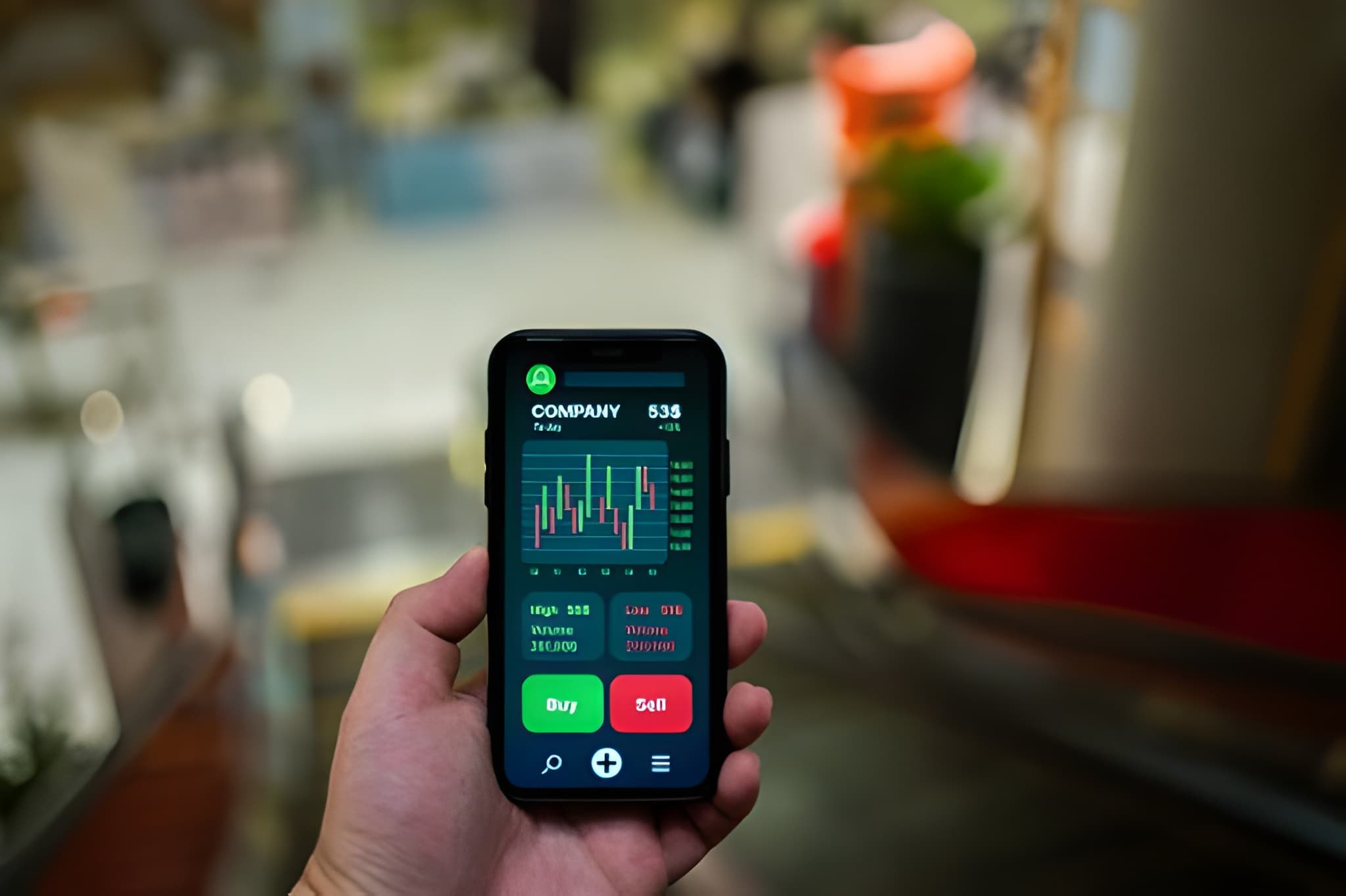
In the intraday arena, the "Buy" button is a surgical instrument. Understanding the difference between Market Orders and Limit Orders is the difference between a profitable strategy and a "Death by a Thousand Cuts."
A market order is an "Urgent" request that hits the existing bid or offer. In high-volatility environments, this often leads to significant Slippage—getting filled at a price much worse than expected. Professional traders utilize Limit Orders or "Marketable Limit Orders" to control their entry price. By refusing to pay more than a specific price, they ensure that the mathematical "Reward-to-Risk" ratio of the trade remains intact.
| Execution Type | Mechanism | Best For | Risk Factor |
|---|---|---|---|
| Limit Order | Added to the book at a fixed price. | Passive entries; trend pullbacks. | Non-execution risk (Missed trade). |
| Marketable Limit | Limit price set slightly above the ask. | Breakout entries with price caps. | Partial fills in thin markets. |
| Stop-Limit | Converts to limit when price is hit. | Technical confirmation entries. | Gapping through the limit price. |
| VWAP Slice | Broken into tiny parts over time. | Institutional-sized entries. | High transactional overhead. |
Biological Bias and Resilience
The human brain is biologically optimized for survival in the wilderness, not for trading in electronic markets. Our instincts lead to Cognitive Biases that are lethal to an equity curve. The "Disposition Effect" causes us to hold losing trades too long (hoping for a bounce) while cutting winning trades too short (fearing we will lose the profit).
To combat this, a trader must build Rule-Based Resilience. This involves treating the trade as a "Closed-Loop Experiment." Once the order is placed, the outcome is binary: it either hits the stop-loss or the take-profit target. There is no middle ground, and there is no room for "hope." By detaching the ego from the individual trade and focusing purely on the Large Sample Size, a trader achieves the mental neutrality required for long-term survival.
Journaling and Feedback Loops
The greatest asset of a day trader is not their strategy, but their Data. A trading journal is an immutable record of every decision, emotion, and outcome. Without a journal, you are not trading; you are practicing "random walk" speculation.
A professional journal tracks more than just P&L. It tracks Strategy Drift. Did you enter the trade because your rules were met, or because you were bored? It tracks Execution Quality. Did you get filled at your limit? By reviewing this data every weekend, a trader can identify the "Leakage" in their business and plug it before it drains their capital.
2. Risk Check: Did any single trade lose more than my 1% budget?
3. Discipline Check: Did I move any stop-losses during the trade?
4. Asset Check: Was the RVOL of my stocks above 1.5?
5. Feedback: What is one mistake I made today that I can codify as a new "Hard Rule"?
In summary, mastering day trading is an exercise in Systematic Refinement. It is the marriage of technical proficiency, capital discipline, and psychological mastery. As the digital transformation of finance continues to accelerate, the independent investor who operates with institutional rigor will be the one who not only survives the volatility but thrives within it. The market is a machine; your job is to become the engineer.