
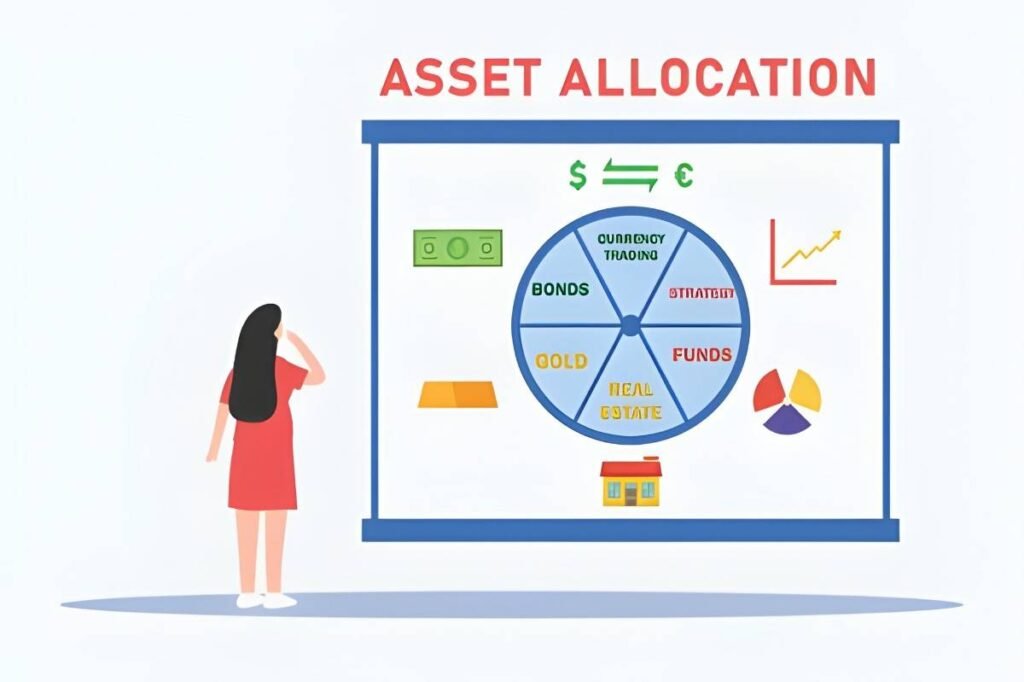
At 30, you have a 30+ year investment horizon, making this the ideal time to build wealth aggressively while managing risk. Below is a data-driven strategy for maximum long-term growth.
Table of Contents
Recommended Allocation for a 30-Year-Old
| Asset Class | Allocation | Why It Matters | Best ETFs/Funds |
|---|---|---|---|
| U.S. Stocks | 60-70% | Core growth driver | VTI, VOO, SCHB |
| International Stocks | 20-30% | Diversification | VXUS, IXUS |
| Bonds | 5-10% | Stability | BND, AGG |
| Small-Cap/Growth | 5-10% | Higher growth potential | VB, IJT |
| REITs | 0-5% | Inflation hedge | VNQ, SCHH |
Key Adjustments Based on Risk Tolerance
- Aggressive (High Risk Tolerance): 80% stocks, 15% international, 5% bonds
- Moderate: 70% stocks, 20% international, 10% bonds
- Conservative (Low Risk Tolerance): 60% stocks, 25% international, 15% bonds
Why This Allocation Works
- High Equity Exposure (90% Stocks)
- Historically, stocks return ~7-10% annually over long periods.
- At 30, you can ride out market downturns (e.g., 2008, 2020).
- International Diversification (20-30%)
- Non-U.S. markets often outperform during different cycles.
- Reduces reliance on the U.S. economy alone.
- Minimal Bonds (5-10%)
- Bonds provide stability but limit growth at this age.
- Consider long-term Treasuries (TLT) if adding bonds.
- Small-Cap & REITs (5-10%)
- Small-caps historically outperform long-term.
- REITs hedge against inflation and provide dividends.
Sample Portfolio ($10,000 Example)
| Fund | Allocation | Amount |
|---|---|---|
| VTI (U.S. Total Market) | 60% | $6,000 |
| VXUS (International) | 25% | $2,500 |
| BND (Bonds) | 10% | $1,000 |
| VB (Small-Cap) | 5% | $500 |
Projected Growth (7% annual return):
- After 10 years: ~$19,600
- After 30 years: ~$76,100 (without additional contributions)
Common Mistakes to Avoid
- Too Much Cash – Sitting on sidelines loses compounding potential.
- Overconcentration in Employer Stock – Keep <10% in any single stock.
- Market Timing – Stay invested; time in market > timing market.
- Ignoring Fees – Use low-cost ETFs (expense ratio < 0.20%).
Action Plan
- Open a Roth IRA or 401(k) – Tax-advantaged growth is critical.
- Automate Investments – Set monthly contributions (e.g., $500/month).
- Rebalance Annually – Reset to target allocations once per year.
- Increase Bonds Gradually – At 40, shift to 15-20% bonds.
Final Advice
At 30, your biggest asset is time. This allocation maximizes growth while keeping risk manageable. Stick with it, avoid emotional decisions, and let compounding work.
(Need a more aggressive or conservative version? Adjust stock/bond ratios accordingly.)



