
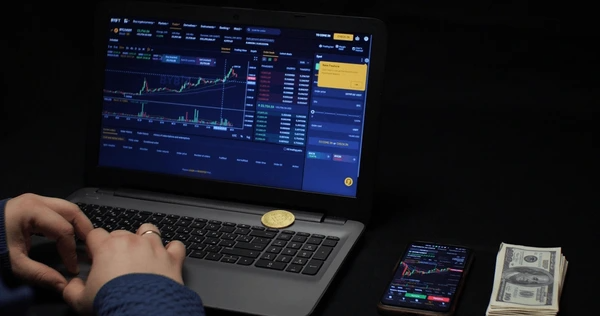
Neutral Territory: The Strategic Advantage of Broker-Neutral Algorithmic Trading Platforms
Decoupling execution from the custodian to optimize latency, redundancy, and capital efficiency.
Defining Broker-Neutrality in Systematic Finance
In the high-velocity domain of algorithmic trading, your choice of cockpit determines your survival. Most retail traders operate within a "captive" environment—using software provided by their brokerage. While convenient, this creates a structural dependency. Broker-neutral platforms, conversely, act as an independent software layer that sits between your algorithmic logic and the market. These platforms do not hold your capital; they simply provide the pipes and the interface to route orders to any number of participating custodians or exchanges.
True neutrality means the software developer has no financial incentive to encourage trading volume with a specific broker. This decoupling allows the trader to treat the brokerage as a commodity. If a broker suffers a latency spike, changes their commission structure, or experiences an outage, a neutral platform allows you to re-route your order flow to an alternative provider within minutes, sometimes seconds. In the institutional world, this is not just a luxury; it is a fundamental requirement for risk management and best execution compliance.
The "Redundancy Premium": Why Neutrality Wins
The strategic advantage of neutrality extends far beyond mere convenience. It addresses the three critical vulnerabilities of systematic trading: Connectivity Risk, Liquidity Access, and Capital Optimization. By using an agnostic platform, you gain access to a "multi-lane highway" of execution venues, ensuring that your alpha is not eroded by the technical failures of a single point of entry.
Redundancy and Reliability
When your software is independent, a broker outage is a minor inconvenience rather than a trading disaster. You can maintain multiple active connections and switch your primary route if one provider goes dark.
Global Asset Reach
A neutral platform often aggregates data and execution for Equities, Futures, Options, and Forex from different brokers into a single, unified algorithmic workspace.
Furthermore, broker-neutral systems often provide superior Smart Order Routing (SOR) logic. Instead of relying on a single broker's internal crossing network, these platforms can scan multiple dark pools and lit exchanges simultaneously to find the tightest spread. For high-frequency or large-block traders, the savings generated by this improved execution quality frequently exceed the licensing costs of the software itself.
Protocols of Freedom: FIX, REST, and WebSockets
The "glue" that enables broker-neutrality is standardized communication. To communicate with dozens of different brokers, the platform must speak their languages flawlessly. The choice of protocol often dictates the speed and reliability of your execution engine.
FIX is the gold standard of institutional trading. It is a highly efficient, binary-based protocol designed for massive throughput. Broker-neutral platforms that support FIX allow you to connect to major prime brokers and exchanges with minimal overhead. It is the preferred choice for traders who require sub-millisecond execution and complex order types.
Modern cloud-based platforms often utilize REST for account management and WebSockets for real-time data streaming. While slightly slower than FIX, these protocols are far easier to implement and are standard for connecting to retail brokers and cryptocurrency exchanges. They provide the agility needed for mid-frequency strategies.
High-Performance Prosumer Platforms
The gap between retail and institutional tools has narrowed significantly. Today, several platforms provide "Prosumer" (Professional-Consumer) features that allow individual quants to trade with the same neutrality as a boutique hedge fund.
| Platform | Target Audience | Supported Brokers | Primary Language |
|---|---|---|---|
| MultiCharts | Systematic Retail / Pro | 30+ (IBKR, CQG, Rithmic) | PowerLanguage / C# |
| QuantConnect | Cloud-Native Developers | 10+ (Oanda, Coinbase, IBKR) | Python / C# |
| Sierra Chart | Low-Latency Futures Traders | Dozens via Teton/CQG | C++ (ACSIL) |
| MotiveWave | Technicians and Quants | 35+ (TD Ameritrade, Tradier) | Java |
MultiCharts is often cited as the benchmark for retail neutrality. It allows you to use data from one provider (like IQFeed) and execute through another (like Interactive Brokers). This is a classic neutral setup that prevents the "data lag" often found in all-in-one broker applications. Sierra Chart, while having a steep learning curve, is prized for its extreme efficiency and direct-to-exchange Teton routing, making it a favorite for professional futures scalpers.
Institutional Gateways and Execution OMS
At the highest levels of systematic finance, neutrality is synonymous with Trading Technologies (TT) and Bloomberg (EMSX). These are not just trading platforms; they are comprehensive Order Management Systems (OMS). They provide a global backbone of microwave and fiber connectivity, allowing a fund in London to trade a Chicago-based future with the same speed as a local participant.
Institutional platforms focus heavily on Compliance and Pre-Trade Risk. A neutral OMS will check your order against thousands of risk rules across multiple brokers before the order ever leaves your server. This "Master Risk" layer is essential when you have various strategies running across different custodians simultaneously. It ensures that your net exposure remains within the firm's mandate, regardless of which broker is being utilized for a specific trade.
Calculation: The Real Cost of "Free" Broker Platforms
Brokers offer "free" software because it locks you into their ecosystem. A neutral platform carries a licensing fee, but the execution savings often create a positive return on that investment. We can model the Break-Even Neutrality (BEN) point by looking at slippage and spread capture.
Trade Size: 1,000 Shares
Broker-Owned Platform Slippage (Captive): 0.02 / share
Neutral Platform Slippage (Smart Routed): 0.005 / share
Slippage Savings per Trade: (0.02 - 0.005) * 1,000 = $15.00
Monthly Software License Fee: $150.00
// Break-Even Point:
Trades per Month needed: 150 / 15 = 10 Trades
// Analysis: If you trade more than 10 times a month, the neutral platform pays for itself.
This calculation illustrates the Hidden Spread Tax. Captive platforms often route to their own internal pools first, which may not provide the best price. A neutral platform's ability to "work the spread" across multiple venues frequently captures those extra pennies that aggregate into significant annual alpha.
Implementation: Routing Logic and Smart Execution
Building a neutral system requires a robust Abstraction Layer in your code. You do not want your algorithm to know the specific details of a broker's API. Instead, your algorithm should call a generic SubmitOrder() function. The neutral platform's connectivity layer then translates that generic command into the specific protocol required by the destination broker.
This abstraction is what allows for Hot-Swapping. If Broker A’s API starts responding with errors, your monitoring script can update the routing table. The next SubmitOrder() call from your algorithm will automatically be sent to Broker B. This resilience is what separates "toy" algorithms from professional systematic ventures. It assumes that failure is inevitable and builds the software architecture to route around it.
The Future of Agnostic Execution Systems
The industry is moving toward Cloud-Native Neutrality. We are seeing the rise of platforms like QuantConnect and QuantRocket that allow you to develop in the cloud and deploy to any broker via a secure API bridge. This eliminates the need for expensive on-site server maintenance while maintaining the agnostic philosophy.
Moreover, the integration of Cross-Chain Neutrality is becoming relevant. As decentralized finance (DeFi) matures, neutral platforms are beginning to provide gateways that bridge traditional "TradFi" brokers with decentralized "DEX" liquidity pools. The trader of the future will operate from a single dashboard that routes to Goldman Sachs as easily as it routes to Uniswap. In this landscape, neutrality is not just a tactical choice; it is the cornerstone of a future-proofed financial architecture.
In summary, broker-neutral algorithmic trading platforms offer the ultimate strategic hedge. They provide the flexibility to seek better pricing, the redundancy to survive technical outages, and the reach to trade any asset on any exchange. While they require a higher initial commitment in terms of both cost and complexity, the resulting freedom ensures that the systematic trader remains the master of their own execution destiny.


