
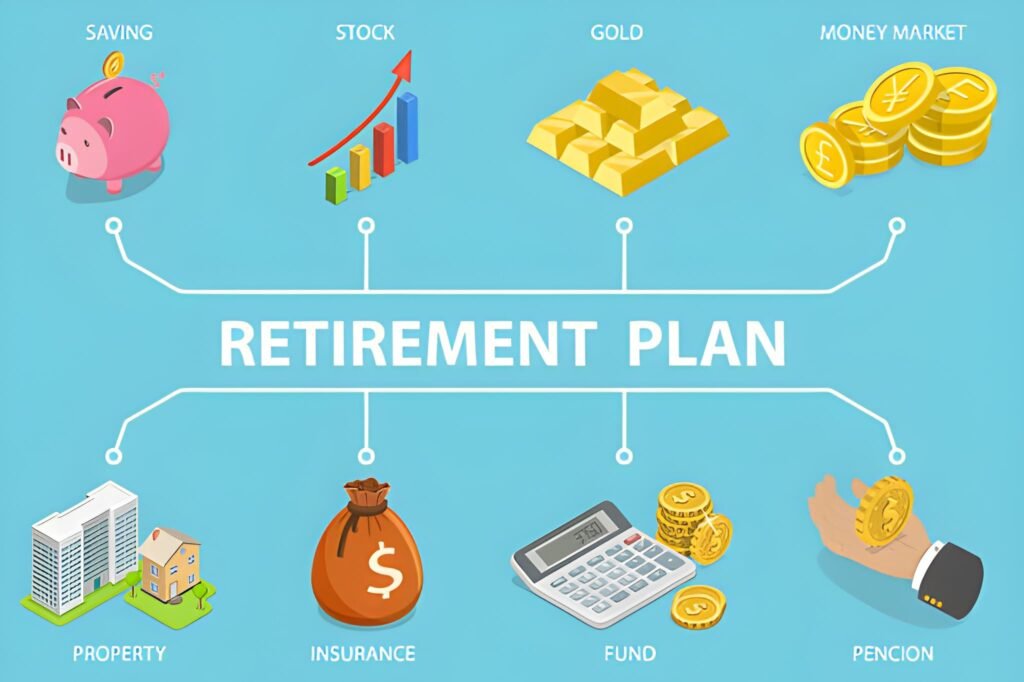
Understanding Keogh Retirement Plans
A Keogh plan, also known as an HR-10 plan, is a tax-advantaged retirement account available to self-employed individuals and unincorporated businesses in the United States. Established in 1962 under the Self-Employed Individuals Tax Retirement Act, Keogh plans enable business owners to save for retirement while reducing taxable income. They are especially beneficial for sole proprietors, partnerships, and certain small business owners.
Keogh plans are similar to traditional employer-sponsored retirement accounts but offer higher contribution limits and more flexibility for business owners. They come in two main types: defined-contribution and defined-benefit plans, each with distinct features, rules, and benefits.
Types of Keogh Plans
1. Defined-Contribution Keogh Plan
A defined-contribution plan specifies the amount contributed annually to the retirement account, often expressed as a percentage of net earnings from self-employment. Common structures include profit-sharing plans and money purchase plans.
Key Features:
- Annual contribution limits (2025): Up to 25% of net self-employment income, not exceeding $66,000.
- Tax treatment: Contributions are tax-deductible, reducing current taxable income.
- Investment growth: Earnings grow tax-deferred until withdrawal.
Example: A self-employed professional earning $150,000 net income contributes 25% to a defined-contribution Keogh plan:
Contribution = 150,000 \times 0.25 = 37,500\ USDAssuming an annual investment return of 7% over 30 years, the future value can be calculated as:
FV = 37,500 \times \frac{(1 + 0.07)^{30} - 1}{0.07} \approx 2,490,000\ USDThis demonstrates how substantial retirement savings can accumulate with consistent contributions and compounding growth.
2. Defined-Benefit Keogh Plan
A defined-benefit plan guarantees a specific retirement benefit based on earnings and years of service rather than annual contributions. This structure is more complex but allows higher contribution amounts, particularly for older business owners seeking to accelerate retirement savings.
Key Features:
- Annual contribution varies based on the benefit formula, actuarial assumptions, and retirement age.
- Contributions are tax-deductible and investment earnings grow tax-deferred.
- Requires actuarial calculations and compliance with funding requirements to ensure promised benefits can be paid.
For instance, a self-employed individual aiming for an annual retirement benefit of $80,000 at age 65 may need to contribute $50,000 annually starting at age 50, assuming a 7% annual investment return and 15 years of contributions.
Eligibility and Participation
- Keogh plans are available to individuals who are self-employed or own unincorporated businesses.
- Employees of the business can also participate if the plan includes them, but contributions for employees are generally proportional to their compensation.
- There is no age restriction for participation, though contribution limits and IRS rules apply.
Tax Advantages
1. Tax-Deferred Growth
All earnings within a Keogh plan—interest, dividends, and capital gains—grow tax-deferred until distribution, allowing the investment to compound more effectively compared to taxable accounts.
2. Deductible Contributions
Contributions reduce current taxable income, lowering federal income tax liability. For example, contributing $37,500 from a $150,000 net income reduces taxable income to $112,500:
Taxable\ Income = 150,000 - 37,500 = 112,500\ USD3. Flexible Investment Options
Keogh accounts can invest in a broad range of assets including stocks, bonds, mutual funds, ETFs, and, in certain self-directed accounts, real estate or alternative investments. This flexibility enables tailored asset allocation strategies based on risk tolerance and retirement goals.
Contribution Strategies
1. Maximizing Contributions
Self-employed individuals often aim to contribute the maximum allowable amount, particularly those with higher net income, to take full advantage of tax deferral and compound growth.
2. Adjusting for Income Variability
For businesses with fluctuating annual earnings, defined-contribution Keogh plans allow flexible contribution amounts. Contributions can be reduced in low-income years and increased when income rises, providing adaptability.
3. Combining with Other Retirement Accounts
Keogh plans can complement other retirement vehicles such as Traditional IRAs, SEP IRAs, or 401(k) plans. However, combined contribution limits across accounts must comply with IRS rules to avoid penalties.
Withdrawals and Retirement Planning
1. Distributions
- Withdrawals from Keogh plans are taxed as ordinary income.
- Distributions can begin at age 59½ without penalty.
- Early withdrawals before 59½ generally incur a 10% penalty in addition to income tax.
2. Required Minimum Distributions (RMDs)
Keogh plans are subject to RMD rules, requiring distributions to start at age 73. The RMD amount is calculated using the account balance and IRS life expectancy factors:
RMD = \frac{Account\ Balance}{Life\ Expectancy\ Factor}Failing to take RMDs results in a 50% excise tax on the shortfall.
3. Retirement Income Planning
Keogh plans can be a primary source of retirement income or combined with Social Security, IRAs, and other investments to create a diversified retirement income strategy. Strategic withdrawals and tax planning are essential to minimize taxation and maximize post-retirement income.
Risk Considerations
- Investment Risk: Returns depend on market performance and asset allocation. A conservative approach reduces volatility, while aggressive equity investments may increase growth potential and risk.
- Contribution Limits: Changes in business income or IRS regulations may affect annual contributions.
- Liquidity: Keogh funds are intended for retirement, limiting access to cash without penalties.
- Complexity: Defined-benefit Keogh plans require actuarial calculations and compliance, which may involve additional administrative costs.
Practical Example: Self-Employed Retirement Planning
A self-employed consultant aged 40 earns $200,000 annually and establishes a defined-contribution Keogh plan contributing 25% of net income:
- Contribution: $200,000 × 0.25 = $50,000 per year
- Expected return: 7% annually
- Investment horizon: 25 years
Future value calculation:
FV = 50,000 \times \frac{(1 + 0.07)^{25} - 1}{0.07} \approx 3,030,000\ USDThis scenario illustrates how a Keogh plan can enable high-net-worth self-employed individuals to accumulate substantial retirement savings while reducing current tax liability.
Compliance and Administration
- Plan Documentation: A formal written plan is required, outlining eligibility, contribution formulas, and distribution rules.
- Annual Reporting: Plans exceeding IRS thresholds must file Form 5500.
- Fiduciary Responsibility: Plan sponsors must act in the best interest of participants, selecting prudent investments and managing the plan responsibly.
Conclusion
Keogh retirement plans offer self-employed individuals and small business owners a powerful tool for tax-advantaged retirement savings. With defined-contribution and defined-benefit options, these plans provide flexibility in contributions, investment choices, and long-term growth potential. Proper planning, adherence to IRS rules, and strategic investment management can help self-employed professionals build substantial retirement wealth while optimizing current tax benefits. Keogh plans remain a cornerstone strategy for those seeking financial security and independence in retirement.



