
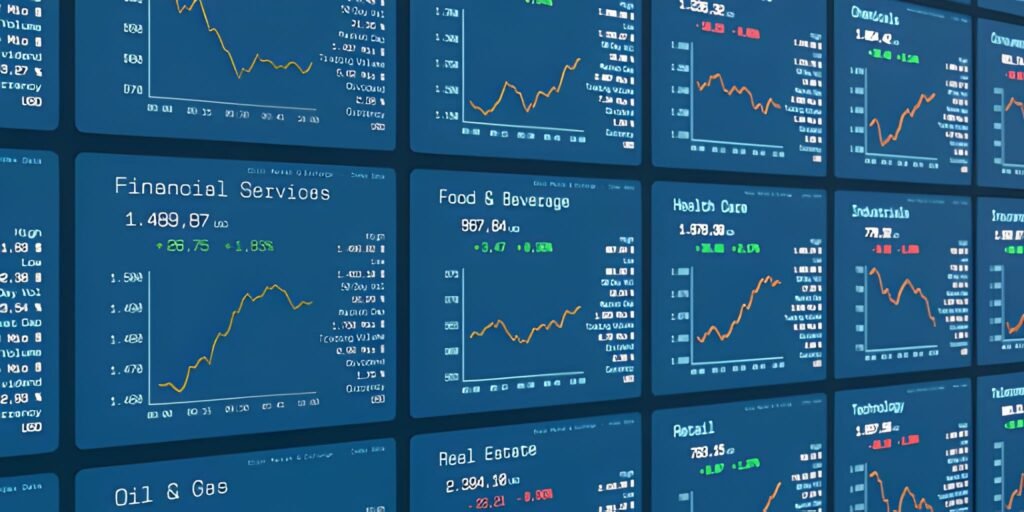
Institutional Systematic Investing and Algorithmic Frameworks
The Convergence of Investing and Automation
The global financial landscape has undergone a structural transition where discretionary intuition is increasingly augmented or replaced by systematic rigor. Quantitative investment strategies represent the "brain" of this movement, defining the mathematical logic of why a portfolio should hold specific assets. Algorithmic trading serves as the "muscle," handling the tactical execution of those decisions at speeds and scales beyond human capacity. This guide deconstructs the architectural synthesis required to build an evergreen quantitative desk.
In the modern era, the distinction between a long-term investor and a short-term trader has blurred through the lens of systematic logic. Both utilize high-fidelity data to identify probabilities rather than certainties. Whether managing a pension fund or a proprietary arbitrage book, the objective remains the same: to extract consistent alpha while strictly adhering to a predefined risk budget. For the practitioner, the edge resides in the intersection of mathematical theory, software engineering, and a deep understanding of market microstructure.
Factor-Based Investment Architectures
The foundation of quantitative investing is the identification of "Factors"—recurring characteristics of securities that explain their risk and return profile. Instead of picking individual stocks, quantitative practitioners allocate capital to broad premiums that have historically outperformed the general market. This "Factor Zoo" includes established metrics like Value, Momentum, Quality, and Low Volatility.
Multi-Factor Aggregation
A professional desk rarely relies on a single factor. Instead, they utilize Multi-Factor Models to smooth out the equity curve. When Value is underperforming (e.g., in a high-growth tech rally), Momentum or Quality often picks up the slack. The algorithm dynamically rebalances these exposures based on historical correlations and prevailing market regimes, ensuring the portfolio is never overly exposed to a single failure point.
| Factor Type | Signal Input | Strategic Goal |
|---|---|---|
| Size | Market Capitalization | Exploiting the small-cap premium. |
| Volatility | Standard Deviation / Beta | Capturing alpha from low-risk anomalies. |
| Carry | Interest Rate Differentials | Profiting from yield spreads (common in FX). |
| Reversal | Short-term Price Extremes | Capturing mean reversion on 1-5 day horizons. |
Optimization and Capital Allocation Models
Once a set of signals is identified, the practitioner faces the "Allocation Problem." How much capital should be assigned to each asset to maximize the risk-adjusted return? While Harry Markowitz’s Mean-Variance Optimization provided the historical starting point, modern desks utilize more advanced frameworks to combat the sensitivity of classical models to input errors.
Quantifying Performance: The Sharpe Ratio
Practitioners measure success not through absolute profit, but through the efficiency of risk utilization. The Sharpe Ratio remains the industry standard, measuring the excess return per unit of total risk. Sophisticated desks also prioritize the Information Ratio, which measures the practitioner's ability to generate excess returns relative to a specific benchmark.
Algorithmic Execution and Market Impact
Even the most brilliant quantitative strategy can be rendered unprofitable by poor execution. Algorithmic trading desks focus on minimizing Slippage and Market Impact. Every trade placed by an institutional fund moves the market; the goal of the algorithm is to hide its footprint in the noise of global liquidity.
Practitioners utilize Smart Order Routers (SOR) and execution algorithms like VWAP (Volume Weighted Average Price) or Implementation Shortfall. These systems break down a large "parent" order into thousands of tiny "child" orders, routing them across lit exchanges and dark pools to find hidden liquidity. By analyzing the "Tick-to-Trade" latency and the probability of fill at different price levels, the execution algorithm preserves the alpha that the research team identified.
Alternative Data and High-Dimensional Alpha
As traditional data sources—such as price history and earnings reports—become hyper-efficient, practitioners are looking toward Alternative Data to find a novel edge. This involves processing unstructured data that was previously ignored by the financial community. This is where quantitative strategies meet the world of big data engineering.
Examples of modern inputs include satellite imagery of retail parking lots to predict quarterly sales, credit card transaction flows for real-time consumer spending analysis, and Natural Language Processing (NLP) of central bank speeches. Integrating these datasets requires a massive infrastructure capable of cleaning, normalizing, and backtesting petabytes of data without succumbing to the trap of "Data Mining Bias."
Managing Volatility and Correlation Risk
Systematic risk management is an autonomous process. A quantitative desk does not wait for a "gut feeling" to reduce exposure; it implements Hard Guardrails that operate independently of the alpha signals. The objective is survival during "Black Swan" events where traditional correlations break down.
One of the most dangerous phenomena in quantitative trading is Correlation Spikes. During a market crash, assets that usually move in opposite directions—such as equities and gold—may suddenly fall together. Robust risk modules utilize "Dynamic De-leveraging" that automatically reduces the portfolio's gross exposure as realized volatility crosses specific thresholds. This protects the capital base from catastrophic depletion during periods of systemic instability.
Statistical Rigor in Model Validation
The greatest enemy of the quantitative practitioner is Overfitting. With enough data and enough computing power, an algorithm can find a "perfect" strategy in historical data that is entirely based on noise. Professional validation requires a scientific approach that goes far beyond a simple backtest.
Validation Protocols
- Out-of-Sample Testing: Training the model on one period of data (e.g., years 1-5) and testing it on an entirely different, unseen period (e.g., years 6-10).
- Walk-Forward Analysis: A rolling process of training and testing that simulates the actual experience of deploying a model and updating it as time moves forward.
- Monte Carlo Permutations: Shuffling the order of historical returns to see if the strategy's profitability survives a different sequence of market events.
- Sensitivity Analysis: Checking if a slight change in parameters (e.g., changing a 50-day average to a 51-day average) results in a collapse of the strategy's performance. A robust strategy should be insensitive to minor parameter shifts.
The Future of Autonomous Systematic Desks
The evolution of systematic investing is moving toward Autonomous Decision Engines. These systems utilize Reinforcement Learning (RL) to manage the entire lifecycle of a trade—from factor discovery to execution. Unlike traditional models that follow static rules, these agents learn by interacting with the market environment, receiving "rewards" for profitable outcomes and "punishments" for excessive drawdowns.
However, the human practitioner remains essential as the "Architect" of the system. The role has shifted from a trader making decisions to an engineer designing the environment in which the machine operates. Success in this future requires a mastery of data integrity, a relentless commitment to the scientific method, and the humility to know that the market is always more powerful than any model. As computing power continues to expand, the edge will belong to those who can filter the noise of the world with the cold, disciplined logic of the machine.
Final Practitioner Verdict
Quantitative investment strategies and algorithmic trading represent the pinnacle of modern financial engineering. By replacing emotion with evidence-based logic, practitioners can build resilient portfolios that thrive across changing market regimes. The key to longevity in this field is not a "secret formula," but a rigorous lifecycle of research, validation, and risk management. Start with a solid economic hypothesis, test with absolute skepticism, and always respect the tail risks of the global financial stage. In the world of systematic trading, the process is the profit.


