Introduction
The internet has come a long way from its early days of static web pages (Web1) to the interactive and social web (Web2). Now, we are entering the era of Web3, a decentralized and blockchain-powered internet that promises to transform the way we interact with digital assets. At the heart of this transformation is the concept of digital ownership, which is being redefined by Non-Fungible Tokens (NFTs). NFTs are cryptographic tokens that represent unique digital or physical assets, providing verifiable ownership, scarcity, and transferability.
In this article, I will break down how Web3 is revolutionizing digital ownership through NFTs, providing real-world examples, statistical insights, and mathematical calculations to explain their financial implications. I will also discuss the advantages and challenges of this emerging technology and its impact on various industries.
The Evolution of Digital Ownership
Web1: The Read-Only Era
In the early days of the internet (Web1), users could only consume information. There was no real interaction, no social media, and certainly no concept of digital ownership. Websites were static, and content creators had little control over distribution.
Web2: The Rise of Centralized Platforms
Web2 introduced interactivity, social media, and user-generated content. However, digital ownership remained elusive. Large tech companies like Google, Facebook, and Apple controlled the infrastructure, monetized user data, and dictated the rules of engagement. Users could create and share content, but they didn’t own it. Digital assets, whether music, videos, or in-game items, were stored on centralized servers, subject to deletion or modification by platform operators.
Web3: Decentralization and True Digital Ownership
Web3 aims to shift power away from centralized entities and place it into the hands of users through blockchain technology. Decentralized networks enable true ownership of digital assets by allowing individuals to store, buy, sell, and transfer unique tokens—NFTs—without intermediaries. This is a game-changer for artists, gamers, and content creators who now have direct control over their digital assets.
What Are NFTs and How Do They Work?
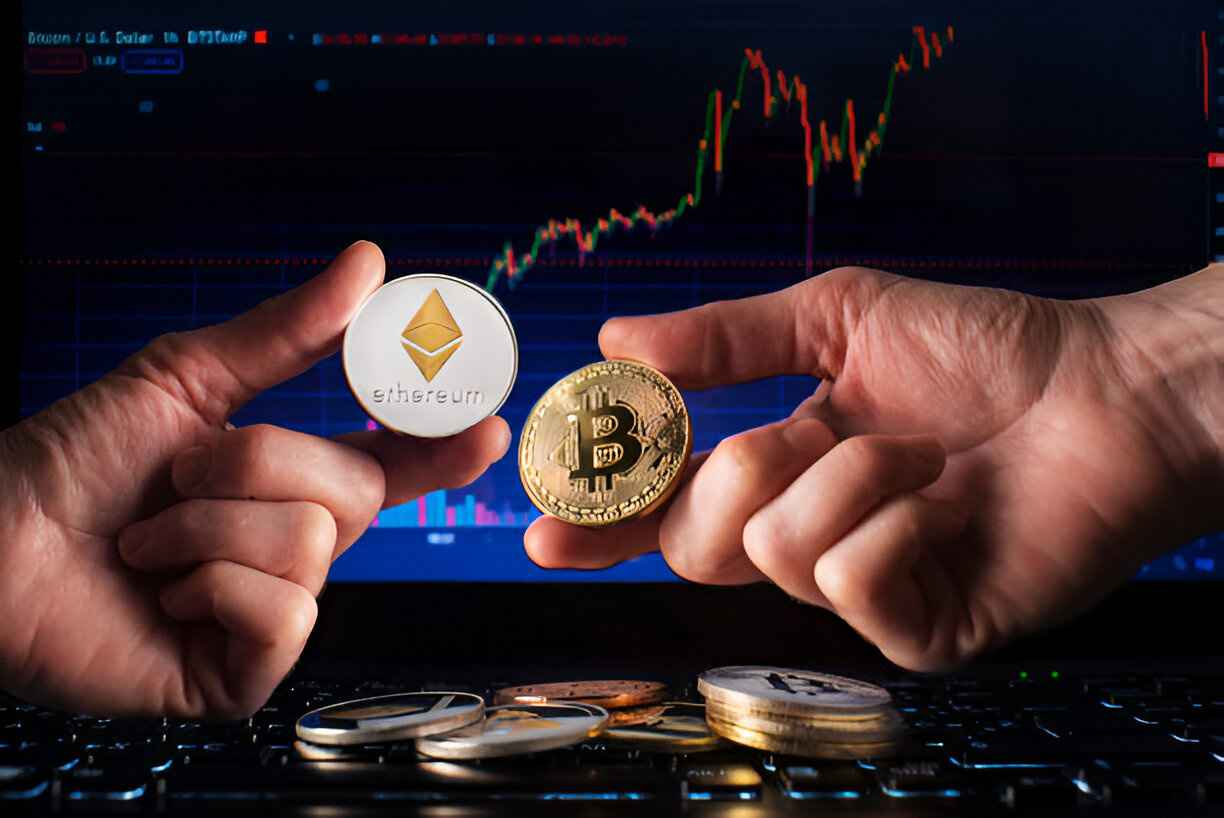
NFTs are digital tokens that live on a blockchain, ensuring uniqueness and provenance. Unlike cryptocurrencies such as Bitcoin and Ethereum, which are fungible (each unit is interchangeable), NFTs are one-of-a-kind or part of a limited edition. Each NFT has a unique identifier, metadata, and ownership history recorded on a blockchain.
NFT Structure and Smart Contracts
NFTs are powered by smart contracts—self-executing agreements stored on a blockchain. These contracts define the rules of ownership and transferability. The most common NFT standard is Ethereum’s ERC-721, which allows for the creation of unique digital assets.
Mathematically, if we define an NFT as a function NN, the ownership at time tt is represented as:
N(t) = H(N_{prev}, U, M)where:
- HH is a cryptographic hash function
- NprevN_{prev} is the previous ownership record
- UU is the unique identifier of the NFT
- MM is the metadata
This ensures immutability, preventing unauthorized changes.
NFTs and the Economics of Digital Scarcity
One of the key value propositions of NFTs is digital scarcity. Unlike traditional digital files that can be copied endlessly, NFTs use blockchain technology to enforce scarcity. This scarcity is a crucial factor in determining an asset’s value.
Let’s take an example:
A digital artist mints 1,000 limited-edition NFTs of their artwork and sells them at an initial price of $100 each. If demand rises and the secondary market price jumps to $500, the total market value of these NFTs becomes:
V = P \times Qwhere:
- VV is total market value
- PP is the current price per NFT ($500)
- QQ is the quantity (1,000)
This model enables artists to directly benefit from increased demand without relying on intermediaries like auction houses.
Comparing Traditional and NFT-Based Ownership
| Feature | Traditional Digital Assets | NFT-Based Digital Assets |
|---|---|---|
| Ownership | Centralized (Platform-owned) | Decentralized (User-owned) |
| Transferability | Restricted | Peer-to-peer via blockchain |
| Authenticity | Easily copied | Verifiable on blockchain |
| Revenue Model | Platform fees & royalties | Smart contract royalties |
Real-World Applications of NFTs in Web3
1. Art and Collectibles
NFTs allow artists to sell digital art without intermediaries, ensuring that they receive a percentage of secondary sales through smart contracts. Major auction houses like Sotheby’s and Christie’s have sold NFT artworks for millions of dollars.
2. Gaming Industry
In traditional gaming, players buy in-game items, but they don’t truly own them. NFTs enable gamers to own, trade, and monetize their digital assets across multiple platforms.
3. Real Estate
Virtual real estate in metaverse platforms like Decentraland and The Sandbox has gained traction, with NFT-based land parcels being bought and sold for thousands of dollars.
Challenges and Criticisms of NFTs
While NFTs offer a new paradigm for digital ownership, they also come with challenges:
- Scalability Issues – Ethereum gas fees can make NFT transactions costly.
- Environmental Concerns – Blockchain networks consume significant energy.
- Market Volatility – NFT prices are highly speculative and fluctuate rapidly.
- Legal Uncertainties – Intellectual property rights and regulatory frameworks are still evolving.
The Future of NFTs and Digital Ownership
Despite challenges, NFTs continue to evolve. Layer-2 scaling solutions, proof-of-stake consensus mechanisms, and cross-chain interoperability are being developed to make NFT transactions more efficient and environmentally friendly. Additionally, industries like ticketing, identity verification, and music royalties are exploring NFT-based models to ensure fair compensation and transparency.
Conclusion
Web3 is fundamentally changing the way we perceive and handle digital ownership. NFTs provide a mechanism for individuals to claim true ownership over digital assets, paving the way for new business models and financial opportunities. While challenges remain, ongoing innovation in blockchain technology is likely to address them, making NFTs a cornerstone of the Web3 economy.