
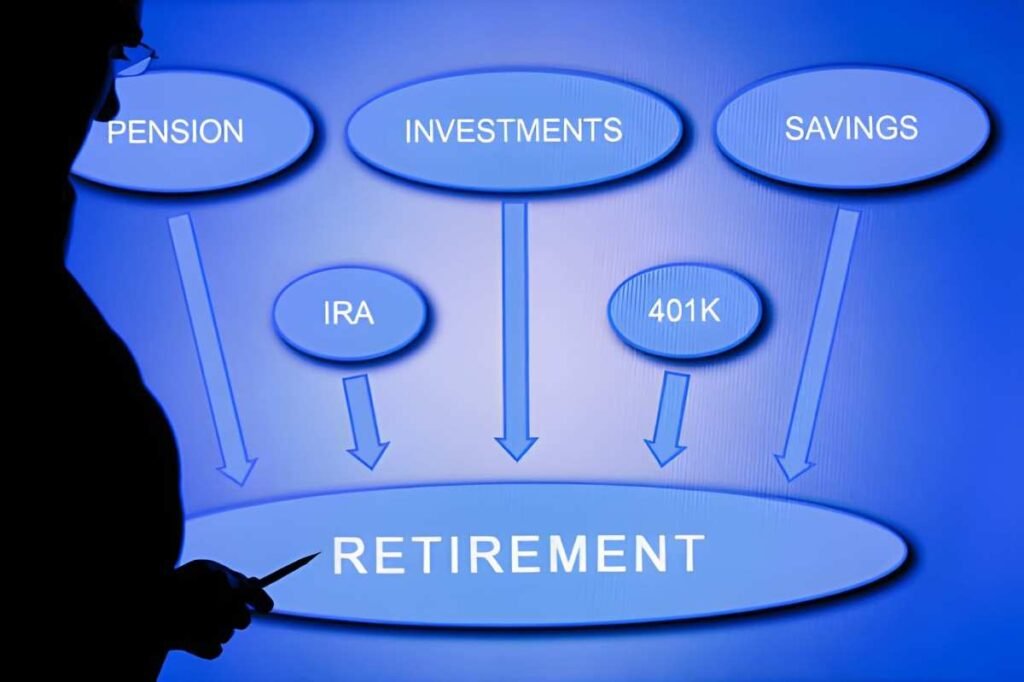
Contributing to a qualified retirement plan is an essential step for building long-term financial security while taking advantage of tax benefits. Qualified retirement plans, governed by the Internal Revenue Code and often covered under ERISA (Employee Retirement Income Security Act), include plans like 401(k)s, 403(b)s, 457 plans, and defined benefit pension plans. Understanding the rules, methods, and strategies for contributing is critical to maximizing retirement savings.
1. Understanding Qualified Retirement Plans
A qualified retirement plan is an employer-sponsored or individual retirement arrangement that meets IRS requirements for favorable tax treatment. Contributions are typically made pre-tax or, in some cases, post-tax (Roth), allowing assets to grow tax-deferred or tax-free.
Types of Qualified Plans
- 401(k) Plan: Most common for private-sector employees; allows employee deferrals and often employer matching contributions.
- 403(b) Plan: Available to employees of public schools and certain tax-exempt organizations.
- 457 Plan: Designed for state and local government employees and some non-profit workers.
- Defined Benefit Pension Plans: Employer promises a fixed retirement benefit, usually based on salary and years of service.
2. Contribution Rules
a. Employee Contributions
- Contributions are made from salary, either pre-tax or Roth (after-tax).
- Annual contribution limits for 2025:
- 401(k), 403(b), 457(b): $22,500 under age 50
- Catch-up contribution (age 50+): $7,500
Example:
An employee earning $80,000 per year contributes 10% of salary to a 401(k):
b. Employer Contributions
- Many plans provide matching contributions, commonly 50% of employee contributions up to 6% of salary.
- Employers may also make profit-sharing contributions or discretionary contributions.
Example:
Employer matches 50% of contributions up to 6% of salary:
c. Total Annual Contribution
- Combined employee and employer contributions cannot exceed the IRS annual limit ($66,000 for 401(k) plans under age 50 in 2025).
3. Methods to Contribute
a. Payroll Deduction
- The most common method; contributions are automatically deducted from each paycheck.
- Simplifies saving and ensures consistency.
b. Lump-Sum Contribution
- Some plans allow a one-time contribution, especially for self-employed individuals using a Solo 401(k) or SEP IRA.
- Useful when there is surplus income or a windfall.
c. Catch-Up Contributions
- Individuals age 50 or older can make additional contributions beyond standard limits to accelerate retirement savings.
4. Tax Considerations
- Pre-Tax Contributions: Reduce taxable income in the contribution year; taxes are paid upon withdrawal.
- Roth Contributions: Made with after-tax dollars; qualified withdrawals are tax-free.
- Employer Contributions: Typically pre-tax, grow tax-deferred until distribution.
Example Calculation
Employee contributes $10,000 pre-tax to a 401(k), employer matches $5,000. Total contribution = $15,000. Taxable income reduces by $10,000 in the current year, while $15,000 grows tax-deferred.
5. Investment Considerations
- Contributions are invested according to plan options: mutual funds, ETFs, target-date funds, or company stock.
- Allocation should reflect retirement horizon, risk tolerance, and market conditions.
- Regularly reviewing and rebalancing investments ensures alignment with long-term goals.
6. Practical Tips for Contributing
- Maximize Employer Match: Contribute at least enough to get the full employer match.
- Start Early: Compounding growth significantly increases retirement savings over time.
- Increase Contributions Gradually: As income rises, increase contribution percentages.
- Consider Tax Diversification: Split contributions between pre-tax and Roth to manage future tax liabilities.
- Monitor Plan Limits: Stay within IRS contribution limits to avoid penalties.
7. Special Considerations for Self-Employed Individuals
- Can contribute to Solo 401(k), SEP IRA, or SIMPLE IRA.
- Responsible for both “employee” and “employer” contributions.
- Contribution limits may be higher than traditional employee plans, allowing accelerated savings.
Example
A self-employed consultant earns $120,000 net income. For 2025:
- Solo 401(k) employee deferral: $22,500
- Employer contribution (25% of net earnings): $30,000
- Total annual contribution: $52,500
Conclusion
Contributing to a qualified retirement plan is a critical component of long-term financial security. By understanding contribution limits, tax benefits, investment options, and employer matching, employees and self-employed individuals can effectively build wealth for retirement. Regular, disciplined contributions combined with prudent investment strategies ensure growth over time, helping participants achieve their retirement goals while optimizing tax advantages.



