
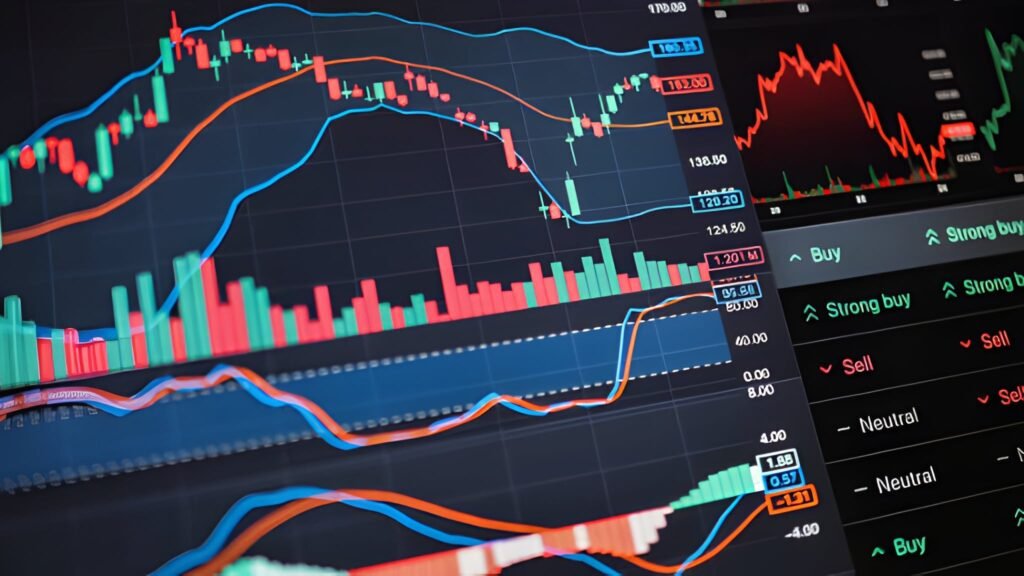
Stock trading algorithms are sophisticated computer programs that automate the entire trading process, from market analysis to order execution. These systems transform trading from human decision-making into a disciplined, data-driven enterprise.
Core Components of Trading Algorithms
Market Data Processing
Algorithms consume and analyze multiple data streams in real-time:
- Price and Volume Data: Tick-by-tick price movements and trade volumes
- Order Book Data: Depth of market showing buy/sell orders at different price levels
- Fundamental Data: Earnings reports, economic indicators, corporate actions
- Alternative Data: Satellite imagery, social media sentiment, credit card transactions
Signal Generation Engine
This is the brain of the algorithm where trading decisions originate:
class SignalGenerator:
    def generate_signals(self, market_data):
        # Technical indicators
        rsi = self.calculate_rsi(market_data.prices)
        macd = self.calculate_macd(market_data.prices)

        # Statistical models
        volatility = self.calculate_volatility(market_data.prices)
        correlation = self.calculate_correlation(market_data)

        # Machine learning predictions
        price_prediction = self.ml_model.predict(market_data.features)

        return self.combine_signals(rsi, macd, volatility, correlation, price_prediction)
Risk Management System
Every algorithm incorporates multiple layers of risk control:
- Position size limits based on portfolio percentage
- Maximum daily loss thresholds
- Sector and concentration limits
- Volatility-adjusted position sizing
Major Algorithm Categories
Execution Algorithms
Designed to minimize market impact and transaction costs:
- VWAP (Volume-Weighted Average Price): Executes orders in proportion to market volume
- TWAP (Time-Weighted Average Price): Slices orders evenly over time
- Implementation Shortfall: Minimizes difference between decision price and execution price
- Dark Pool Aggregation: Seeks hidden liquidity across multiple dark pools
Market Making Algorithms
Provide liquidity by continuously quoting bid and ask prices:
class MarketMaker:
    def update_quotes(self, inventory, volatility):
        # Calculate optimal spread based on market conditions
        spread = self.calculate_spread(volatility, inventory)

        # Adjust quotes based on current inventory
        mid_price = self.get_mid_price()
        bid_price = mid_price - (spread / 2) * self.inventory_adjustment(inventory)
        ask_price = mid_price + (spread / 2) * self.inventory_adjustment(inventory)

        return Quote(bid_price, ask_price)
Statistical Arbitrage Algorithms
Identify and exploit pricing relationships between securities:
- Pairs Trading: Find two correlated stocks, go long the underperformer and short the outperformer
- Mean Reversion: Bet that prices will revert to their historical average
- Index Arbitrage: Exploit price differences between ETFs and their underlying stocks
Momentum and Trend-Following Algorithms
Capitalize on persistent price movements:
- Breakout Strategies: Enter when price moves beyond defined resistance/support levels
- Moving Average Crossovers: Buy when short-term average crosses above long-term average
- Time Series Momentum: Trade based on intermediate-term price trends
The Algorithm Development Process
Research and Backtesting
def develop_strategy(historical_data):
    # 1. Hypothesis Formation
    hypothesis = "Stocks with high RSI and increasing volume will continue rising"

    # 2. Feature Engineering
    features = calculate_technical_indicators(historical_data)

    # 3. Strategy Logic
    signals = generate_trading_signals(features)

    # 4. Backtesting
    results = backtest_engine.run(historical_data, signals)

    # 5. Performance Analysis
    sharpe_ratio = calculate_sharpe(results.returns)
    max_drawdown = calculate_max_drawdown(results.equity_curve)

    return Strategy(results, sharpe_ratio, max_drawdown)
Key Backtesting Considerations
- Survivorship Bias: Including only currently existing stocks
- Look-Ahead Bias: Accidentally using future information
- Transaction Costs: Realistic modeling of commissions and slippage
- Market Impact: Accounting for how large orders affect prices
Machine Learning Integration
Supervised Learning Approaches
- Classification: Predict direction of next price movement (up/down)
- Regression: Predict exact future price levels
- Ensemble Methods: Combine multiple models for better predictions
Feature Engineering for ML
def create_features(market_data):
    features = {}

    # Technical features
    features['rsi'] = calculate_rsi(market_data.prices, period=14)
    features['bollinger_bands'] = calculate_bollinger_bands(market_data.prices)
    features['volume_profile'] = calculate_volume_profile(market_data.volume)

    # Statistical features
    features['volatility'] = calculate_rolling_volatility(market_data.prices)
    features['skewness'] = calculate_returns_skewness(market_data.returns)

    # Market microstructure features
    features['order_imbalance'] = calculate_order_imbalance(market_data.order_book)
    features['spread'] = calculate_bid_ask_spread(market_data.quotes)

    return features
Risk Management Framework
Pre-Trade Risk Controls
- Maximum order size limits
- Price collars (cannot trade too far from current price)
- Quantity limits per security
- Concentration limits per sector
Real-Time Risk Monitoring
class RiskManager:
    def __init__(self):
        self.max_daily_loss = 0.02  # 2% maximum daily loss
        self.position_limits = {'AAPL': 1000, 'GOOGL': 500}
        self.var_limit = 100000  # Value at Risk limit

    def check_order(self, order, portfolio):
        if self.daily_pnl < -self.max_daily_loss:
            return False, "Daily loss limit exceeded"

        if order.symbol in self.position_limits:
            current_position = portfolio.positions.get(order.symbol, 0)
            if abs(current_position + order.quantity) > self.position_limits[order.symbol]:
                return False, "Position limit exceeded"

        return True, "Order approved"
Order Execution Process
Smart Order Routing
class SmartOrderRouter:
    def route_order(self, order):
        # Analyze multiple execution venues
        venues = self.analyze_venues(order)

        # Consider factors like:
        # - Current quotes and depth
        # - Historical fill rates
        # - Fee structures
        # - Latency to each venue

        best_venue = self.select_best_venue(venues, order)
        return self.send_to_venue(order, best_venue)
Execution Tactics
- Iceberg Orders: Display only portion of total order size
- Time Slicing: Break large orders into smaller pieces
- Liquidity Seeking: Hunt for hidden liquidity across venues
- Dark Pool Access: Access non-displayed liquidity sources
Performance Measurement
Key Metrics
- Sharpe Ratio: Risk-adjusted returns
- Maximum Drawdown: Largest peak-to-trough decline
- Win Rate: Percentage of profitable trades
- Profit Factor: Gross profits divided by gross losses
- Alpha Generation: Returns above market benchmark
Attribution Analysis
- Which signals contributed most to performance?
- How did market regime affect strategy performance?
- What was the impact of transaction costs?
Common Challenges and Solutions
Overfitting
- Use walk-forward analysis instead of in-sample optimization
- Implement robust feature selection
- Regularize machine learning models
- Validate on out-of-sample data
Market Regime Changes
- Implement regime detection algorithms
- Use adaptive parameters that change with market conditions
- Maintain multiple strategies for different environments
Technology Risks
- Redundant systems and fail-safes
- Comprehensive monitoring and alerting
- Regular stress testing and disaster recovery drills
Real-World Example: Mean Reversion Algorithm
class MeanReversionAlgorithm:
    def __init__(self):
        self.lookback_period = 20
        self.entry_threshold = 2.0  # Standard deviations
        self.exit_threshold = 0.5

    def generate_signal(self, price_series):
        # Calculate rolling mean and standard deviation
        rolling_mean = price_series.rolling(self.lookback_period).mean()
        rolling_std = price_series.rolling(self.lookback_period).std()

        # Calculate z-score (current price relative to history)
        z_score = (price_series.iloc[-1] - rolling_mean.iloc[-1]) / rolling_std.iloc[-1]

        # Generate signals
        if z_score > self.entry_threshold:
            return 'SELL'  # Overbought - price likely to revert down
        elif z_score < -self.entry_threshold:
            return 'BUY'   # Oversold - price likely to revert up
        elif abs(z_score) < self.exit_threshold:
            return 'EXIT'  # Close position when near mean
        else:
            return 'HOLD'
Evolution and Future Trends
Current Innovations
- Deep Learning: Neural networks for complex pattern recognition
- Reinforcement Learning: Algorithms that learn optimal trading policies through experience
- Natural Language Processing: Analyzing news, social media, and earnings calls
- Alternative Data Integration: Using non-traditional data sources for edge
Emerging Challenges
- Increasing Competition: More participants using similar strategies
- Regulatory Scrutiny: Growing oversight of algorithmic trading
- Market Impact: Large-scale algorithmic trading affecting market dynamics
- Ethical Considerations: Fairness and transparency in automated systems
Stock trading algorithms represent the intersection of finance, technology, and data science. They have transformed markets by increasing efficiency, liquidity, and accessibility while introducing new complexities and risks. Understanding how these algorithms work is essential for anyone participating in modern financial markets, from individual investors to institutional traders.


