
Introduction
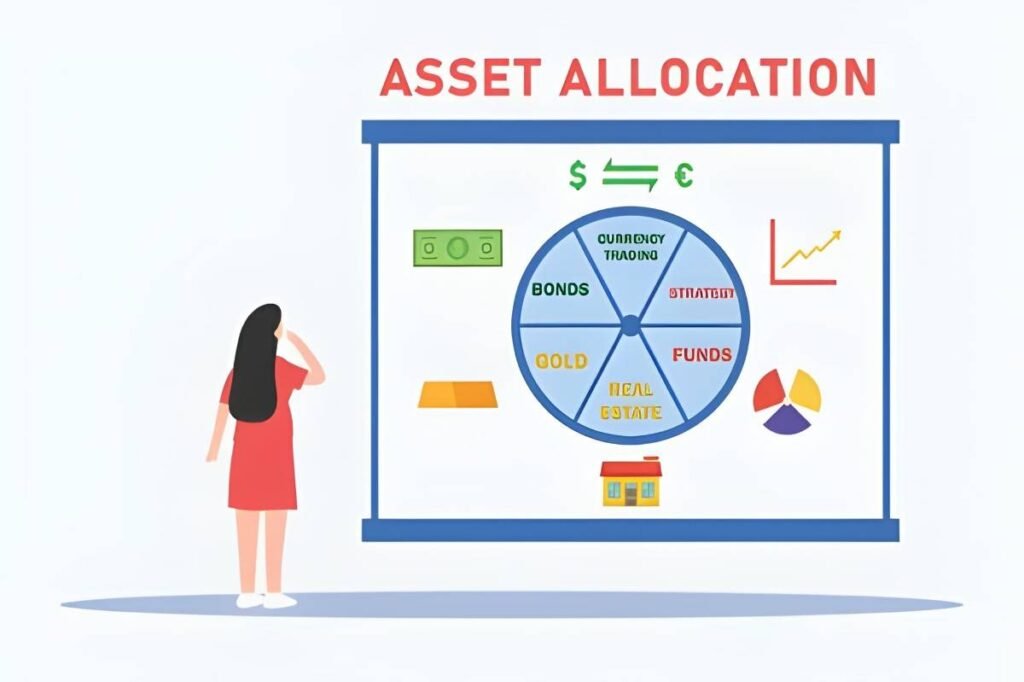
Asset allocation is a critical component of portfolio management, determining how investments are distributed among asset classes such as equities, bonds, and cash. Choosing the right asset allocation model aligns your portfolio with financial goals, risk tolerance, and investment horizon. A well-structured allocation strategy balances potential returns against risk, reduces volatility, and provides a framework for disciplined investing.
Understanding Asset Allocation Models
Asset allocation models provide guidelines for dividing investments among asset classes to achieve desired financial outcomes. The choice of model depends on an investor’s objectives, time horizon, and risk tolerance. Broadly, models can be categorized as conservative, moderate, or aggressive.
Key Asset Classes
- Equities (Stocks): High growth potential but higher volatility.
- Fixed Income (Bonds): Provide stability, regular income, and lower risk.
- Cash and Cash Equivalents: Include money market funds and short-term Treasury bills, offering liquidity and safety.
- Alternative Investments: Real estate, commodities, or private equity can enhance diversification.
Popular Asset Allocation Models
1. Conservative Model
Designed for risk-averse investors or those near retirement, emphasizing capital preservation and income generation.
| Asset Class | Allocation |
|---|---|
| Bonds | 60% |
| Equities | 30% |
| Cash / Money Market | 10% |
Example Projection: A $100,000 portfolio with 60% in bonds (6% average annual return), 30% in equities (8% return), and 10% in cash (2% return):
\text{Expected Portfolio Return} = 0.6 \times 0.06 + 0.3 \times 0.08 + 0.1 \times 0.02 = 0.064 = 6.4%This model prioritizes stability over maximum growth.
2. Moderate Model
Balances growth and stability for investors with medium risk tolerance and a medium-term investment horizon.
| Asset Class | Allocation |
|---|---|
| Equities | 50% |
| Bonds | 40% |
| Cash / Money Market | 10% |
Expected portfolio return calculation with 50% equities at 8%, 40% bonds at 6%, and 10% cash at 2%:
\text{Expected Return} = 0.5 \times 0.08 + 0.4 \times 0.06 + 0.1 \times 0.02 = 0.062 + 0.024 + 0.002 = 8.8%This allocation offers moderate growth while retaining some stability.
3. Aggressive Model
Geared toward long-term growth for investors with high risk tolerance and a longer investment horizon.
| Asset Class | Allocation |
|---|---|
| Equities | 80% |
| Bonds | 15% |
| Cash / Money Market | 5% |
Example Expected Return:
\text{Expected Return} = 0.8 \times 0.08 + 0.15 \times 0.06 + 0.05 \times 0.02 = 0.064 + 0.009 + 0.001 = 7.4%Although volatility is higher, potential long-term gains can be substantial.
Factors to Consider When Choosing an Asset Allocation Model
1. Risk Tolerance
- Conservative investors prioritize capital preservation and income stability.
- Moderate investors balance growth and stability.
- Aggressive investors accept higher volatility for potential higher returns.
2. Time Horizon
- Longer horizons allow greater equity exposure due to the ability to recover from market fluctuations.
- Shorter horizons favor bonds and cash to protect capital.
3. Financial Goals
- Retirement planning may favor stable income-generating assets as retirement approaches.
- Wealth accumulation objectives may support aggressive equity-heavy models.
4. Diversification
- Include multiple asset classes to reduce risk through correlation benefits.
- Consider global equities, corporate and government bonds, and alternative investments for additional diversification.
5. Rebalancing
- Periodically adjust allocations to maintain the target model.
- Rebalancing prevents drift from the desired risk profile and captures gains in over-performing assets.
Example Portfolio Implementation
For a moderate investor with a $200,000 portfolio:
| Asset Class | Allocation | Investment Amount |
|---|---|---|
| Equities | 50% | $100,000 |
| Bonds | 40% | $80,000 |
| Cash / Money Market | 10% | $20,000 |
Assuming annual returns of 8% for equities, 6% for bonds, and 2% for cash, the expected portfolio return is 8.8%, generating approximately $17,600 in the first year:
200,000 \times 0.088 = 17,600This demonstrates how allocation impacts growth and risk.
Tips for Effective Asset Allocation
- Assess risk tolerance and time horizon carefully.
- Diversify within each asset class to reduce individual security risk.
- Monitor performance and rebalance annually or when allocations drift by more than a specified percentage.
- Consider tax-efficient allocation strategies, such as holding bonds in tax-advantaged accounts.
- Combine asset allocation with financial planning for retirement, education, or other long-term goals.
Conclusion
Choosing the right asset allocation model is foundational to successful investing. Conservative, moderate, and aggressive models each serve distinct purposes based on risk tolerance, time horizon, and financial goals. Diversification, periodic rebalancing, and integration with overall financial planning ensure that the portfolio remains aligned with objectives while managing risk. By carefully selecting and implementing an asset allocation model, investors can optimize returns, control volatility, and achieve long-term financial success.



