
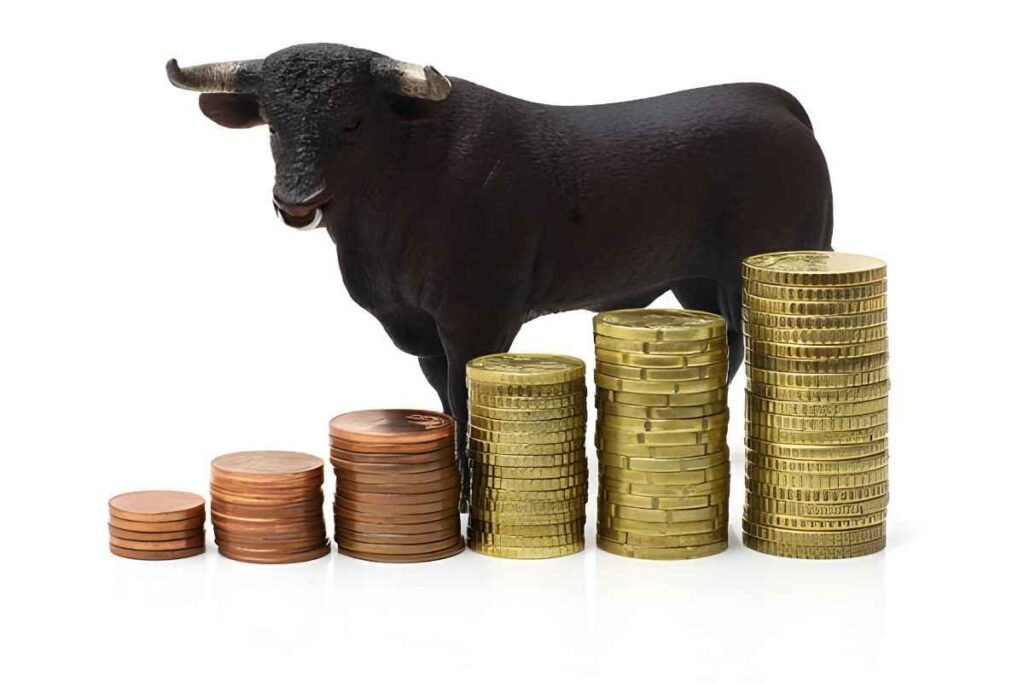
Bull markets inspire confidence. Rising equity prices and expanding valuations often encourage investors to increase exposure to growth-oriented assets. Yet every bull market eventually matures, and failing to adapt asset allocation as conditions shift can expose portfolios to significant downside risk. Adjusting allocation at the end of a bull market requires balancing capital preservation with long-term growth, incorporating defensive strategies, and managing liquidity effectively.
This article explores how investors can recognize late-cycle signals, rebalance portfolios, and reposition assets for resilience when a bull market shows signs of fatigue.
Recognizing the End of a Bull Market
Although predicting the exact peak of a bull market is impossible, investors can monitor late-cycle indicators:
- Valuation Extremes: Price-to-earnings ratios significantly above historical averages
- Monetary Tightening: Rising interest rates and reduced central bank liquidity
- Economic Slowdown: Slower GDP growth, declining corporate earnings, or weakening consumer demand
- Market Breadth: Fewer stocks driving index gains while others underperform
- Investor Sentiment: Excessive optimism and speculative behavior, often seen in retail inflows
These indicators suggest an elevated risk of correction or transition into a bear market.
Strategic Principles for End-of-Bull Market Allocation
- Preserve Capital: Shift exposure from high-volatility assets to more stable ones.
- Enhance Liquidity: Maintain cash and near-cash instruments to seize opportunities in downturns.
- Diversify Across Asset Classes: Reduce correlation risk by broadening exposure to bonds, commodities, and alternatives.
- Manage Duration and Credit Risk: Position fixed-income holdings to benefit from interest rate changes without excessive risk.
- Protect Against Inflation: Use assets like TIPS, commodities, or real assets if inflation remains a risk.
Adjusting Equity Exposure
Equities typically drive growth during a bull market but also experience steep losses in downturns. Adjustments include:
- Reduce Cyclical Stocks: Trim holdings in sectors like consumer discretionary or industrials, which are sensitive to economic cycles.
- Increase Defensive Sectors: Tilt toward healthcare, utilities, and consumer staples.
- Favor Dividend-Paying Stocks: Companies with strong balance sheets and stable cash flows offer downside protection.
- Consider Low-Volatility ETFs: These funds aim to reduce portfolio drawdowns while maintaining equity exposure.
Example: Portfolio Reallocation of Equities
| Allocation | Early Bull Market | End of Bull Market | Notes |
|---|---|---|---|
| Growth Stocks | 45% | 25% | Reduce exposure to high-valuation equities |
| Defensive Stocks | 20% | 35% | Increase stability |
| International Equities | 15% | 15% | Maintain diversification |
| Dividend Stocks | 20% | 25% | Enhance cash flow and resilience |
Increasing Bond Exposure
Bonds serve as a counterbalance to equities in downturns. At the end of a bull market:
- Shift Toward High-Quality Bonds: Prioritize U.S. Treasuries and investment-grade corporate bonds.
- Shorten Duration: Reduce exposure to long-term bonds if interest rates are rising.
- Consider Inflation-Protected Securities: Treasury Inflation-Protected Securities (TIPS) provide a hedge against persistent inflation.
Illustration of Bond Allocation Change
Investor with $500,000 portfolio:
- Early bull market: 15% in bonds = $75,000
- End of bull market: 30% in bonds = 500,000 \times 0.30 = 150,000
Doubling bond allocation reduces volatility while preserving income.
Building Cash and Short-Term Assets
Cash may underperform in bull markets, but at cycle peaks it becomes a strategic asset. Benefits include:
- Provides liquidity for buying opportunities after market corrections
- Reduces drawdowns during downturns
- Covers living expenses or withdrawals without liquidating long-term holdings
Recommended range: 10–20% of portfolio in cash or short-term instruments (money market funds, T-bills).
Alternative Assets and Commodities
- Gold and Precious Metals: Hedge against volatility and currency risk
- Real Estate Investment Trusts (REITs): Provide income and diversification, though sensitive to interest rates
- Commodities: Offer inflation protection, though more volatile
- Hedge Funds or Private Equity: May offer uncorrelated returns, but access and fees vary
Case Study: End-of-Bull Market Reallocation
Investor A, age 55, $1,000,000 portfolio:
| Asset Class | Before (Bull Market Allocation) | After (End-of-Bull Market Allocation) |
|---|---|---|
| Equities | 70% ($700,000) | 45% ($450,000) |
| Bonds | 20% ($200,000) | 35% ($350,000) |
| Cash | 5% ($50,000) | 15% ($150,000) |
| Alternatives | 5% ($50,000) | 5% ($50,000) |
This reallocation reduces exposure to volatility, increases income, and ensures liquidity.
Behavioral Considerations
- Avoid Market Timing: Shifting entirely to cash risks missing late-stage gains.
- Rebalance Gradually: Adjust allocation over months rather than all at once.
- Stay Disciplined: Emotional reactions to market noise often lead to poor outcomes.
- Use Dollar-Cost Averaging: Transition investments steadily to reduce timing risk.
Mathematical Framework for Allocation Adjustment
A simplified allocation adjustment model considers risk tolerance and market stage:
\text{Adjusted Equity Allocation} = \text{Base Equity Allocation} \times (1 - \text{Market Risk Factor})Example:
- Base equity allocation = 60%
- Market risk factor at late-cycle = 0.25
- Adjusted equity allocation = 60% × (1 − 0.25) = 45%
This model reduces equity exposure while keeping some growth potential.
Conclusion
The end of a bull market requires thoughtful portfolio adjustments. Investors who reallocate assets toward defensive equities, high-quality bonds, cash, and select alternatives position themselves to weather volatility while preserving long-term growth potential.
The key is balance: maintain enough exposure to benefit from residual market gains, but increase protection against inevitable downturns. Gradual reallocation, disciplined risk management, and a focus on capital preservation transform late-cycle uncertainty into an opportunity for strategic resilience.



