
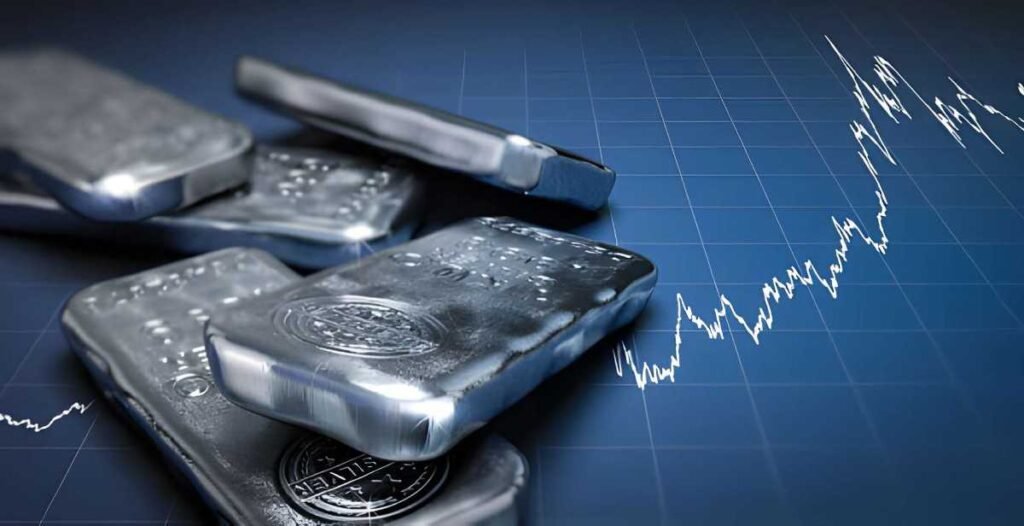
In the realm of hard assets, gold often commands the spotlight, celebrated as the ultimate store of value and hedge against chaos. But as a finance professional who values diversification and looks for asymmetric risk opportunities, I find the strategy of buying and holding silver to be a compelling, if more complex, proposition. Silver is not merely “poor man’s gold”; it is a unique asset that straddles the worlds of monetary metal and industrial commodity. A buy and hold strategy for silver is not a passive endeavor. It is a calculated bet on a confluence of factors: industrial demand, monetary debasement, and its historical role as a undervalued precious metal. It requires a specific mindset and a clear understanding of its volatile, dual nature.
The buy and hold strategy for physical silver involves acquiring the metal in bullion form—typically coins or bars—with the intention of storing it securely for a long-term period, typically a decade or more. The objective is not to trade its short-term price fluctuations but to preserve purchasing power and potentially generate significant returns should the fundamental thesis driving its value come to fruition. Unlike a dividend-producing stock or a rent-generating property, silver is a non-yielding asset. Its return is generated solely through capital appreciation. Therefore, the entire thesis rests on the belief that its price will be substantially higher in the future due to a combination of supply constraints, demand growth, and a decline in the value of fiat currencies.
The Dual Nature of Silver: Industrial and Monetary Demand
This is the critical concept that every silver investor must internalize. Silver’s value is derived from two distinct engines, and their dynamics are not always aligned.
1. The Industrial Metal (The “Consumable” Thesis):
Approximately 50-60% of annual silver demand comes from industrial applications. This is what fundamentally differentiates it from gold.
- Green Energy Transition: Silver is the most conductive metal on earth. It is an irreplaceable component in photovoltaic cells for solar panels. Global solar capacity expansion is a massive, structural driver of silver demand.
- Electronics: It is used in virtually every electrical switch, circuit board, and smartphone due to its superior conductivity.
- Automotive: The rise of electric vehicles (EVs), which use far more silver than internal combustion engines, represents another growing demand source.
This industrial demand creates a “consumption” dynamic. Unlike gold, which is primarily stored, a portion of the silver supply is used and not recovered. This draws down above-ground inventories, potentially creating a supply squeeze if production cannot keep pace.
2. The Monetary Metal (The “Store of Value” Thesis):
Throughout history, silver has been money. While it long ago lost its official role in the monetary system, it retains its value as a hedge against:
- Inflation: When central banks print currency, the value of tangible, scarce assets tends to rise. Silver preserves purchasing power over long periods.
- Currency Devaluation: It is an asset outside the traditional financial system, with no counterparty risk. You own it outright.
- Geopolitical Uncertainty: It is a portable, valuable asset that can be held privately.
The monetary premium in silver’s price fluctuates with fear and uncertainty in the broader markets.
The Investment Thesis: Why Buy and Hold Silver?
The strategy is built on several converging beliefs.
1. The Gold/Silver Ratio: This is a key metric watched by precious metals investors. It measures how many ounces of silver it takes to buy one ounce of gold.
\text{Gold/Silver Ratio} = \frac{\text{Price of Gold per Ounce}}{\text{Price of Silver per Ounce}}This ratio has historically averaged between 40:1 and 60:1 over the last century. When the ratio is significantly higher than its historical average—for instance, pushing to 80:1 or even 100:1—it suggests that silver is historically cheap relative to gold. A buy and hold investor might accumulate silver when the ratio is high, anticipating a “mean reversion” where the ratio falls, causing silver to outperform gold. This is a valuation play within the precious metals space.
2. The Supply/Demand Squeeze Thesis: As outlined, relentless industrial demand consumes silver. On the supply side, primary silver mining is often uneconomical at low prices; over 70% of supply comes as a byproduct of mining for other metals like zinc, lead, and copper. This means silver supply is not easily ramped up to meet demand. A sustained surge in industrial demand could theoretically create a physical shortage, driving prices significantly higher.
3. The Asymmetric Risk Profile: An investor might allocate a small portion of their portfolio (e.g., 5-10%) to physical silver. The potential upside, if a perfect storm of high industrial demand and monetary fear occurs, could be multiples of the current price. The maximum downside, barring a collapse of civilization, is theoretically the cost of production, which provides a floor. This asymmetric risk—a large potential upside with a defined, limited downside—is mathematically attractive.
The Practicalities and Drawbacks of Holding Physical Silver
This strategy is not without significant costs and complexities.
1. The Cost of Ownership:
- Premium Over Spot: When you buy a silver coin or bar, you pay a premium over the spot price of silver to cover the minting, distribution, and dealer markup. This premium can range from 10% to 20% for common coins like American Eagles. This is an immediate sunk cost.
- Storage and Insurance: Physical silver is bulky and valuable. Storing it securely in a home safe or, more wisely, a private vaulting service incurs costs. It must also be insured against theft or loss.
- Liquidity and Spread: While liquid, you will likely sell back to a dealer at a price below the spot price. The bid-ask spread is a transaction cost.
Example of Cost Drag:
You buy 100 ounces of silver at a spot price of \text{\$25} per ounce.
- Purchase Price (with 15% premium): 100 \times \text{\$25} \times 1.15 = \text{\$2,875}
- Annual Storage/Insurance Cost: \text{\$100}
If you hold for 5 years, your total cost basis is \text{\$2,875} + (\text{\$100} \times 5) = \text{\$3,375}.
For you to break even, the spot price must rise to \frac{\text{\$3,375}}{100} = \text{\$33.75} per ounce.
This means the spot price must increase by \frac{\text{\$33.75} - \text{\$25.00}}{\text{\$25.00}} \times 100 = 35\% just for you to break even. This high hurdle rate is a critical consideration.
2. The Volatility: Silver is far more volatile than gold. Its smaller market and industrial nature make its price prone to wild swings. A buy and hold investor must have the stomach to see their holding value drop 30% or more without panic selling.
| Aspect | Pros | Cons |
|---|---|---|
| Diversification | Low correlation to stocks & bonds; hedge against inflation. | No yield; carries opportunity cost of capital. |
| Upside Potential | High if industrial/monetary thesis plays out; asymmetric risk. | High volatility can lead to significant paper losses. |
| Tangibility | Direct ownership without counterparty risk. | Storage, insurance, and transaction costs erode returns. |
| Strategic Value | Can be accumulated when Gold/Silver ratio is historically high. | Complex valuation; influenced by economic cycles. |
Implementation: How to Approach a Buy and Hold Silver Strategy
If you proceed, do so strategically.
- Allocate Wisely: Treat silver as a strategic allocation within a broader, diversified portfolio. A 5-10% allocation to precious metals is a common rule of thumb.
- Focus on Bullion: Stick to recognized government mint coins (American Eagles, Canadian Maples, Austrian Philharmonics) or bars from reputable refiners (Johnson Matthey, Engelhard, PAMP). Avoid numismatic coins whose value is based on collectibility, not metal content.
- ** Dollar-Cost Average:** Given the volatility, invest a fixed dollar amount at regular intervals (e.g., quarterly). This smooths out your entry price over time.
- Secure Storage: Prioritize security. A high-quality home safe for a small allocation or a professional, non-bank vaulting service for larger holdings is essential.
- Consider Alternatives: For some investors, holding a silver ETF like the iShares Silver Trust (SLV) can be more practical. It offers liquidity and avoids storage costs, but it introduces counterparty risk (you own a share of a trust, not the metal itself) and may not satisfy the “hard asset” desire that drives many to silver.
The decision to buy and hold silver is a strategic one, rooted in a specific worldview that anticipates monetary instability and believes in the growing industrial utility of the metal. It is not a get-rich-quick scheme but a long-term insurance policy and a speculative bet on a supply-demand imbalance. For the investor who understands its unique dynamics, can stomach its volatility, and is willing to bear its carrying costs, silver can serve as a potent, if unconventional, component of a truly robust and diversified wealth preservation strategy.



