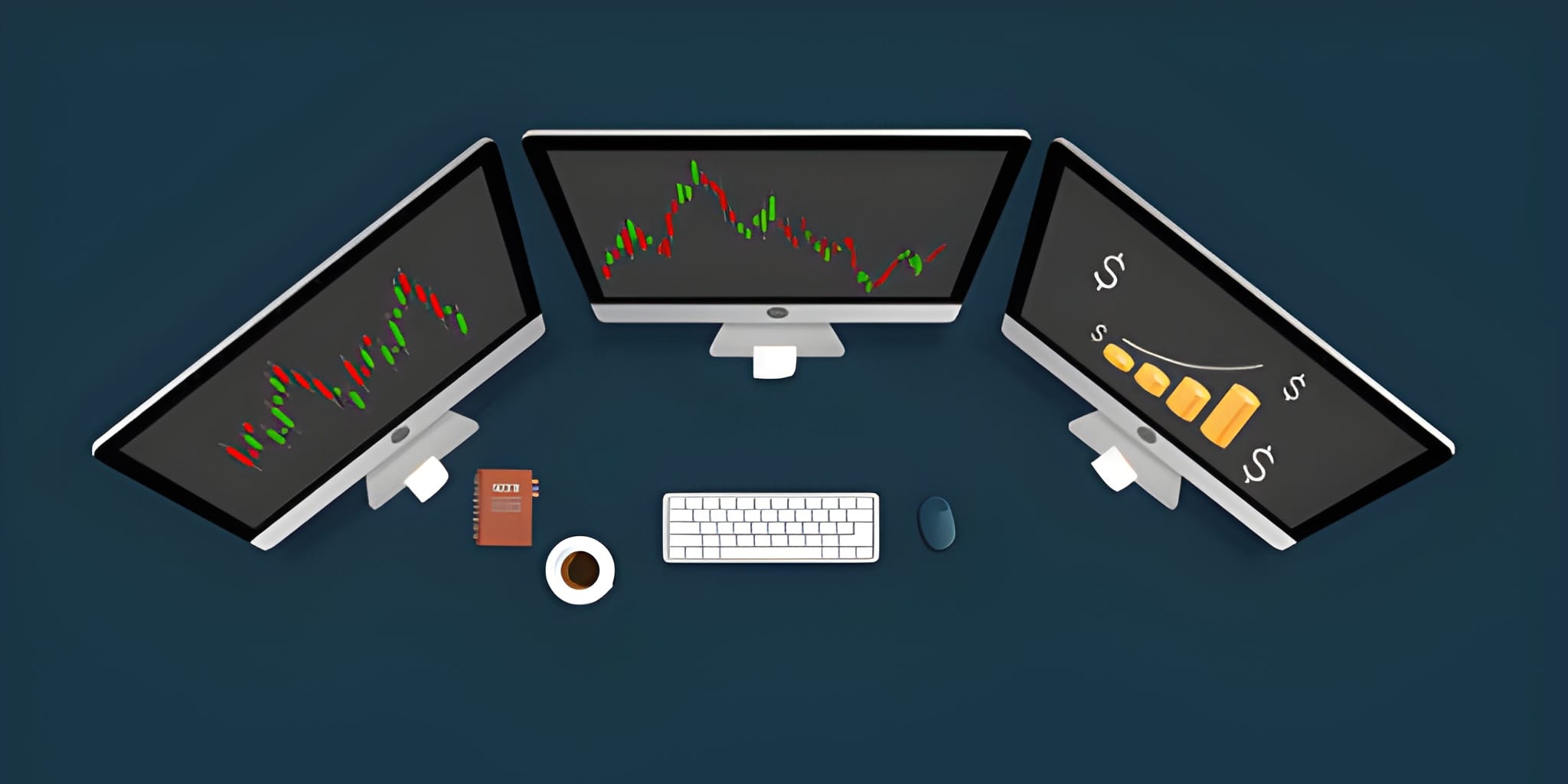
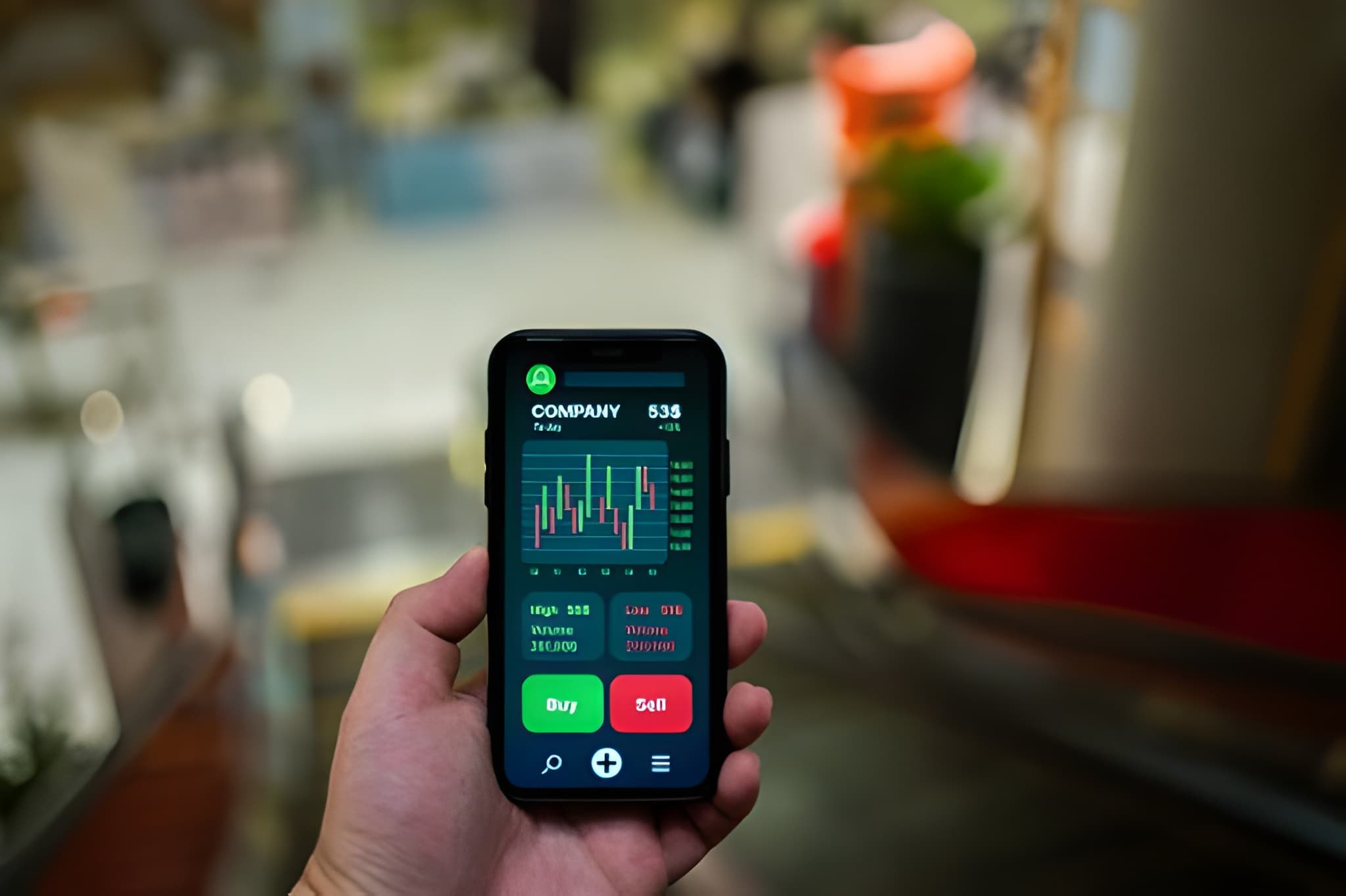
In the foreign exchange market, the quest for a 100-pip move represents a significant psychological and financial milestone for day traders. While many market participants satisfy themselves with small "scalps" of 5 to 10 pips, the 100-pip strategy shifts the focus from high-frequency noise to significant intraday trends. Capturing this "century move" requires more than just a passing glance at a chart; it demands an intimate understanding of market structure, economic catalysts, and the specific volatility profiles of individual currency pairs.
A pip, or Percentage in Point, is the smallest unit of price change in a currency pair, representing the fourth decimal place in most major pairs (0.0001). Extracting 100 units of this movement in a single session is not an everyday occurrence for major pairs like EUR/USD, which often have an Average True Range (ATR) of 60 to 80 pips. Consequently, success with this strategy relies on the careful selection of high-volatility environments and the patience to hold through minor intraday fluctuations that would frighten less disciplined traders.
The Anatomy of a 100-Pip Move
To capture 100 pips, a trader must first differentiate between random market oscillations and directional surges. Market movements are typically driven by institutional order flow, which responds to macroeconomic data releases, central bank commentary, or shifts in risk appetite. A 100-pip day is almost always characterized by a "trending" market structure, where the price makes consistent higher highs or lower lows with minimal deep retracements.
Understanding the context of the daily range is the first step. If a currency pair typically moves 150 pips a day, a 100-pip target is realistic. If it only moves 40 pips, seeking 100 pips is a mathematical impossibility that leads to over-leveraging and eventual account depletion. We must align our targets with the reality of the asset's current volatility.
Pair Selection: Hunting Volatile Assets
Not all currency pairs are created equal when it comes to range. For the 100 pips strategy, traders typically ignore "quiet" pairs like EUR/CHF or even the highly liquid but often stable EUR/USD. Instead, the focus shifts to "Cross Pairs" or pairs involving the Japanese Yen and the British Pound, which are known for their explosive volatility.
GBP/JPY (The Dragon)
Known for massive intraday swings. It often exceeds a 150-pip daily range, making the 100-pip target achievable frequently. It is highly sensitive to global risk sentiment.
EUR/JPY
Similar to the GBP/JPY but slightly more measured. It provides excellent trend-following opportunities when the Eurozone and Japan have diverging monetary policies.
GBP/USD (The Cable)
A classic choice for volatility. During the London/New York overlap, this pair can easily traverse 100 pips on the back of US employment data or UK inflation reports.
The Technical Engine: Indicators and Filters
A professional 100 pips strategy does not rely on a single indicator. It uses a confluence of factors to confirm that a "Move of Substance" is beginning. The primary goal is to identify a breakout from a consolidation zone that has the backing of volume and momentum.
1. Average True Range (ATR)
The ATR does not tell us direction, but it tells us "capability." If the 14-day ATR is below 100, we know that seeking a 100-pip move is an aggressive bet. We look for pairs where the ATR is expanding, indicating that volatility is returning to the market.
2. Moving Average Convergence Divergence (MACD)
We use the MACD on a 1-hour timeframe to identify the strength of the trend. A 100-pip move requires significant momentum. If the MACD lines are crossing and the histogram is expanding, it confirms that the "push" is supported by increasing momentum.
3. Support and Resistance Pivots
100 pips is a long distance in intraday terms. The price will likely encounter several levels of support or resistance. We use daily Pivot Points to identify where the price might stall. If the distance between the entry point and the next major "R2" or "S2" pivot is 100 pips, we have a clear runway for the trade.
The Execution Framework: Entry and Exit
The most successful entry for this strategy is the London Open Breakout. The London session provides the highest liquidity and often sets the tone for the entire day. By identifying the high and low of the pre-London session (the Asian session), traders can wait for a breakout that signals institutional intent.
| Execution Step | Action Detail | Confirmation Signal |
|---|---|---|
| Consolidation Identification | Identify the range of the Asian session (last 4 hours). | Range must be narrower than 40 pips. |
| Entry Trigger | Buy 5 pips above the high or Sell 5 pips below the low. | Volume must be 1.5x higher than previous hour. |
| Stop Loss Placement | Place stop at the midpoint of the Asian range. | Ensures a roughly 1:3 reward-to-risk ratio. |
| Profit Target | Set at exactly 100 pips from entry. | Verify no major news event in the next 4 hours. |
The Mathematics of Pip Value and Margin
Trading for 100 pips requires a different risk-to-reward calculation than scalping. Because the stop loss is wider (perhaps 30 to 40 pips), the position size must be adjusted to ensure that a single loss does not damage the account's health. We follow the strict rule of risking no more than 1% to 2% of equity per trade.
Account Balance: $10,000
Risk Percentage: 1% ($100)
Stop Loss Distance: 40 pips
Value per Pip Allowed: $100 / 40 = $2.50 per pip
Standard Lot Value (USD): $10 per pip (1.0 lot)
Final Position Size: 0.25 Lots (2.5 mini lots)
By using this calculation, the trader remains calm even if the market moves 20 pips against them. They know that their total risk is capped at $100, which is only 1% of their capital. This mathematical certainty is the foundation of emotional control in the 100 pips strategy.
Risk Management and Emotional Discipline
The greatest challenge of the 100 pips strategy is not the entry—it is the wait. It can take 6 to 12 hours for a currency pair to move 100 pips. During that time, a trader will face multiple urges to close the trade for a 30-pip profit or to move the stop loss to "break even" too early, resulting in being stopped out by a minor "wick" before the real move occurs.
On high-volatility pairs like GBP/JPY, a 100-pip move occurs roughly 2-3 times per week. On major pairs like EUR/USD, it may only occur 1-2 times per month, usually during major economic data releases like Non-Farm Payrolls (NFP) or Central Bank interest rate decisions.
Only after the price has moved at least 50 pips in your favor. Moving it too early (at 10 or 20 pips) frequently results in being stopped out by standard market "noise" before the trend resumes its primary direction.
Leverage is a tool, not a danger. The danger lies in improper position sizing. If you risk only 1% of your account, the amount of leverage used is irrelevant to your safety. High leverage simply allows you to control the necessary position size with less required margin.
Strategic Summary
The 100 pips day trading strategy is a sophisticated approach that rewards patience and macroeconomic awareness. By selecting the right pairs, utilizing momentum filters, and applying rigid position sizing, a trader can distance themselves from the chaotic "churn" of the lower timeframes. Success in this arena is defined by the ability to identify a significant trend and the discipline to let that trend reach its mathematical conclusion.
Only trade pairs with an ATR > 100. If the pair doesn't move, you can't win.
Trade the London/NY overlap for maximum liquidity and trend continuation.
Risk 1% per trade. Let the 1:3 reward-to-risk ratio handle the profitability long-term.
References:
1. Murphy, J. J. Technical Analysis of the Financial Markets.
2. Schwager, J. D. Market Wizards: Interviews with Top Traders.
3. Bank for International Settlements (BIS) Triennial Central Bank Survey.
4. Federal Reserve Economic Data (FRED) Volatility Indices.