Balancing the Scales: A Strategic Analysis of Day Trading Advantages and Disadvantages
Professional Investor ReportNavigation Roadmap
Hide RoadmapDay trading functions as the most demanding intersection of finance, psychology, and technology. It promises a level of autonomy and capital velocity that long-term investing cannot match, yet it simultaneously imposes a level of stress and complexity that destroys the majority of its participants. To navigate this landscape, an individual must view the profession not through the lens of potential wealth, but through the lens of structural trade-offs. This analysis provides a clinical breakdown of the advantages and disadvantages that define the reality of active market participation.
The Architectural Advantages of Intraday Speed
The allure of day trading stems from several unique financial advantages that are structurally impossible in traditional portfolio management. By closing all positions before the market close, the trader fundamentally alters their relationship with global risk. This speed provides a distinct edge in certain market regimes.
Elimination of Overnight Risk
Day traders avoid "gaps" that occur when news breaks after hours. While an investor might wake up to a 20% decline in a stock due to a geopolitical event, the day trader remains in cash, protected from the "black swan" of the morning bell.
Capital Velocity
High-frequency turnover allows for the rapid compounding of small gains. By utilizing the same capital multiple times within a single session, a trader can generate a high return on equity even with small percentage moves in the underlying asset.
Independence from Market Direction
Traditional investors often rely on a "Buy and Hold" strategy, which leaves them vulnerable to prolonged bear markets. Day traders, conversely, profit from volatility regardless of direction. Through the use of short selling and liquid derivatives, the active participant views a market crash not as a disaster, but as a window of expanded opportunity. This directional neutrality is a primary advantage for those operating in a high-variance economic environment.
The Structural Burdens of High Frequency
While the advantages are significant, the disadvantages of day trading are often terminal for the unprepared. These are not merely obstacles to overcome, but inherent costs of the business model. The transition from a passive participant to an active operator brings about several immediate challenges.
The Transaction Erosion
Frequent trading triggers constant fees, commissions, and spreads. Over hundreds of trades, these costs aggregate into a significant "hurdle rate" that the trader must clear before seeing a single dollar of net profit.
The Emotional Toll
Decision fatigue is a real physiological constraint. Processing thousands of data points and making high-stakes financial choices every hour leads to psychological burnout, often resulting in "revenge trading" or catastrophic errors in judgment.
Comparative Risk Profile Frameworks
To determine suitability, one must compare the risk-adjusted outcomes of different trading styles. Day trading carries a high "idiosyncratic risk"—meaning the outcome is almost entirely dependent on the individual's performance rather than the market's performance.
| Factor | Day Trading | Swing Trading | Long-Term Investing |
|---|---|---|---|
| Primary Risk Type | Execution and Slippage | Overnight Gaps | Market and Inflation Risk |
| Time Commitment | Full-time (Intense) | Part-time (Moderate) | Minimal (Passive) |
| Technical Difficulty | High (Quant/Pattern) | Medium (Fundamental/Trend) | Low to Medium (Value/Growth) |
| Stress Level | Extreme | Moderate | Low |
The Mathematics of Fee Drag and Slippage
The most understated disadvantage is the "Mathematical Drag" of frequent execution. In a passive account, fees are negligible. In an active account, fees are the primary line item on the expense sheet. Professional traders calculate their "Break-Even Volatility" to ensure their strategy is viable after friction.
Average Trades per Day: 5
Average Commission + Spread Cost per Trade: $5.00
Daily Transaction Cost: $25.00
Annual Transaction Cost (250 Days): $6,250.00
Net Required Return: 25% annually just to cover costs and reach $0.00 profit.
This calculation demonstrates why many traders "feel" like they are winning based on their win rate, yet their account balance remains stagnant or declines. To overcome a 25% annual drag, the trader's strategy must be exceptionally robust. For an investor, a 25% return is a spectacular year; for a day trader, it might just be the cost of doing business.
Behavioral and Psychological Dynamics
Advantages and disadvantages often shift based on the trader's temperament. For some, the fast-paced nature of the market is an advantage that provides focus; for others, it is a disadvantage that triggers panic. The psychological "edge" is the most difficult component to develop because it involves fighting basic human survival instincts.
Day traders have thousands of assets to choose from every second. This abundance often leads to "analysis paralysis," where the trader misses high-probability setups because they are overwhelmed by noise. Narrowing the focus to a few liquid instruments is the only way to transform this disadvantage into a manageable routine.
Professional trading is a solitary endeavor. The lack of social reinforcement and the presence of a "negative feedback loop" (losing money for mistakes) can lead to depression and isolation. Successful practitioners often join professional communities or trading desks to mitigate this structural disadvantage.
Technological and Capital Requirements
Modern day trading is a race against institutional infrastructure. This creates a significant "Entry Barrier" disadvantage for retail participants. You are not just competing against other humans; you are competing against co-located servers and multi-million dollar algorithms.
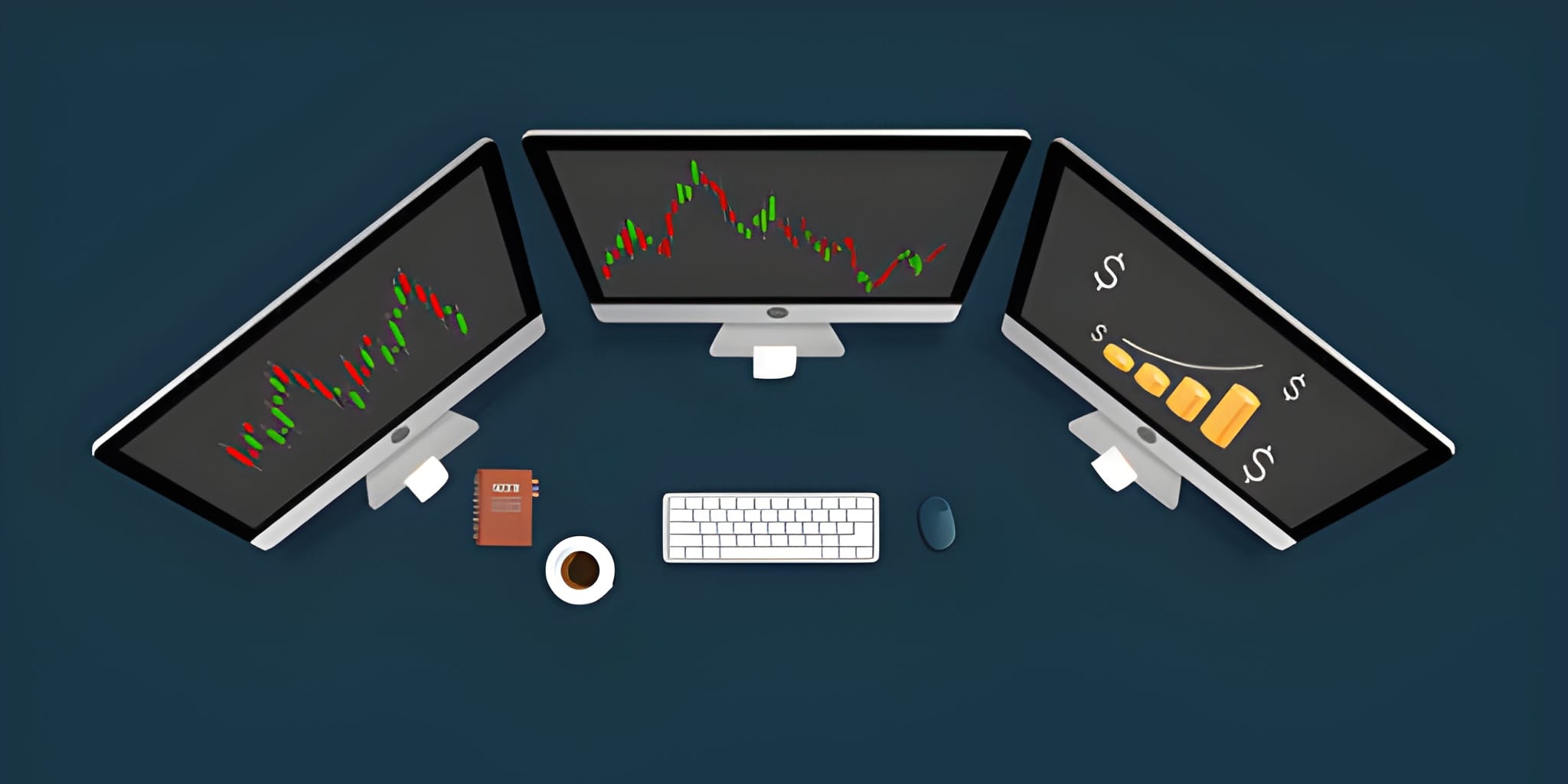
- Hardware: High-speed processors and multi-monitor setups are not luxury items; they are basic tools for situational awareness.
- Software: Professional-grade charting and execution platforms often carry monthly subscription costs that add to the "Mathematical Drag."
- Capitalization: In the US, the Pattern Day Trader (PDT) rule requires a minimum of $25,000 to trade stocks frequently. This forces under-capitalized traders into more volatile markets like Forex or Crypto, which carries its own set of disadvantages.
Final Synthesis and Suitability
The decision to pursue day trading should be based on a cold assessment of your resources—both financial and mental. The advantage of independence and unlimited upside must be weighed against the disadvantage of high failure rates and extreme stress. For the vast majority of individuals, the structural burdens of high-frequency trading outweigh the potential rewards.
However, for the small percentage of participants who can master the technical complexity and maintain rigorous emotional discipline, day trading offers a career path unlike any other. It is the ultimate meritocracy where the market provides immediate, objective feedback on your performance. The key to long-term survival is acknowledging the disadvantages early and building an infrastructure—both technological and psychological—to withstand them.
Success is found in the clinical application of a strategy that accounts for fee drag, respects market volatility, and protects the trader's mental capital as fiercely as their financial capital. Day trading is not a path to easy wealth; it is a high-stakes business that requires professional-level commitment to even achieve a break-even result.