
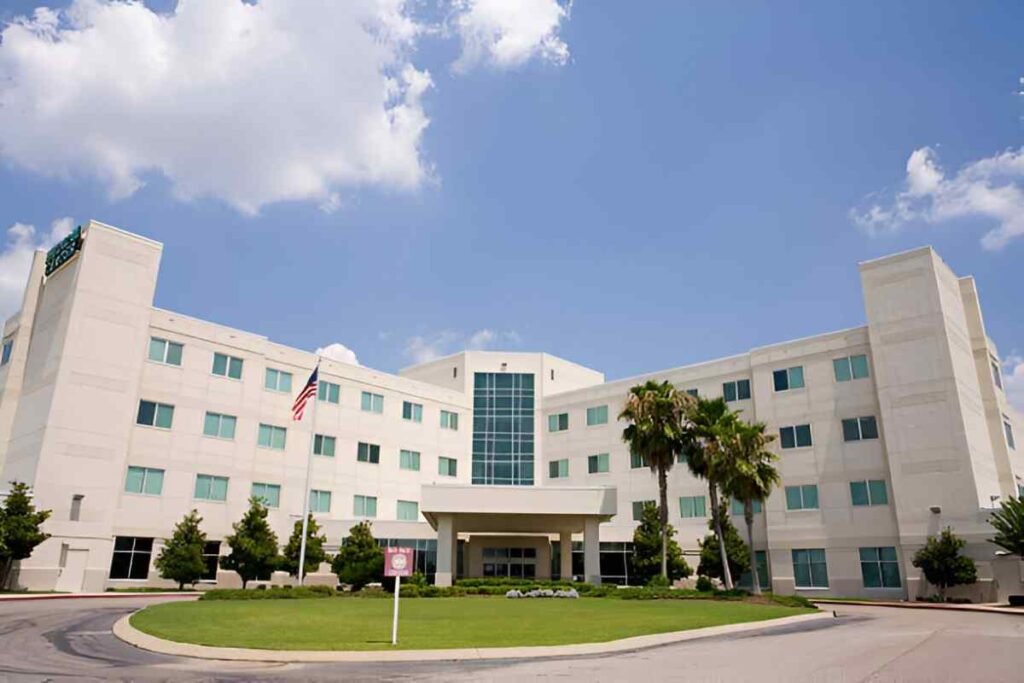
As a finance expert, I often analyze retirement plans to help employees make informed decisions. The Arrowhead Regional Medical Center (ARMC) retirement plan serves healthcare professionals in San Bernardino County, California. In this guide, I break down the plan’s structure, benefits, and strategies to maximize retirement savings.
Table of Contents
Understanding the ARMC Retirement Plan
The ARMC retirement plan falls under the San Bernardino County Employees’ Retirement Association (SBCERA). It’s a defined benefit (DB) plan, meaning retirees receive a fixed payout based on salary and years of service. Unlike 401(k) plans, the employer bears investment risk, providing stability for employees.
Key Features of the ARMC Retirement Plan
- Pension Formula: The retirement benefit calculates using:
\text{Annual Pension} = \text{Years of Service} \times \text{Benefit Factor} \times \text{Final Average Salary}
The benefit factor typically ranges between 2% and 3%, depending on employment terms. - Final Average Salary (FAS): This averages the highest 12 or 36 consecutive months of salary. For example, if an employee’s highest 12-month earnings total $120,000, FAS = $120,000 / 12 = $10,000/month.
- Vesting Period: Employees vest after 5 years. Leaving before this forfeits pension benefits.
- Cost-of-Living Adjustments (COLAs): SBCERA provides periodic COLAs to counter inflation.
Comparing Defined Benefit vs. Defined Contribution Plans
Many private-sector workers rely on 401(k) plans (defined contribution). The ARMC DB plan offers advantages:
| Feature | ARMC DB Plan | Typical 401(k) Plan |
|---|---|---|
| Risk Responsibility | Employer manages investments | Employee bears market risk |
| Payout Guarantee | Lifetime income | Depends on account balance |
| Contribution Role | Mandatory employer funding | Employee/employer contributions |
Example Calculation
Suppose an ARMC nurse retires after 25 years with a final average salary of $90,000 and a 2.5% benefit factor:
\text{Annual Pension} = 25 \times 0.025 \times 90,000 = \$56,250
This nurse receives $56,250 yearly, adjusted for COLAs.
Supplemental Retirement Savings Options
While the DB plan provides security, I recommend supplementing with a 457(b) or 403(b) plan. These deferred-compensation plans allow pre-tax contributions, increasing retirement savings.
457(b) vs. 403(b) Comparison
| Aspect | 457(b) Plan | 403(b) Plan |
|---|---|---|
| Eligibility | Government employees | Non-profit/healthcare workers |
| Withdrawal | No early withdrawal penalty | 10% penalty before 59.5 |
| Contribution Limit (2023) | $22,500 (+$7,500 catch-up) | Same as 457(b) |
Tax Considerations
Pension income is taxable in California. However, contributions are tax-deferred. Strategizing withdrawals with Roth IRAs can minimize tax burdens.
Socioeconomic Factors Affecting ARMC Employees
Healthcare workers face unique challenges:
- Shift Work: Irregular hours may limit side investments.
- Student Debt: Many carry loans, delaying retirement savings.
- Pay Scales: Public-sector salaries lag behind private-sector peers, impacting FAS.
Case Study: Balancing Debt and Savings
An ARMC technician earning $70,000 with $50,000 student debt should:
- Prioritize High-Interest Debt: Pay off loans >6% interest first.
- Contribute to 457(b): Even 5% of salary ($3,500/year) grows significantly over time.
Using compound interest:
FV = P \times \left(1 + \frac{r}{n}\right)^{nt}
Where:
- P = \$3,500 (annual contribution)
- r = 0.07 (7% return)
- n = 1 (annual compounding)
- t = 20 years
Future Value:
FV = 3,500 \times \left(1 + 0.07\right)^{20} = \$13,534.28Optimizing Your ARMC Retirement
- Maximize Service Years: Each year increases pension benefits.
- Track FAS: Seek promotions/overtime to boost final salary.
- Diversify: Pair pension with 457(b) and Roth IRA.
Final Thoughts
The ARMC retirement plan offers robust security, but proactive steps enhance outcomes. I advise employees to consult SBCERA resources and financial planners to tailor strategies. By understanding the plan’s mechanics and supplementing wisely, healthcare workers can achieve a stable retirement.



