
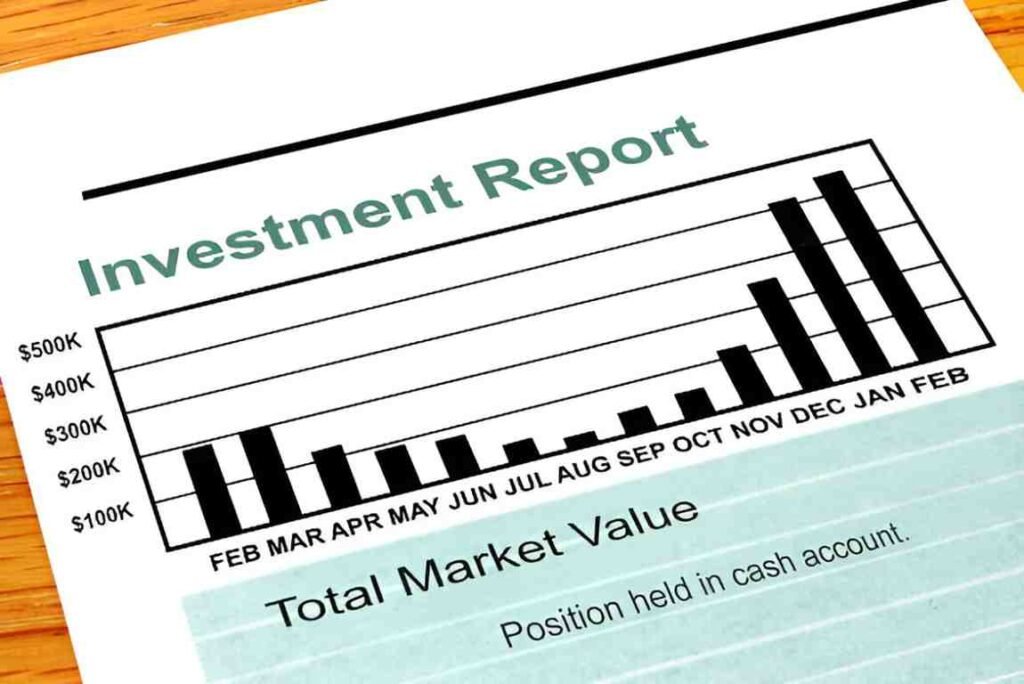
As a finance professional, I often get asked whether short-term investments get reported at market value. The answer is nuanced, but in most cases, yes—short-term investments are reported at fair market value. However, the accounting treatment depends on the type of investment, the intent behind holding it, and the applicable accounting standards. In this article, I’ll break down how short-term investments are valued, the accounting rules governing them, and the real-world implications for businesses and investors.
Table of Contents
Understanding Short-Term Investments
Short-term investments, also called marketable securities, are assets that a company plans to hold for less than a year. These typically include:
- Treasury Bills (T-Bills)
- Commercial Paper
- Money Market Funds
- Corporate Bonds (with short maturities)
- Equity Securities (if intended for short-term trading)
Because these investments are liquid and easily convertible to cash, they appear under current assets on the balance sheet.
How Are Short-Term Investments Valued?
Under U.S. Generally Accepted Accounting Principles (GAAP), short-term investments are generally reported at fair market value (FMV). The Financial Accounting Standards Board (FASB) outlines specific rules in ASC 320 (Investments—Debt and Equity Securities) and ASC 825 (Financial Instruments).
Key Accounting Classifications
The valuation method depends on how the investment is classified:
| Classification | Measurement Basis | Unrealized Gains/Losses |
|---|---|---|
| Held-to-Maturity (HTM) | Amortized Cost | Not recognized in income |
| Trading Securities | Fair Market Value | Recognized in net income |
| Available-for-Sale (AFS) | Fair Market Value | Recognized in OCI |
Since short-term investments are rarely held-to-maturity, they usually fall under trading securities or available-for-sale (AFS).
Fair Value vs. Amortized Cost
For trading securities, changes in market value directly impact the income statement. For AFS securities, unrealized gains/losses go to Other Comprehensive Income (OCI) until sold.
The fair value is calculated as:
FV = P_t \times QWhere:
- P_t = Current market price
- Q = Quantity of securities held
Example Calculation
Suppose Company A holds 1,000 shares of XYZ Corp, classified as a trading security. If the stock price moves from $50 to $55, the unrealized gain is:
Unrealized\ Gain = (55 - 50) \times 1000 = \$5,000This $5,000 is reported in the income statement.
Why Market Value Matters
Reporting at market value ensures transparency. Investors see the real-time worth of a company’s holdings rather than historical costs. This prevents misleading financial statements, especially in volatile markets.
Impact on Financial Ratios
Since market value affects the balance sheet, key ratios like current ratio and quick ratio change with fluctuations.
Current\ Ratio = \frac{Current\ Assets}{Current\ Liabilities}If market values drop, liquidity ratios worsen, potentially affecting credit ratings.
Tax Implications
For tax purposes, unrealized gains are not taxed until realized. However, mark-to-market accounting (used by traders) requires recognizing gains/losses annually.
Criticisms and Alternatives
Some argue market value accounting increases volatility. During the 2008 financial crisis, banks faced massive write-downs due to falling asset prices, worsening the downturn.
Historical Cost vs. Fair Value
| Aspect | Fair Value Accounting | Historical Cost Accounting |
|---|---|---|
| Volatility | Higher | Lower |
| Transparency | More accurate | Less reflective of current value |
| Complexity | Requires frequent revaluation | Simpler to maintain |
Conclusion
Short-term investments are generally reported at market value under U.S. GAAP, ensuring transparency. However, the classification (trading vs. AFS) determines where gains/losses appear. While fair value accounting provides real-time insights, it also introduces volatility. As an investor or financial manager, understanding these rules helps in making informed decisions.



