
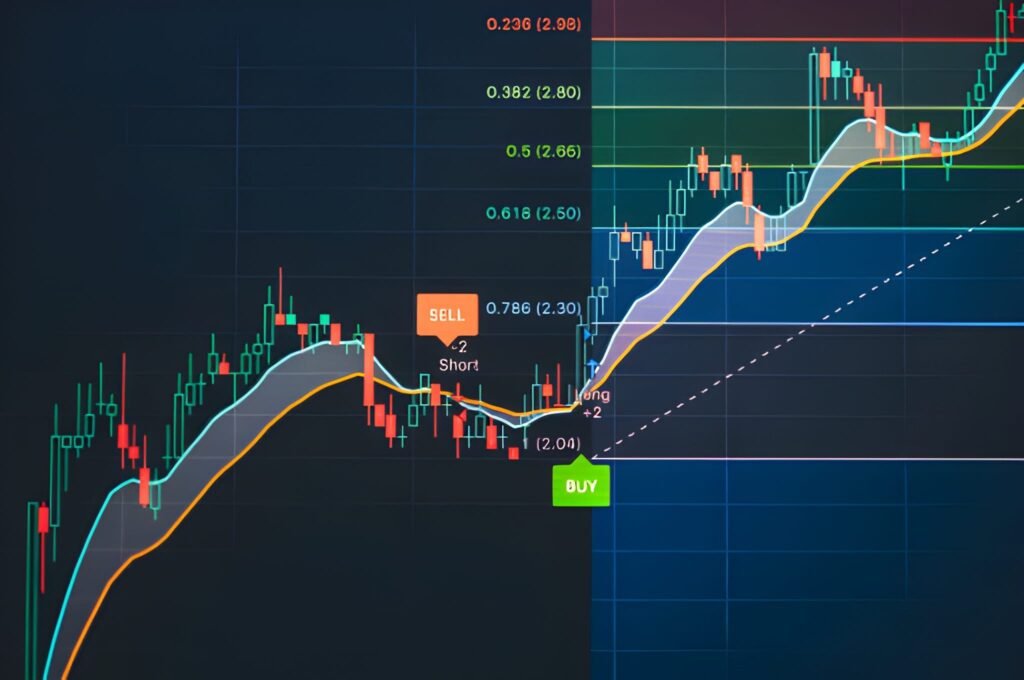
Introduction to Algorithmic Trading
Algorithmic trading uses computer programs to automatically execute trades according to predefined rules. Unlike manual trading, it relies on historical data, technical indicators, and quantitative models to generate buy and sell signals. In the U.S., algorithmic trading has become mainstream across equities, futures, forex, and options markets, driven by speed, accuracy, and scalability.
Technical analysis is a widely used method in algorithmic trading. It examines price patterns, volume, and technical indicators to forecast potential market movements. Python, with its extensive libraries, provides a flexible environment to develop, backtest, and deploy technical analysis strategies effectively.
Why Python for Algorithmic Trading
Python is ideal for algorithmic trading because of its simplicity, extensive library support, and strong community. Key advantages include:
- Data Handling: Libraries like Pandas and NumPy efficiently manage large datasets.
- Technical Analysis: TA-Lib and pandas_ta offer ready-to-use indicators such as SMA, EMA, RSI, MACD, and Bollinger Bands.
- Backtesting: Tools like Backtrader and Zipline allow historical strategy evaluation.
- Visualization: Matplotlib, Plotly, and Seaborn enable clear representation of price trends, indicators, and strategy performance.
- Broker Integration: APIs for Interactive Brokers, Alpaca, and TD Ameritrade support live trading deployment.
Python allows traders to move seamlessly from research to live trading, making it a complete solution for algorithmic trading.
Key Components of Technical Analysis Strategies in Python
1. Data Acquisition
Reliable market data is essential. Python supports multiple sources:
- Yahoo Finance via yfinance library for historical daily and intraday data.
- Alpha Vantage or IEX Cloud for U.S. equities and forex data.
- Broker APIs for real-time data feeds.
Example: Fetching Apple Inc. (AAPL) historical prices:
import yfinance as yf
data = yf.download('AAPL', start='2018-01-01', end='2023-01-01')
close_prices = data['Close']
Daily returns can be calculated as:
R_t = \frac{P_t - P_{t-1}}{P_{t-1}}
Where P_t is the closing price at day t.
2. Technical Indicator Calculation
Technical indicators provide insights into price trends and market conditions:
- Simple Moving Average (SMA):
Relative Strength Index (RSI):
RSI = 100 - \frac{100}{1 + RS}
Where RS = \frac{Average\ Gain}{Average\ Loss}
Moving Average Convergence Divergence (MACD):
MACD = EMA_{12} - EMA_{26}Bollinger Bands:
Upper = SMA + 2\sigma,\quad Lower = SMA - 2\sigmaPython libraries like pandas_ta allow easy calculation of these indicators.
3. Signal Generation
Trading signals are derived when indicator thresholds are met:
- SMA Crossover Strategy:
\text{Buy if } SMA_{short} > SMA_{long}
RSI Strategy:
\text{Buy if RSI < 30 (oversold)}
Python example:
short_sma = close_prices.rolling(window=20).mean()
long_sma = close_prices.rolling(window=50).mean()
buy_signal = short_sma > long_sma
sell_signal = short_sma < long_sma
4. Backtesting
Backtesting evaluates strategies against historical data. Key performance metrics include:
- Cumulative Return:
Sharpe Ratio:
Sharpe\ Ratio = \frac{E[R_p] - R_f}{\sigma_p}Maximum Drawdown:
Max\ Drawdown = \max\left(\frac{Peak - Trough}{Peak}\right)Python backtesting with Backtrader:
import backtrader as bt

class SMA_Crossover(bt.Strategy):
    def __init__(self):
        self.sma_short = bt.indicators.SMA(period=20)
        self.sma_long = bt.indicators.SMA(period=50)

    def next(self):
        if self.sma_short[0] > self.sma_long[0]:
            self.buy()
        elif self.sma_short[0] < self.sma_long[0]:
            self.sell()

cerebro = bt.Cerebro()
cerebro.addstrategy(SMA_Crossover)
datafeed = bt.feeds.PandasData(dataname=data)
cerebro.adddata(datafeed)
cerebro.run()
cerebro.plot()
5. Risk Management
Proper risk management is essential:
- Position Sizing:
Stop-Loss/Take-Profit: Limit losses and lock in profits.
Portfolio Diversification: Spread capital across instruments to reduce volatility.
6. Optimization
Python allows parameter optimization:
- Grid Search: Test multiple threshold combinations.
- Genetic Algorithms: Optimize parameters for performance metrics.
- Monte Carlo Simulation: Assess strategy robustness under random market conditions.
Example: Optimizing SMA periods:
import itertools

best_return = -float('inf')
for short, long in itertools.product(range(5, 30), range(31, 100)):
    cum_return = compute_cum_return(short, long)
    if cum_return > best_return:
        best_return = cum_return
        best_params = (short, long)
7. Live Deployment
Optimized strategies can be deployed live via broker APIs:
- Interactive Brokers using ib_insync
- Alpaca API for commission-free trading
- TD Ameritrade API for equities and options
Python scripts can monitor prices, generate signals, and execute trades automatically.
Example: SMA and RSI Combined Strategy
For Apple Inc.:
- Buy when 20-day SMA > 50-day SMA and RSI < 30.
- Sell when 20-day SMA < 50-day SMA or RSI > 70.
- Stop-loss at 1% and take-profit at 2%.
- Backtest 5 years of historical data.
Python pseudocode:
short_sma = data['Close'].rolling(20).mean()
long_sma = data['Close'].rolling(50).mean()
rsi = compute_rsi(data['Close'], 14)

buy_signal = (short_sma > long_sma) & (rsi < 30)
sell_signal = (short_sma < long_sma) | (rsi > 70)
Backtesting shows cumulative returns, drawdowns, and Sharpe ratio for confidence before live deployment.
Risk Considerations and Compliance
Python-based algorithmic trading carries risks:
- Model Risk: Indicators may fail under unusual market conditions.
- Execution Risk: API errors or latency can cause losses.
- Regulatory Risk: U.S. traders must comply with SEC, CFTC, and FINRA rules.
Stress testing and logging in Python mitigate these risks.
Conclusion
Algorithmic trading with Python using technical analysis strategies allows U.S. investors to implement systematic trading rules efficiently. Indicators like SMA, RSI, MACD, and Bollinger Bands help generate objective trading signals, reduce emotional bias, and enhance execution accuracy. Success requires careful data management, robust backtesting, disciplined risk controls, and regulatory compliance. Python’s ecosystem enables full workflow—from research to live deployment—empowering traders to turn quantitative insights into actionable trades.


