
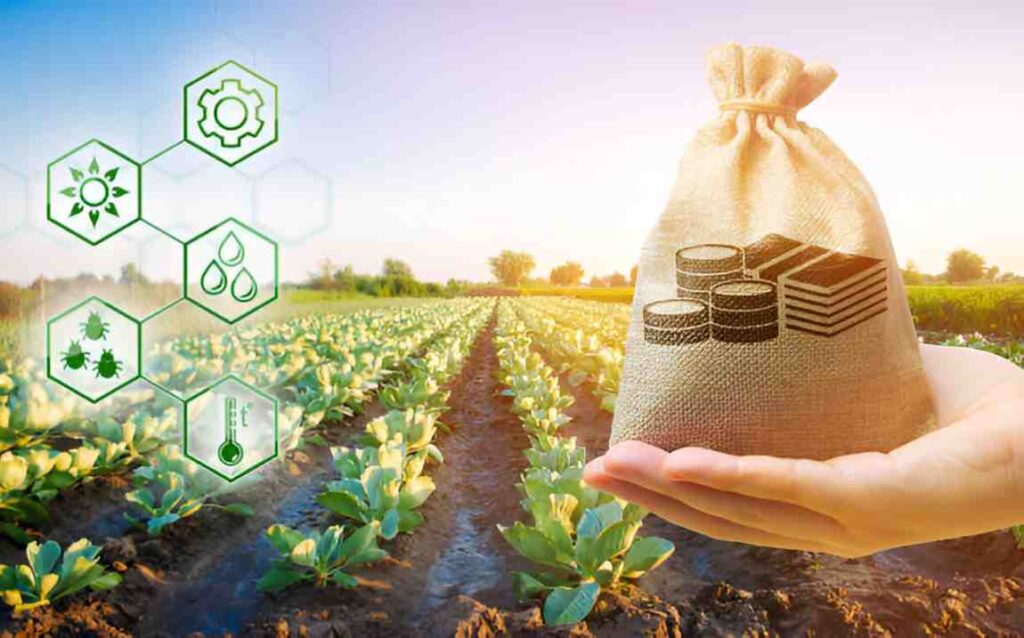
As a finance and investment expert, I have spent years analyzing opportunities in the agricultural sector. One area that stands out for its potential returns and socioeconomic impact is agricultural value chain investments. This article explores the intricacies of investing in the agricultural value chain, from production to distribution, and provides actionable insights for investors.
Table of Contents
Understanding the Agricultural Value Chain
The agricultural value chain encompasses all the steps involved in bringing a farm product to the consumer. These steps include:
- Input Supply (seeds, fertilizers, machinery)
- Production (farming, livestock rearing)
- Processing (milling, packaging, refining)
- Distribution (storage, transportation, logistics)
- Retail & Marketing (wholesale, supermarkets, e-commerce)
Investing in any of these segments can yield substantial returns, but each comes with unique risks and opportunities.
Why Invest in the Agricultural Value Chain?
The global food demand is projected to increase by 70% by 2050, driven by population growth and rising incomes. The U.S. remains a key player in agribusiness, contributing over $1 trillion to GDP annually. Investing in the agricultural value chain offers:
- Diversification – Agriculture has a low correlation with traditional asset classes.
- Inflation Hedge – Food prices tend to rise with inflation.
- Impact Investing Potential – Supports food security and rural development.
Key Investment Opportunities
1. Pre-Production: Input Suppliers
Companies that provide seeds, fertilizers, and farm machinery are critical to agricultural productivity. For example, precision agriculture—using AI and IoT to optimize farming—has seen rapid adoption.
Example Calculation:
If a farmer invests \$50,000 in precision farming equipment that increases yield by 20\% , the additional revenue ( R ) can be calculated as:
Assuming a current yield worth \$250,000 , the extra revenue would be:
R = 250,000 \times 0.20 = \$50,000This means the investment pays for itself in one season.
2. Production: Farmland Investments
Farmland has historically provided stable returns, with U.S. farmland appreciating at an average of 6% annually over the past 30 years. Investors can buy land directly or through Real Estate Investment Trusts (REITs).
Comparison of Farmland vs. S&P 500 (Last 20 Years)
| Asset Class | Avg. Annual Return | Volatility |
|---|---|---|
| U.S. Farmland | 11.5% | Low |
| S&P 500 | 9.8% | High |
Source: USDA, Federal Reserve
3. Processing & Value Addition
Food processing companies convert raw produce into shelf-stable goods, increasing profitability. For example, turning wheat into flour or fresh milk into cheese adds value.
Example:
If a ton of wheat costs \$200 and processing it into flour yields \$500 , the gross margin is:
4. Distribution & Logistics
Cold storage and efficient transport reduce post-harvest losses, which account for 30% of food waste in the U.S. Investing in refrigerated logistics can capture this inefficiency.
5. Retail & Direct-to-Consumer Models
E-commerce platforms like Farmers’ Markets Online connect producers directly with consumers, eliminating middlemen.
Risks & Mitigation Strategies
1. Climate Risks
Droughts and floods disrupt production. Diversification across geographies and crop insurance can mitigate this.
2. Price Volatility
Commodity prices fluctuate. Futures contracts and hedging strategies help stabilize revenues.
3. Regulatory Challenges
Farm subsidies and trade policies change frequently. Staying informed and lobbying for favorable policies is crucial.
Case Study: Vertical Farming
Vertical farming—growing crops in stacked layers—reduces land use and water consumption. Companies like AeroFarms have attracted significant investment.
Cost-Benefit Analysis:
- Initial Setup Cost: \$1M
- Annual Revenue: \$500K
- Break-even Point: \frac{1,000,000}{500,000} = 2 \text{ years}
Conclusion
Agricultural value chain investments offer diversification, inflation protection, and impact potential. Whether through farmland, processing, or agri-tech, opportunities abound for informed investors.



