
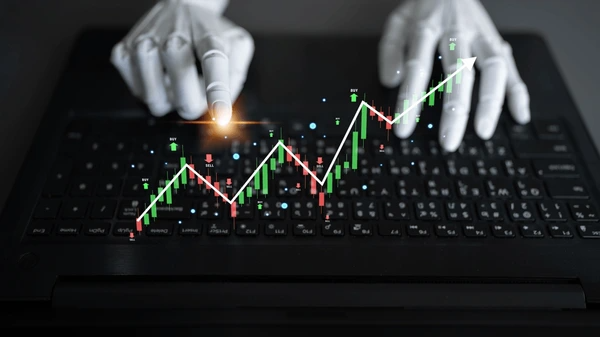
Advanced Automated Algorithmic Trading Strategies
A Technical Deep Dive into Quantitative Logic and Market RegimesThe Digital Frontier of Finance
The global financial ecosystem has transitioned from a human-centric environment to a machine-dominated landscape. In the vibrant history of Wall Street, the "open outcry" system defined market movements. Today, those shouts have been silenced by the rhythmic hum of high-density server racks. Automated algorithmic trading represents the pinnacle of this evolution, utilizing sophisticated mathematical models to execute trades at speeds and volumes that far exceed human capability.
An algorithm, in its simplest form, is a set of defined instructions designed to perform a task. In trading, these instructions process massive datasets—incorporating price, timing, volume, and even geopolitical news—to determine the optimal moment for entry and exit. This shift has democratized access to complex strategies while simultaneously creating a high-stakes arms race for latency and precision.
The primary driver behind this automation is the elimination of human psychological interference. Fear and greed are the two most destructive forces in a trader's arsenal. By delegating execution to a cold, logical script, institutional investors ensure that their strategic intent is carried out without the hesitation or impulsivity that often plagues manual trading during periods of high volatility. This technological shift is not merely an upgrade; it is a total reimagining of how capital finds value in a globalized, hyper-connected world.
Architectural Foundations
Building an algorithmic trading system is an exercise in structural engineering. A robust system consists of three primary layers: the data ingestion layer, the strategy engine, and the execution gateway. Each layer must function with near-perfect reliability to avoid catastrophic financial loss. Failures in any single component can lead to runaway trades that deplete accounts in microseconds.
The data ingestion layer must handle thousands of updates per second. For high-frequency firms, this data often arrives via direct microwave links or fiber-optic lines that are physically closer to exchange servers—a practice known as co-location. Any delay, even a few microseconds, can render a strategy obsolete. This requirement for speed has driven massive investment in specialized hardware, where the software itself is often secondary to the speed of the electricity moving through the circuit.
Low-Latency Execution
Focuses on pure speed. These systems often use FPGA (Field Programmable Gate Arrays) to process trades directly on hardware rather than through standard software operating systems.
Quantitative Research
Focuses on predictive accuracy. These systems use historical backtesting and statistical modeling to find long-term edges, where speed is secondary to the quality of the signal.
Momentum and Trend Logic
Trend-following remains the most enduring philosophy in the algorithmic world. These strategies operate on the premise that markets move in recognizable waves. Rather than trying to predict the bottom or top of a move, these algorithms wait for a trend to establish itself and then participate in the middle 60% of the movement.
The MACD algorithm calculates the difference between a short-term and long-term exponential moving average. When the MACD line crosses above the signal line, the algorithm triggers a buy order. This provides a mathematical confirmation of momentum shift.
Common Configuration: 12-period EMA and 26-period EMA with a 9-period signal line. This setup is considered a gold standard for detecting medium-term cyclical shifts.
Algorithms often use RSI as a secondary filter. If a trend-following signal is generated but the RSI is above 70, the algorithm may ignore the signal, as the asset is statistically overextended or "overbought." This prevents entering a trade at the peak of a parabolic move.
Decoding Regimes: The Baum-Welch Logic
One of the most complex challenges in automated trading is identifying "Market Regimes." A market can be trending, range-bound, or in a state of high-volatility panic. A trend-following algorithm will fail miserably in a range-bound market. To solve this, quantitative analysts use Hidden Markov Models (HMM).
The Baum-Welch Algorithm is a special case of the Expectation-Maximization (EM) algorithm used to find the unknown parameters of an HMM. In trading, the "hidden" states are the market regimes (e.g., Bull, Bear, Sideways), and the "observations" are the price changes and volume.
The algorithm works through a process of iterative refinement. It starts with a guess of the transition probabilities (how likely the market is to move from Bull to Bear) and emission probabilities (what price changes look like in a Bull market). It then looks at historical data to see how well these guesses fit. Using the Forward-Backward algorithm, it updates its guesses until it reaches a model that best explains the historical observations.
Arbitrage and Market Efficiency
Arbitrage is the lubricant of the financial markets. It involves the simultaneous purchase and sale of an asset to profit from price imbalances across different venues. While traditional arbitrage is nearly extinct due to market efficiency, Statistical Arbitrage (StatArb) continues to thrive.
StatArb systems look for historical correlations between pairs of stocks. For example, if ExxonMobil (XOM) and Chevron (CVX) typically trade with a correlation coefficient of 0.95, and they suddenly diverge by three standard deviations, an algorithm will "short" the overperformer and "long" the underperformer, expecting a return to the historical mean. This reliance on correlation rather than fundamental value allows for market-neutral returns.
| Strategy Type | Average Holding Time | Typical Asset Class | Primary Edge |
|---|---|---|---|
| HFT Scalping | 0.01 - 5 Seconds | Equities / Futures | Execution Speed |
| Pair Trading | 1 - 5 Days | Equities | Statistical Correlation |
| Carry Trade | Months | Forex | Interest Rate Differentials |
| News Sentiment | Minutes | Global Macro | NLP Processing Speed |
Mean Reversion Mechanics
Mean reversion is based on the "rubber band" theory of finance: prices can only stretch so far from their average before they snap back. Algorithms using this logic define a "normal" range using tools like Bollinger Bands or Keltner Channels. These systems assume that markets are fundamentally efficient and that price deviations are temporary anomalies caused by liquidity shocks or emotional overreactions.
When the price exceeds the second or third standard deviation, the algorithm assumes the move is unsustainable. This is particularly effective in range-bound markets but can be dangerous during "black swan" events where a fundamental shift has occurred. A successful mean-reversion algorithm must, therefore, be paired with a regime-detection filter (like the Baum-Welch HMM) to ensure it doesn't try to "catch a falling knife" during a regime change.
Sentiment and Machine Learning
The newest frontier in algorithmic trading involves Natural Language Processing (NLP). These systems scan thousands of news articles, earnings transcripts, and social media posts every second. By assigning a "sentiment score" to the text, the algorithm can trade on news events before a human could even finish reading the headline. This technology has fundamentally changed how earnings seasons are navigated, as computers now front-run human analysts by parsing data in near-real-time.
If a CEO mentions "supply chain challenges" during an earnings call, an NLP algorithm can detect the negative nuance and execute a sell order in milliseconds. This has created a market where the first few minutes after an announcement are characterized by extreme volatility as machines digest the linguistic data. The competition has moved from who can read the fastest to who can train the most accurate linguistic models.
Risk Management Protocols
Risk management is not an afterthought in algorithmic trading; it is the core of the code. A "runaway algorithm" can liquidate a firm's capital in minutes. Therefore, developers implement multi-layered safety nets, ranging from hard limits on position size to sophisticated real-time monitoring of portfolio heat.
One primary calculation is the Value at Risk (VaR), which estimates the maximum potential loss over a specific timeframe with a given confidence level. For institutional quants, VaR is checked every second.
Capital_at_Risk = Total_Equity * 0.02;
Stop_Distance = Entry_Price - Stop_Loss;
Position_Size = Capital_at_Risk / Stop_Distance;
// Calculation: If Equity is 100,000 and Stop is 2.00, Position is 1,000 shares.
Furthermore, "Circuit Breakers" are programmed into individual strategies. If a strategy loses more than a predefined percentage of its daily allocation, the system automatically shuts down and alerts the human risk managers. This ensures that a single bug in the code cannot lead to an irrecoverable loss of firm capital.
Socioeconomic and Regulatory Impact
The rise of automated trading has significant implications for the average American investor. On one hand, it has drastically reduced bid-ask spreads, making it cheaper for retail investors to buy and sell stocks. Liquidity is more abundant than ever before, allowing for smoother market entry and exit even for large positions.
On the other hand, it has introduced new forms of systemic risk. The "Flash Crash" of May 2010 saw the Dow Jones Industrial Average drop nearly 1,000 points in minutes, only to recover most of it shortly after. This was driven by a feedback loop of algorithms reacting to one another’s sell orders. This "mechanical fragility" is a major concern for central banks and global regulators.
Regulators in the US, including the SEC, have implemented "Limit Up-Limit Down" rules to prevent such occurrences. These rules temporarily pause trading if a stock moves too quickly outside a certain price band. Despite these safeguards, the complexity of modern markets means that unexpected "glitches" remain a constant threat to stability. The battle between market innovation and regulatory oversight is an ongoing struggle that defines the modern era of finance.
In summary, algorithmic trading strategies—from simple trend followers to complex Baum-Welch regime detectors—are the invisible architecture of our modern financial world. They provide the liquidity that keeps the gears of capitalism turning, but they also demand a level of vigilance and technical understanding never before required in human history. As we move deeper into the age of Artificial Intelligence, the line between "trading" and "data science" will continue to blur until they are one and the same.


