Operational Blueprint: A Professional Business Plan Template for Day Trading
Strategic Framework for a High-Performance EnterpriseCore Infrastructure Index
Collapse BlueprintIn the global financial theater, the distinction between a speculative hobbyist and a professional trader is found in the rigor of their business plan. Most market participants approach price action with enthusiasm but lack a structured framework, leading to the inevitable attrition that characterizes retail trading. In , the saturation of automated liquidity and institutional algorithms makes a written business plan an operational necessity. This template functions as your corporate charter, defining the rules of engagement, capital preservation mandates, and the technological standards required to sustain a profitable intraday enterprise.
The Executive Summary: Shifting from Hobby to Enterprise
A day trading business is an enterprise that specialized in the provision of liquidity and the exploitation of short-term price imbalances. Your executive summary should define your "Value Proposition." Why does the market pay you? If you cannot define your edge—whether it is identifying mean reversion in high-beta assets or capturing momentum breakouts in small-cap equities—you do not have a business; you have a gamble.
Hobbyist Approach
Trades when "the market looks good." Uses mental stop-losses. Focuses on dollar profits. No written record of errors.
Professional Enterprise
Executes based on pre-defined triggers. Hard-coded risk limits. Focuses on process and expectancy. Rigorous weekly audits.
Capital Structure and Funding Models
The foundation of any business is its capital base. In day trading, you must separate your "Risk Capital" from your "Living Capital." Risk capital is money that, if lost entirely, would not alter your standard of living or debt obligations. Under-capitalization is the primary cause of business failure in this sector, as it forces the trader to over-leverage to meet basic financial needs.
The Edge: Strategic Methodology
Your methodology section must be so detailed that a stranger could execute your strategy based on the text alone. It should define your "Universe of Assets," your "Time Window," and your "Entry/Exit Triggers." Vague descriptions like "buying strong stocks" are insufficient. A professional plan uses quantitative filters.
1. Asset Price: $20.00 - $250.00
2. Average Daily Volume: > 2,000,000 shares
3. Relative Volume (RVOL): > 2.5x normal
4. Intraday Range: > 3.0% ATR
Operational Mandate: Do not scan for or watch any asset that fails these baseline requirements.
Defensive Layer: Risk Architecture
If the strategy is the engine, risk management is the braking system. Your business plan must dictate how much you are willing to pay for a "lesson" from the market. The industry standard is the Fixed-Fractional Risk Model. This ensures that your position size shrinks as your capital base shrinks, preventing a catastrophic "blowout."
| Risk Parameter | Business Standard | Operational Purpose |
|---|---|---|
| Max Risk Per Trade | 0.5% - 1.0% of Equity | Ensures 10 consecutive losses only result in <10% drawdown. |
| Daily Stop Limit | 2.5% of Account Value | Prevents emotional "revenge trading" on bad sessions. |
| Max Account Drawdown | 15.0% - 20.0% | The "Kill Switch" level where all operations cease for auditing. |
| Position Correlative Limit | No more than 3 simultaneous longs | Prevents over-exposure to a single market theme (e.g., AI stocks). |
Infrastructure: Operational Tech Stack
A day trading business requires professional-grade equipment. Using a standard consumer laptop and a mobile application is structurally inadequate for high-frequency execution. Your tech stack determines your "Execution Latency"—the time between identifying an edge and being filled in the order book.
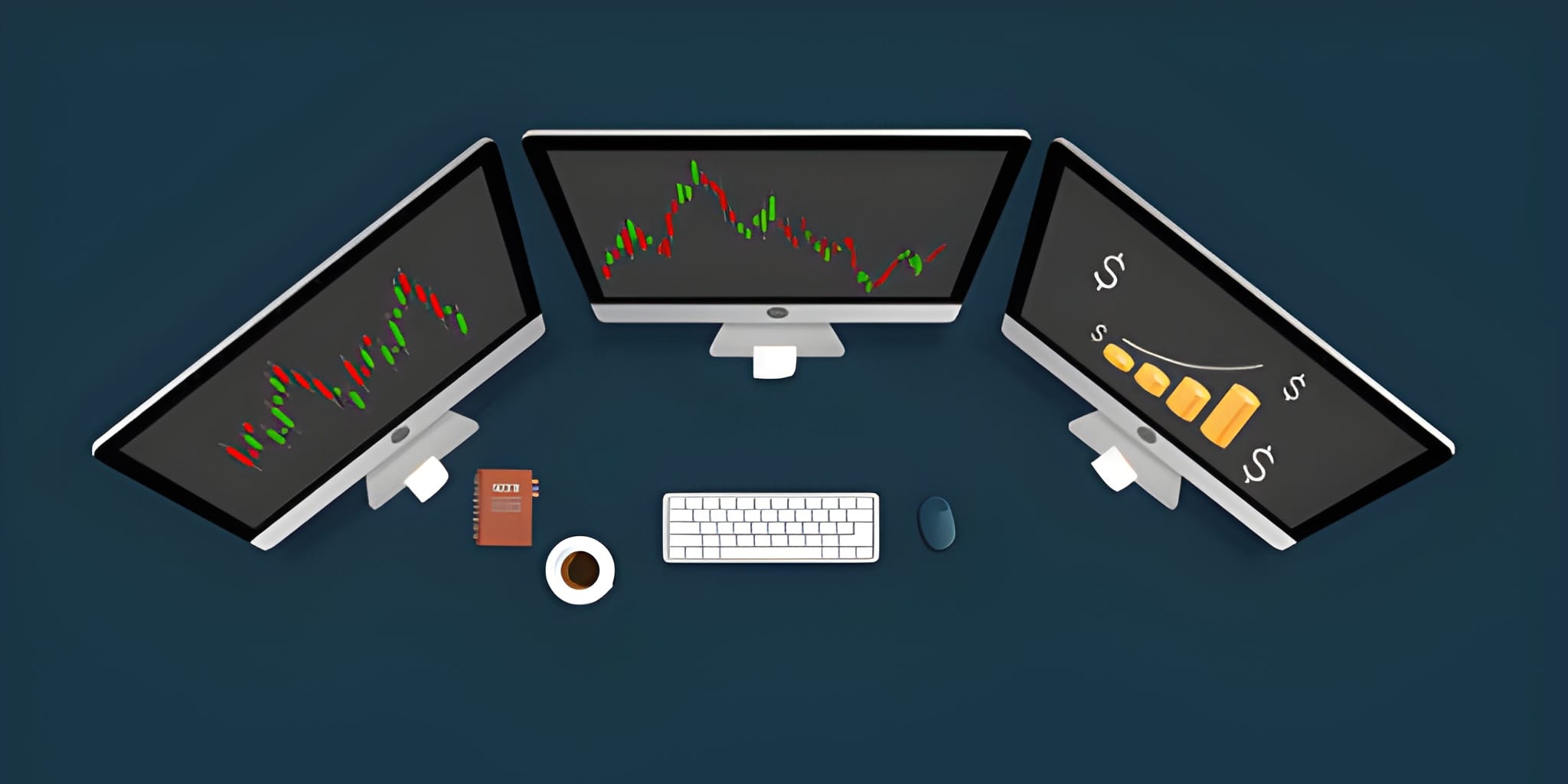
A professional workstation should include at least dual high-resolution monitors, a dedicated high-speed fiber connection, and a secondary backup internet source (cellular hotspot). A Virtual Private Server (VPS) is recommended if you utilize automated scripts or trade during periods of potential power instability.
Select a broker that offers Direct Market Access (DMA). Avoid "Payment for Order Flow" (PFOF) brokers, as the hidden slippage cost will erode your profit margins. Charting software must provide tick-by-tick data without the delay found in web-based interfaces.
The Daily Routine: Process Management
Success is a byproduct of repetition. A professional business plan includes a "Daily Operational Checklist." This removes the need for morning decision-making, preserving your "Decision Capital" for the actual trading session. A distracted trader is a losing trader.
- 08:30 AM: Macro Review. Check Economic Calendar (CPI, FOMC, Job reports).
- 09:00 AM: Scanner Review. Identify top 3 assets meeting the RVOL and ATR criteria.
- 09:15 AM: Level Setting. Mark Daily Pivots, VWAP, and previous day's High/Low.
- 12:00 PM: Mid-day Audit. Review active positions and adjust trailing stops.
- 04:30 PM: Trade Journaling. Input every execution into a database for monthly review.
Auditing and Performance Metrics
You cannot manage what you do not measure. Your business plan must define the Key Performance Indicators (KPIs) that you will monitor. A high win-rate is a vanity metric; professional businesses focus on the "Profit Factor" and "Expectancy."
Business Requirement: If your expectancy is not positive over a 100-trade sample, the business must pivot to simulation (paper trading) until the edge is re-verified.
Every month, perform a "Behavioral Audit." Review your logs for "Error Trades"—executions that violated your written plan. If error trades exceed 5% of your total volume, your primary business risk is Operational Discipline rather than market volatility.
Legal and Regulatory Compliance
In the United States, trading is a taxable business. For high-volume traders, electing Trader Tax Status (TTS) is essential. This allows for the deduction of business expenses (software, hardware, education) on Schedule C and potentially the use of the "Mark-to-Market" accounting election, which eliminates the $3,000 capital loss limitation.
Closing Strategic Synthesis
A business plan for day trading is not a static document; it is a "Living Logic" that evolves with market regimes. However, the core principles of capital preservation, quantitative selection, and disciplined execution remain constant. By documenting your process, you transform your trading from an emotional response to a systematic business operation. Respect the math, maintain the infrastructure, and follow the routine. In the end, the market rewards those who treat it with the seriousness of an institution and the discipline of a professional.