Velocity Mechanics: The Structural Architecture of Professional Day Trading
Strategic Investment Analysis & FrameworkCore Analysis Roadmap
Collapse- Operational Scope of Day Trading
- The Retail Investor vs. Active Trader Divide
- Physics of Market Liquidity and Friction
- High-Frequency Execution Strategies
- Risk Management and Quantitative Sizing
- Psychology: The Neuroscience of the Trade
- Operational Technology Requirements
- Profitability Realities and Performance Metrics
Day trading is frequently mischaracterized as a high-speed game of chance. In professional financial circles, however, it is recognized as a sophisticated discipline of systematic speculation. Technically, day trading involves the acquisition and liquidation of financial instruments within the same calendar trading day. The central operational pillar of this practice is the total elimination of overnight risk. By closing all positions before the market bell, the practitioner insulates their capital from exogenous shocks that occur while the primary exchange is closed, such as geopolitical crises or late-night corporate earnings revisions.
This discipline demands an exceptional level of technical proficiency, an intimate understanding of market microstructure, and, most importantly, a clinical adherence to a mathematically validated trade plan. Day trading is not merely about finding "winning" stocks; it is about managing the probability of variance over thousands of iterations.
The Retail Investor vs. Active Trader Divide
The fundamental distinction between a retail investor and an active day trader lies in their relationship with time and intrinsic value. A long-term investor seeks capital appreciation through the fundamental growth of an enterprise or economy over years or decades. They absorb short-term price fluctuations in exchange for the long-term compounding of value. In contrast, the day trader is largely indifferent to the long-term health or fundamental "worth" of an asset.
Data Utilization
Investor: Focuses on cash flow statements, balance sheet strength, and 10-year industry projections.
Day Trader: Focuses on 1-minute price charts, volume profiles, and real-time order flow imbalances.
Risk Exposure
Investor: Susceptible to systemic market corrections and long-term fundamental decline.
Day Trader: Susceptible to execution errors, slippage, and high-velocity volatility that can erode capital in minutes.
Physics of Market Liquidity and Friction
For day trading to remain economically viable, the chosen asset must possess extreme liquidity. Liquidity is the capacity for an asset to be exchanged for cash without significantly impacting the market price. Without sufficient liquidity, a trader faces the "Hotel California" problem: you can enter a position easily, but you can never leave at your desired price. This is why professional intraday activity is concentrated in major currency pairs (Forex), high-volume equities (Blue Chips), and high-cap digital assets like Bitcoin.
High-Frequency Execution Strategies
Successful day trading is not founded on intuition or "gut feelings." It is the result of executing strategies that possess a verified positive expectancy. An expectancy is the average amount a trader can expect to win (or lose) per dollar at risk. Below are the structural frameworks used by professional operators to extract alpha from intraday volatility.
Scalping involves capturing minuscule price changes multiple times throughout a session. A scalper might hold a position for only seconds or minutes. This strategy requires massive trade volume and lightning-fast execution speed to be profitable. The focus is exclusively on the bid-ask order book and micro-imbalances in supply and demand.
Momentum trading involves identifying key psychological price levels known as support or resistance. When price breaches these levels on significant volume, the trader enters the position, riding the wave of institutional buying or selling. This strategy capitalizes on the "explosion" of price that occurs when thousands of orders are triggered simultaneously.
Mean reversion is based on the mathematical principle that prices tend to return to their average after an extreme deviation. If an asset is "overbought" or "oversold" relative to its historical moving average, the trader bets on a snap-back to the mean. This is often executed using statistical tools like Bollinger Bands or the Relative Strength Index (RSI).
Risk Management and Quantitative Sizing
Novice traders perish because they ignore the mathematics of risk. In professional finance, capital preservation is the only priority. The industry standard for independent traders is the One Percent Rule. This rule dictates that a trader never risks more than 1% of their total account equity on a single trade. This is not the size of the position, but the total potential loss if the stop-loss is triggered.
Maximum Risk (1%): $500
Entry Price: $100.00
Stop Loss: $98.00 (Risking $2.00 per share)
Position Size: $500 / $2.00 = 250 Shares
Net Outcome: If the stop-loss is hit, the trader loses exactly $500, leaving 99% of their capital intact for the next opportunity.
Without this quantitative rigor, a trader is structurally guaranteed to experience a "blowout"—the total loss of the trading account. Day trading is a marathon of probabilities, not a sprint for a single "jackpot" win. Consistency is the only metric that matters.
Psychology: The Neuroscience of the Trade
The greatest adversary a day trader faces is not the market, but their own biological hardware. High-stakes decision-making under time pressure triggers the amygdala—the primitive part of the brain responsible for the "fight or flight" response. This neurological activation leads to devastating cognitive biases such as FOMO (Fear of Missing Out), which forces traders into overpriced positions, or "Revenge Trading," where a trader impulsively increases risk to win back a loss.
Operational Technology Requirements
In the modern market ecosystem, you are competing against institutional algorithms and high-frequency trading (HFT) servers. Attempting to day trade via a mobile application or a standard consumer laptop is fundamentally insufficient. Professional execution requires a dedicated technological stack:
- Low-Latency Connectivity: High-speed internet is mandatory. Latency—the delay in data transmission—can lead to "slippage," where your order is filled at a worse price than expected.
- Direct Market Access (DMA): Using a broker that allows your orders to bypass internal "dealing desks" and interact directly with the exchange order book.
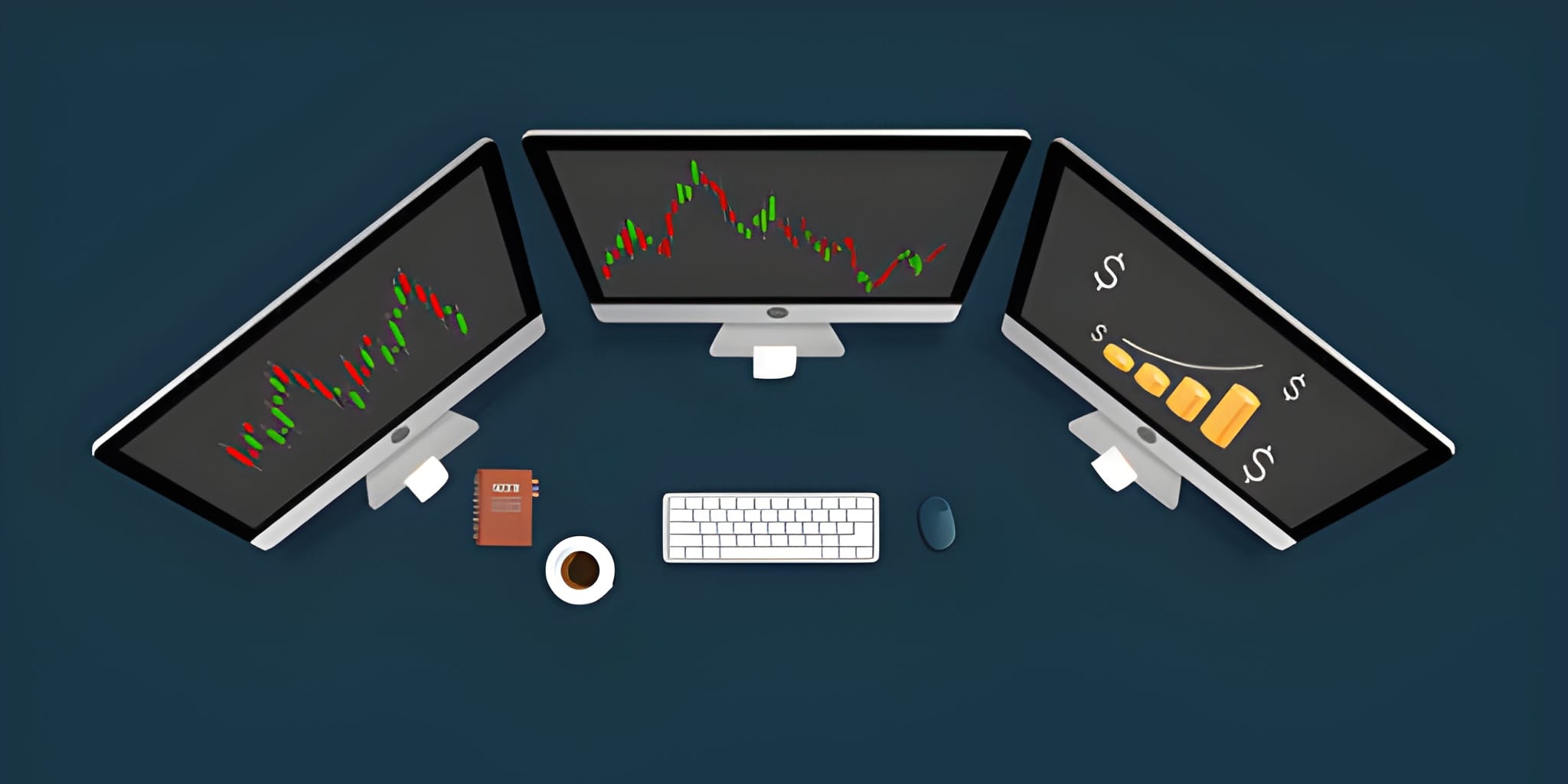
- Multi-Monitor Hardware: Necessary to monitor multiple timeframes, sector correlations, and news feeds simultaneously without switching windows.
- Institutional Charting Software: Platforms capable of displaying tick-by-tick data without the lag common in web-based interfaces.
Profitability Realities and Performance Metrics
The statistical reality of day trading is sobering. Academic and brokerage data suggests that over 90% of retail traders experience significant losses within their first 12 months. Success requires a full-time commitment, extensive training, and sufficient startup capital to absorb the inevitable "learning curve" losses. Furthermore, traders must account for Tax Drag. Short-term gains are typically taxed as ordinary income, which can be significantly higher than the capital gains rates applied to long-term investors.
Profitable traders treat their activity as a business. They maintain a rigorous trading journal, analyze every error, and constantly adapt to changing market "regimes." They do not seek excitement; they seek the boring, repetitive execution of an edge.
The Final Synthesis
Day trading is a high-performance profession that offers financial autonomy to those who can master self-discipline and market mathematics. However, the path to consistency is littered with technical and emotional obstacles. Focus on mastering a single strategy, implement a rigid risk management framework, and treat every trading day as an opportunity to refine your process, not just your results. Liquidity and volatility are the primary tools of your trade; master them, or they will master you.