Operational Excellence: The Institutional Day Trading Checklist for Consistent Payouts
Mission Architecture
- The Professional Necessity of Checklists
- Technical Infrastructure and Latency Checks
- Pre-Market Prep: Narrative and News Filters
- Quantitative Risk and Position Sizing
- Entry Confluence: The Rule of Three
- Intra-Trade Management and Trailing Stops
- Behavioral Audits: Mood and Focus Screening
- Post-Market Forensics: The Growth Journal
The difference between a successful professional and a retail gambler is often found in the rigidity of their operational procedures. In a theater defined by high-frequency volatility and algorithmic precision, human intuition is a liability. A checklist acts as an externalized brain, stripping away the emotional impulses of greed and fear to ensure that every execution meets a predetermined standard of quality.
Operating without a formal checklist is equivalent to a pilot taking off without verifying flight systems; success may occur through luck, but catastrophe is statistically inevitable over a long enough timeline. A professional day trading checklist covers the entire lifecycle of a trade, from the technical calibration of hardware to the forensic review of the daily profit and loss. This guide examines the mechanical components required to build an institutional-grade protocol for intraday speculation.
The Professional Necessity of Checklists
Checklists are utilized in the most high-stakes professions on the planet because they mitigate "unforced errors." In day trading, an unforced error is taking a trade because of FOMO (Fear of Missing Out), ignoring a stop loss, or failing to realize an economic report is being released. A checklist forces the speculator to pause and verify facts before committing capital.
A checklist does not guarantee that a trade will be profitable; it guarantees that a trade will be justifiable. If a losing trade was executed according to all checklist criteria, it is a "good loss." If a winning trade was executed in violation of the checklist, it is a "bad win" that will eventually lead to the erosion of professional discipline.
Technical Infrastructure and Latency Checks
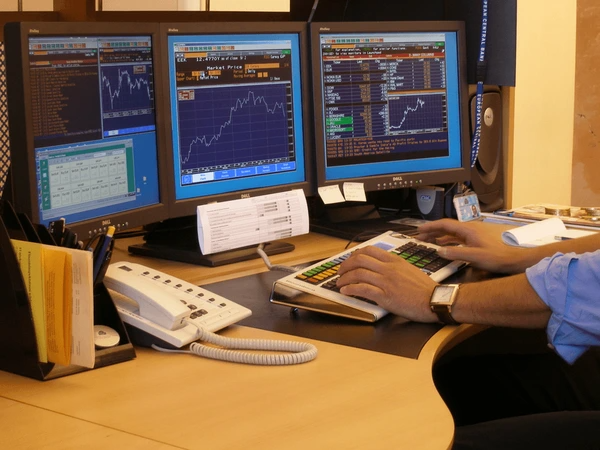
Before the market opens, your hardware must be clinical. A technical failure during a live position is a major risk factor that can lead to catastrophic slippage.
Pre-Market Prep: Narrative and News Filters
The pre-market session (8:00 AM to 9:30 AM EST) is where the day's narrative is forged. A professional does not open the platform at 9:29 AM; they arrive early to filter the noise and locate the genuine momentum.
| Preparation Phase | Required Verification | Action Item | Impact on Trading |
|---|---|---|---|
| Macro Filter | Economic Calendar Check | Note CPI, FOMC, or Jobs data release times. | Avoid volatility traps and news spikes. |
| Sector Bias | Correlation Matrix Review | Check USD Index (DXY) and 10-Year Yields. | Identify the direction of the broad market "wind." |
| Watchlist Build | Relative Volume (RVOL) > 3.0 | Identify top 5 stocks with high pre-market interest. | Focus on assets with institutional participation. |
| Catalyst Audit | News Origin Verification | Check for earnings, FDA approval, or contracts. | Ensure the price move is backed by structural reality. |
Quantitative Risk and Position Sizing
Risk management is not a secondary concern; it is the core of the business. This section of the checklist must be completed before a single share is purchased. If the math does not work, the trade does not exist.
By following this calculation on the checklist, you ensure that even a catastrophic "Black Swan" event on an individual trade only impacts 0.5% of your total net worth. This mathematical armor is what allows a professional to remain calm during extreme volatility.
Entry Confluence: The Rule of Three
A high-probability setup requires Confluence—the alignment of multiple independent factors. A professional uses a "Setup Verification" accordion on their mental checklist to ensure the quality of the entry.
1. Higher Timeframe Alignment: Is the daily chart showing an uptrend?
2. Support Level Confirmation: Is price holding above a major moving average or VWAP?
3. Momentum Indicator Check: Is the RSI above 50 and rising?
4. Order Flow Validation: Does the Level 2 show a "Big Bid" supporting the price?
5. Volume Spike: Is the breakout candle accompanied by a surge in volume?
Intra-Trade Management and Trailing Stops
The checklist does not end once you are in the trade. Managing the position is more critical than entering it. A professional monitors for "Red Flags" that signal the momentum has exhausted.
- Red Flag: Volume is decreasing while the price is making new highs (Divergence).
- Red Flag: The Tape (Time & Sales) shows a massive influx of red prints at the Ask.
- Red Flag: The broad market (SPY/QQQ) is breaking down against your individual ticker.
A common item on professional checklists is: "Once the trade reaches 1:1 risk-to-reward, move the stop-loss to the entry price." This ensures a "risk-free" trade for the remainder of the move, protecting your psychological capital for the next opportunity.
Behavioral Audits: Mood and Focus Screening
You are the most complex piece of hardware in your trading setup. If your internal operating system is compromised, your execution will be flawed.
The 5-Question Personal Screening
- Sleep: Did I get at least 6 hours of quality rest?
- Distraction: Is my environment quiet and free of domestic or digital interruptions?
- Emotion: Am I trying to "revenge trade" to make up for yesterday's loss?
- Patience: Am I willing to do absolutely nothing today if no setup appears?
- Clarity: Do I understand why I am taking this specific trade, or am I just clicking buttons?
Post-Market Forensics: The Growth Journal
The final phase of the checklist occurs after the closing bell. Trading is an iterative process of refinement. If you do not record your data, you cannot improve your performance.
1. Screenshot the Chart: Save an image of the entry and exit with indicators visible.
2. Deviation Analysis: Did I violate any checklist rules today? If so, why?
3. Emotional Review: How did I feel during the 5% drawdown in that position?
4. Outcome Tracking: Record the R-multiple (Risk multiple) of the trade.
5. Market Context: What was the broad market sentiment during my trade execution?
Sustainable Scaling Through Routine
A checklist is the foundation of institutional longevity. It transforms day trading from a chaotic gamble into a systematic business process. By verifying your technical infrastructure, filtering the market narrative, and adhering to rigid mathematical risk parameters, you position yourself to thrive regardless of market direction.
Patience is the only true edge. The market will always present another opportunity tomorrow. Your only job is to remain disciplined enough to be there to take it. Respect the checklist, protect your downside with mechanical severity, and allow the law of large numbers to grow your account equity over time.