Best Cash Accounts for Day Trading: A Strategic Technical Roadmap
Selecting a cash account represents the primary loophole for traders navigating the restrictive regulatory landscape of retail finance. By eliminating leverage, a trader gains the freedom of unlimited daily execution within the boundaries of settled capital.
Strategic Navigator
The Pattern Day Trader Loophole: Freedom via Cash
For most market participants, the 25,000 USD requirement of the Pattern Day Trader (PDT) rule serves as a significant barrier to active trading. This FINRA mandate applies strictly to margin accounts. When you utilize a margin account with less than 25,000 USD in equity, you are restricted to only three round-trip day trades within any rolling five-business-day period. Violating this rule leads to a 90-day account freeze, effectively ending a nascent trading career.
A cash account bypasses the PDT rule entirely. Because you are not borrowing capital from the brokerage, regulators do not impose the same activity restrictions. In a cash account, you can execute as many trades as you wish, provided you only use settled funds. This distinction represents the primary technical edge for small-account traders. Instead of focusing on the number of trades, the focus shifts to managing the rotation of your available cash balance.
Capital Velocity in the T+1 Era
The efficiency of a cash account changed dramatically in May 2024. Prior to this shift, the industry operated on a T+2 settlement cycle, meaning it took two business days for funds from a stock sale to become "settled" and available for a new trade. This created a significant lag in capital velocity, often forcing traders to wait until Wednesday to reuse funds from a Monday morning trade.
The modern transition to T+1 Settlement has effectively doubled the trading capacity of cash accounts. Under the T+1 regime, the proceeds from a sale today settle and become available for reinvestment by the next business day. This accelerated timeline allows for a revolving door of capital that keeps a trader active throughout the week, even with a modest starting balance.
Required a 48-hour wait for capital recycling. Traders often divided their accounts into three separate "buckets" to trade daily, significantly reducing position sizing power.
Requires only a 24-hour wait. A trader can deploy 50% of their account today and the other 50% tomorrow, maintaining a consistent presence in the markets every single day.
For options traders, the advantage is even more pronounced. Options have traditionally settled on a T+1 basis, but the synchronization of stock settlement to T+1 provides a unified workflow for multi-asset traders. The velocity of your capital is now a function of your daily allocation strategy rather than a bureaucratic waiting period.
Navigating the Good Faith Violation Trap
While the cash account removes the PDT restriction, it introduces a unique regulatory hazard: the Good Faith Violation (GFV). A GFV occurs when you purchase a security using unsettled funds and then sell that same security before the funds used to buy it have officially settled. This is viewed by the SEC as a form of "free riding."
Imagine you have 1,000 USD of settled cash on Monday. You buy 1,000 USD of Stock A on Monday morning and sell it Monday afternoon for 1,100 USD. That 1,100 USD is now unsettled. If you use that 1,100 USD to buy Stock B on Monday afternoon, you are allowed to do so. However, if you then sell Stock B before Tuesday morning (when the funds from Stock A settle), you have committed a Good Faith Violation. To avoid this, you must hold Stock B until Tuesday or ensure you only trade with the portion of your account that was settled at the start of the session.
Technical Broker Infrastructure Analysis
Not all brokerages treat cash accounts with the same level of technical priority. For a day trader, the "best" account is defined by execution speed, data integrity, and the quality of the uninvested cash management. We have analyzed the industry leaders to determine where the cash-based operator has the highest probability of success.
Fidelity: The Execution Powerhouse
Fidelity stands out for its commitment to price improvement. Because Fidelity does not sell its equity order flow to market makers (avoiding the PFOF model common in newer apps), traders often receive fills at prices slightly better than the quoted bid or ask. Over a month of active trading, these pennies add up to significant capital preservation. Their Active Trader Pro desktop platform provides robust tools for managing settled vs. unsettled balances in real-time.
Interactive Brokers (IBKR): The Institutional standard
For traders who demand a professional terminal, IBKR’s Trader Workstation (TWS) is unmatched. They offer a unique "Lite" version with zero commissions or a "Pro" version with per-share pricing and superior routing. IBKR also provides some of the highest interest rates on idle cash in the industry, allowing your unsettled "sideline" funds to earn yield while you wait for the next setup.
Webull: The Technical Individual's Choice
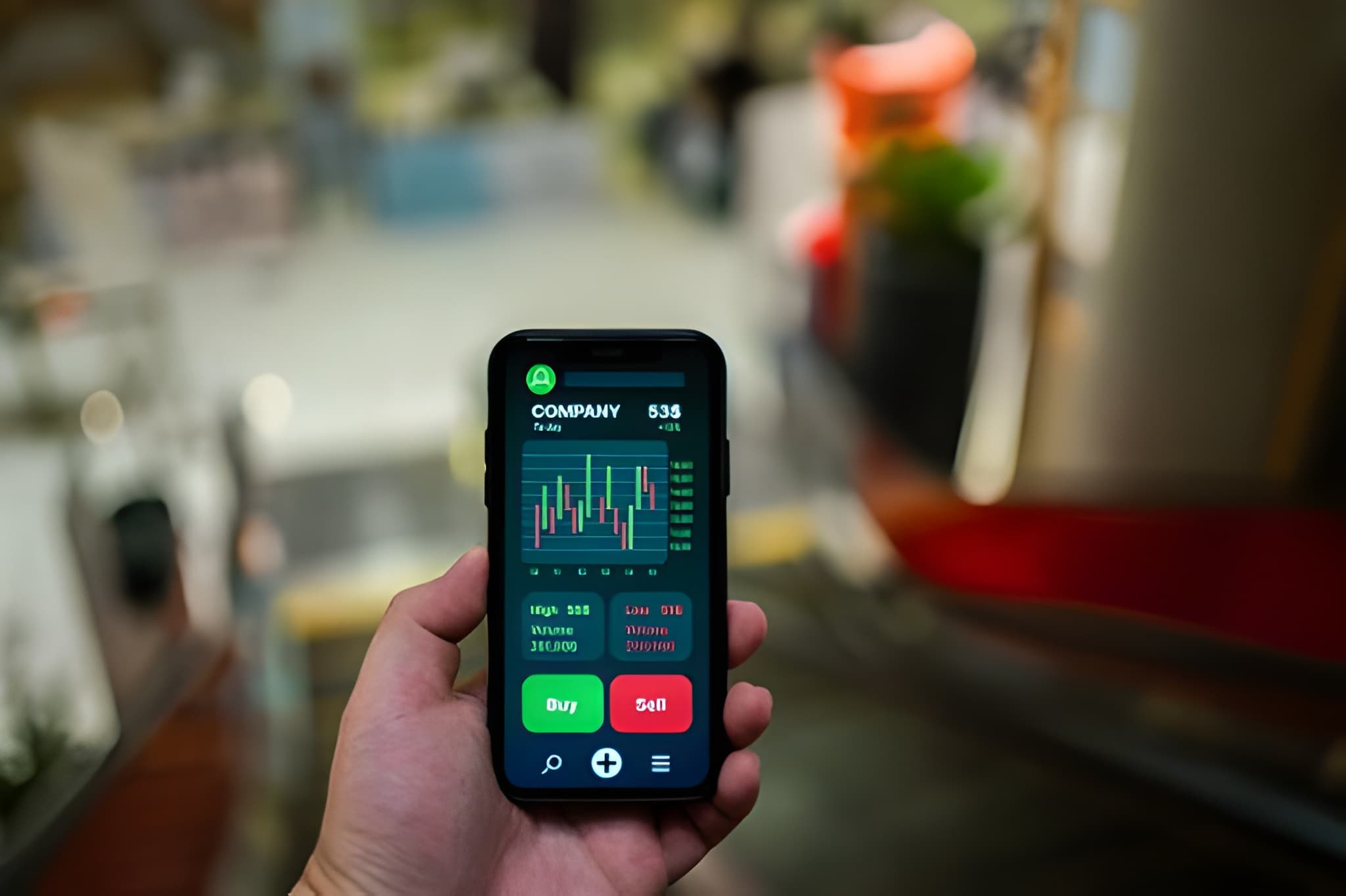
Webull provides a highly technical interface that appeals to the "on-the-go" trader. Their mobile and desktop apps feature integrated Level 2 data and advanced charting. For cash accounts, Webull is particularly transparent, showing a clear breakdown of "Buying Power" versus "Settled Cash," making it much harder to accidentally trigger a Good Faith Violation compared to simpler interfaces.
| Broker | Order Routing | Mobile Logic | Interest on Cash | Best Use Case |
|---|---|---|---|---|
| Fidelity | Direct/Internal | Standard | Automatic Sweep | Execution Quality |
| IBKR | Direct Access | Technical | Tiered High-Yield | Advanced Tools |
| Webull | Smart Routing | Superior | Available | Mobile Charting |
| Schwab | Smart/Thinkorswim | Robust | Manual Sweep | Comprehensive Research |
Mathematics of Capital Recycling
The primary constraint of a cash account is the "budget" of the session. To trade effectively, you must treat your account as a warehouse of fuel. If you burn all your fuel in the first hour, you are grounded for the rest of the day. Professionals utilize a Fractional Deployment Model to ensure they can participate in both the morning volatility and the afternoon trend.
Total Account Value: 10,000 USD (All Settled)
Target Allocation: 50% Daily Cap
Monday: Deploy 5,000 USD. (5,000 USD remains settled for Tuesday).
Tuesday: Deploy 5,000 USD. (The 5,000 USD from Monday settles).
Wednesday: Deploy the 5,000 USD that settled from Monday.
Result: A consistent 5,000 USD of buying power every day.
This model prevents "Friday Fatigue," where a trader has zero buying power on the most volatile day of the week because they over-traded on Thursday. By strictly limiting your daily deployment to 50% of your total equity, you create a sustainable, perpetual cycle of settled capital.
Scaling Strategies for Settled Cash
Trading with settled cash requires a psychological adjustment. In a margin account, the availability of 4x leverage can lead to "revenge trading"—doubling down on a loss to break even. In a cash account, your buying power is absolute. Once a dollar is spent, it is gone for the day. This creates a natural circuit breaker that prevents emotional spirals.
Successful cash account traders focus on Precision over Frequency. Since you only have a fixed amount of capital to deploy, you cannot afford to "spray and pray." You must wait for high-conviction setups where the risk-to-reward ratio is at least 1:3. By focusing on quality, you preserve your capital "fuel" for the best opportunities, leading to a higher win rate and lower emotional volatility.
Final Decision Matrix
Your choice of a cash account should align with your technical requirements and hardware stack. Use the following criteria to finalize your decision.
The Full-Time Workstation Operator
If you trade from a multi-monitor desk and require direct-access routing to capture institutional footprints, Interactive Brokers or Fidelity Active Trader Pro are the industry standards. The stability of their desktop backends is vital for handling the data throughput of active intraday trading.
The Technical Mobile Specialist
If you monitor the markets throughout your workday and require a surgical mobile interface with integrated scanners, Webull is the superior choice. Their app architecture provides the most "information per square inch," allowing for complex analysis without a desktop.
The Safety and Research Advocate
If you prioritize account insurance, high-level research, and the legendary Thinkorswim charting suite, the Charles Schwab cash account is the logical choice. Their integration of professional tools with standard banking security offers a high-trust environment for your capital.