The Professional Path: A Comprehensive Roadmap for Entering the Day Trading Industry
Entering the financial markets as an active day trader requires a shift from an investor's mindset to an operator's discipline. Success in this field demands a rigorous infrastructure, a proven edge, and a mathematical approach to risk.
Strategic Navigator
The Psychological Foundations: Operating Under Pressure
Day trading is frequently marketed as a path to rapid wealth, yet the statistical reality suggests an extremely demanding profession. To enter this industry, you must first decouple your identity from your profit and loss statement. Professionals treat trading as a business where the currency is probability, not intuition. The primary hurdle for any new entrant involves overcoming the biological "fight or flight" response triggered by market volatility.
Emotional stability represents your most valuable asset. When a trade moves against you, the amateur feels a sense of personal failure or a desire to "win back" the capital. The professional views it as a necessary expense of a high-probability model. Decoupling your ego from the ticker allows you to execute your plan with the mechanical precision required to survive the first year of market exposure.
The Hardware and Software Stack: Your Trading Desk
You cannot compete with institutional algorithms and professional desks using a smartphone and a casual internet connection. Professional day trading requires a dedicated environment designed for low latency and data integrity. Your infrastructure serves as the physical backbone of your business.
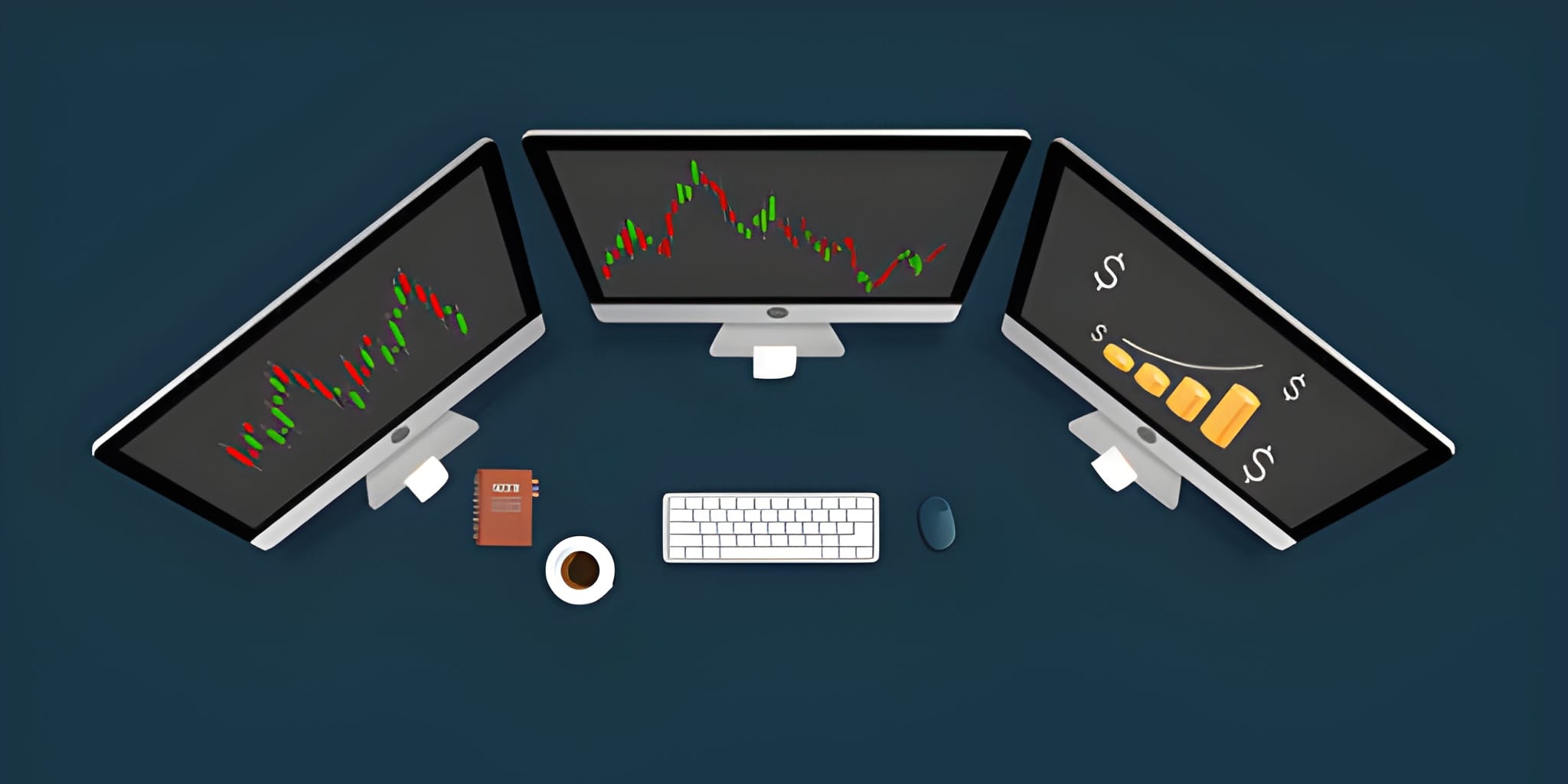
High-speed fiber internet with a redundant backup (e.g., 5G hotspot). A dedicated PC with multiple monitors to track several timeframes and Level 2 data simultaneously.
A direct-access brokerage platform (DAS Trader, Sterling, or TWS). Real-time data feeds directly from the exchanges to ensure quotes reflect the current order book.
Latency represents a hidden cost of trading. Retail-focused web platforms often exhibit delays in price refreshing and order execution. In a fast-moving market, a half-second delay can lead to slippage—filling your order at a price significantly worse than intended. Professional traders utilize direct-access routing to choose the specific exchange where their order is executed, bypassing the delays of standard retail "smart routing."
Capital Structure and the PDT Rule
Before executing your first trade, you must understand the regulatory landscape governing your capital. In the United States, the Pattern Day Trader (PDT) rule represents the most significant barrier to entry for retail participants using margin accounts.
| Account Type | Minimum Requirement | Trading Limitations | Buying Power |
|---|---|---|---|
| Standard Cash Account | $0 (Varies by broker) | Unlimited trades with settled funds | 1:1 (No leverage) |
| Margin Account (Under $25k) | $2,000 | 3 day trades per 5 business days | 2:1 (Overnight) |
| Margin Account (Over $25k) | $25,000 | Unlimited day trading | 4:1 (Intraday) |
For those starting with limited capital, the Cash Account offers a loophole. Because cash accounts are not subject to the PDT rule, you can trade as many times as you like, provided you only use settled cash. In a T+1 settlement environment, funds used on Monday are available for use again on Tuesday. This allows for high-velocity practice even with a smaller balance, avoiding the "three-trade limit" that frequently traps new margin traders into holding losing positions overnight.
Identifying a Repeatable Edge: Statistical Certainty
An "edge" is simply a repeatable market condition that offers a higher probability of one outcome over another. Many beginners make the mistake of searching for a "holy grail" indicator. In reality, an edge is found at the intersection of technical patterns, volume analysis, and market context. You are looking for instances where other traders are forced to act out of necessity or fear.
Common edges for day traders include:
- Mean Reversion: Capturing a snap-back move when a stock extends too far from its volume-weighted average price (VWAP).
- Momentum Breakouts: Entering a trend when a stock breaks through a multi-day resistance level on high relative volume.
- Order Flow: Interpreting the "tape" or Level 2 depth to see institutional accumulation before a price move occurs.
The Mathematics of Loss Mitigation
The secret to professional day trading is not how much you make, but how little you lose when you are wrong. Every trade should be viewed as a mathematical risk-to-reward ratio. If you risk 100 USD to make 300 USD, you only need to be right 33% of the time to break even. This is the positive expectancy model.
1. Determine Account Equity: 30,000 USD
2. Max Risk per Trade (1%): 300 USD
3. Calculate Stop-Loss Distance: 0.50 USD per share
Max Share Size: 300 / 0.50 = 600 Shares
This ensures that even if you hit a stop-loss, your account only declines by 1%.
New traders frequently make the mistake of sizing their trades based on how much they want to make. The professional sizes their trade based on how much they are willing to lose. By keeping your losses consistent, you ensure that a single "bad day" cannot erase weeks of profitable work. This is the foundation of capital preservation.
The Six-Month Apprenticeship: A Phased Roadmap
Day trading is a skill-based profession that requires a training period. Expecting to earn a living in your first month is as unrealistic as expecting a medical student to perform surgery on day one. A structured transition minimizes capital decay during the learning phase.
Focus strictly on market mechanics. Watch how the tape moves during the market open (9:30 AM ET). Identify support and resistance levels without placing trades. Your goal is to learn the "personality" of specific symbols and sectors.
Use a professional simulator that mirrors live market data. Execute your strategy with "fake" money. The objective is to prove that your technical edge results in a positive expectancy over a sample size of at least 100 trades. If you cannot be profitable in a simulator, you will never be profitable in a live market.
Transition to live trading with the smallest possible size (10-100 shares). This phase is designed to test your psychology and discipline with real money at risk. Once you achieve consistency over 20 consecutive days, you can begin to scale your position size incrementally.
Common Pitfalls for New Operators
Success in day trading is as much about what you avoid as what you execute. New entrants are often lured by the noise of social media and the desire for instant gratification, leading to several predictable failure points.
The "Guru" Trap
Social media is saturated with individuals claiming to have "secret" strategies for thousands of dollars. Professional trading is transparent and based on centuries-old market mechanics. Be wary of anyone promising "guaranteed returns" or "low-risk" explosive growth. Your edge must be found through your own data analysis and hours of market screen time.
The Lack of a Trading Plan
If you enter a trade without knowing exactly where you will exit—both for a win and a loss—you are gambling. A trading plan must specify your entry triggers, your share size, your stop-loss, and your profit targets. Discipline is the ability to follow that plan even when your emotions are screaming at you to do otherwise.