
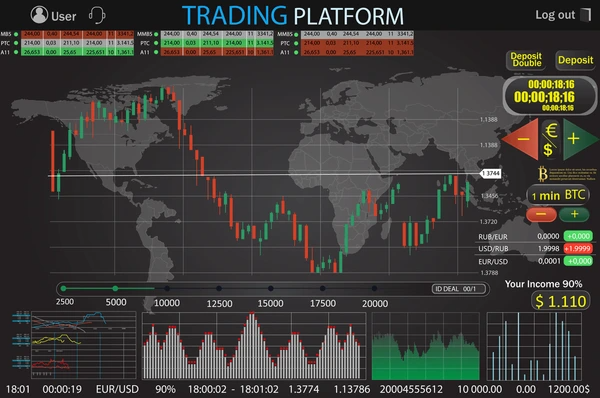
Decoded: The Internal Logic and Architecture of High-Performance Trading Algorithms
- The Brain vs. The Plumbing
- Sensory Input: Real-Time Data Streams
- The Logic Gates: Alpha Generation
- State Management: Counting the Buys
- The Risk Governor: Safety Protocols
- The Execution Layer: Market Microstructure
- Quantitative Logic: The Probability Filter
- The Optimization Loop: Learning from History
- Surviving Regime Shifts
- Expert Verdict on System Design
The Brain vs. The Plumbing
Public discussion regarding algorithmic trading frequently revolves around artificial intelligence and predictive magic. However, a professional trading algorithm operates more like a sophisticated logistics factory than a sentient crystal ball. To decode how an actual algorithm works, we must separate the "Alpha Model"—the brain that identifies opportunities—from the "Execution Engine"—the plumbing that carries out the task.
The brain of the algorithm focuses on statistical probability. It analyzes millions of historical data points to identify a recurring edge. Once identified, the plumbing takes over, managing the thousands of micro-decisions required to buy or sell an asset without alerting the rest of the market. This symbiotic relationship ensures that a good idea actually results in a profitable trade. In the digital arena, a brilliant idea with poor plumbing leads to "execution rot," where slippage and fees evaporate all potential gains.
Sensory Input: Real-Time Data Streams
An algorithm "sees" the world through data streams. These are not the delayed charts found on retail websites. Instead, professional algorithms ingest raw, tick-by-tick data directly from exchange servers. This sensory layer is the first component of the architecture.
The Logic Gates: Alpha Generation
Once the data is ingested, it passes through a series of "Logic Gates." This is the Alpha Model. It applies mathematical filters to determine if a specific market condition meets the criteria for a trade.
For example, a Mean Reversion algorithm might use a Z-Score to measure how far the current price has deviated from its 20-day average. If the Z-score reaches 3.0 (meaning the price is three standard deviations away from the mean), the logic gate triggers a "Potential Buy." This is not an instruction to buy yet; it is merely a signal that the market is stretched and likely to snap back.
State Management: Counting the Buys
One of the most complex tasks within an algorithm is "State Management." The algorithm must constantly track what it is doing across thousands of simultaneous orders. It must accurately count the number of buys currently in flight.
The Risk Governor: Safety Protocols
Before a signal becomes a trade, it must pass the "Risk Governor." This component has the power to veto any trade, regardless of how strong the Alpha signal appears. The Risk Governor enforces the firm's survival rules.
- Hard Position Limits: No single trade can exceed X% of the total account equity.
- Sector Correlation: If the algorithm is already long on Apple and Microsoft, the Risk Governor might block a buy for Nvidia to prevent over-exposure to the technology sector.
- Daily Loss Ceilings: If the system loses a pre-defined amount of capital (e.g., 2%) in a single day, the Risk Governor executes a "Global Kill Switch," flattening all positions and shutting down for the session.
The Execution Layer: Market Microstructure
The Execution Layer is where the algorithm interacts with the real world. Large orders cannot be placed at once without moving the price against the firm. To solve this, the execution engine uses "Slicers" to hide the trade.
| Execution Algorithm | Mechanism | Strategic Goal |
|---|---|---|
| VWAP (Volume Weighted) | Slices orders to match the average daily volume profile. | Minimizes market impact by blending in with the crowd. |
| TWAP (Time Weighted) | Executes equal slices at regular time intervals. | Useful for liquidating large positions over a full trading day. |
| Implementation Shortfall | Aims to minimize the difference between the decision price and final fill. | Balances the risk of waiting against the cost of moving the market. |
| Stealth / Iceberg | Shows only a tiny fraction of the total order to the public book. | Prevents other predatory algorithms from detecting a large buyer. |
Quantitative Logic: The Probability Filter
Actual trading algorithms rely on Expectancy Arithmetic. The system must know the "Cost of Doing Business." Every trade involves commissions, exchange fees, and slippage.
A viable algorithm must satisfy the following inequality:
Net Profit = (Win Rate * Avg Win) - (Loss Rate * Avg Loss) - (Avg Slippage + Commissions)
Example Calculation:
Win Rate: 55%, Avg Win: 200 USD
Loss Rate: 45%, Avg Loss: 150 USD
Slippage + Fees: 15 USD per trade
Expected Profit = (0.55 * 200) - (0.45 * 150) - 15
Expected Profit = 110 - 67.5 - 15 = 27.50 USD per trade
If the "Slippage" variable rises during high volatility, a profitable algorithm can instantly become a losing one. The system must monitor this in real-time.
The Optimization Loop: Learning from History
A trading algorithm is never "finished." It exists in a state of constant iteration. After every trading day, the "Post-Trade Analysis" module reviews every fill. It compares the "Decision Price" (when the signal was first generated) to the "Execution Price" (when the trade was actually filled).
This data is fed back into the simulator. If the algorithm is consistently losing more to slippage than expected, the developers might adjust the "Slicer" settings or change the time of day the bot is active. This feedback loop ensures the algorithm adapts to the evolving "Microstructure" of the exchange.
Surviving Regime Shifts
The greatest threat to an algorithm is a "Regime Shift." This happens when the fundamental behavior of the market changes—for instance, moving from a period of low interest rates to high inflation. An algorithm built for a "low volatility" environment will often fail catastrophically when volatility spikes.
Decoded algorithms use Regime Filters. These are meta-algorithms that monitor the health of the primary trading bot. If the bot's performance deviates too far from its historical backtest (e.g., three standard deviations), the Regime Filter assumes the market has changed and automatically reduces the bot's capital allocation or pauses it entirely. This "System of Systems" approach is what separates professional institutional quants from retail "bots."
Expert Verdict on System Design
Deciphering a trading algorithm reveals a complex ecosystem of data ingestion, statistical logic, ledger management, and risk governance. It is not a single tool, but a modular architecture designed to identify and capture an edge with surgical precision.
As a finance expert, I emphasize that the most robust algorithms are characterized by their simplicity and their safety protocols. In the high-stakes digital markets, the bot that wins is the one that survives the longest. Success is the result of thousands of micro-decisions being executed correctly, second by second, without the interference of human emotion or hesitation. The algorithm is the ultimate expression of disciplined, mathematical wealth creation.


