
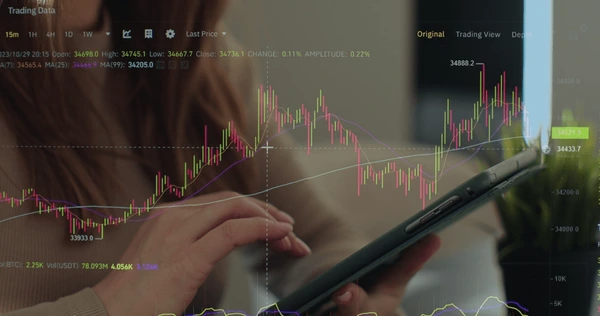
The Physical Edge: Why Commodity Investors are Turning to Algorithmic Trading
The Evolution of the Trading Pit
For decades, the commodities market served as the final frontier for manual, "gut-feeling" trading. While equities and foreign exchange shifted to electronic matching engines in the 1990s, the raw materials sector—gold, crude oil, soybeans, and copper—remained tethered to the shouting floors of the Chicago Board of Trade and the London Metal Exchange. Today, that physical infrastructure has largely vanished, replaced by a sprawling digital ecosystem where algorithmic logic reigns supreme.
The embrace of algorithmic trading by commodity investors is not merely a matter of efficiency; it is a prerequisite for survival. The modern commodity market is no longer driven solely by weather reports or mining strikes. It is influenced by a complex web of global interest rates, geopolitical shifts, and cross-asset correlations. As a finance expert, I have observed that institutional capital has moved away from discretionary bets, favoring systematic models that can process millions of data points across the entire supply chain in real-time.
Understanding Commodity Dynamics
Commodities differ fundamentally from stocks. When you buy a share of a technology company, you are buying a claim on future cash flows. When you trade a commodity, you are dealing with a physical asset that has storage costs, transportation hurdles, and finite supply. These physical realities create unique mathematical patterns—such as contango and backwardation—that algorithms are uniquely qualified to exploit.
Algorithmic models in this space must account for the Term Structure of the market. This refers to the price difference between a contract for immediate delivery and a contract for delivery in six months. A systematic investor doesn't just look at the "price of oil"; they look at the entire curve of prices and use algorithms to determine the most cost-effective way to maintain exposure.
Alternative Data: The New Alpha
In the algorithmic commodity world, the most valuable information isn't found in a central bank report; it is found in the physical world. This has birthed the era of Alternative Data. Systematic investors use computer vision and machine learning to analyze datasets that were previously inaccessible.
Core Algorithmic Strategies
Investors utilize several distinct systematic frameworks to capture value in the commodities space. Unlike the simple "buy and hold" approach, these algorithms are often market-neutral, seeking to profit from the relationships between different assets or time periods.
Mathematics of the Roll Yield
One of the most critical components of a commodity algorithm is the management of the Roll Yield. Since futures contracts expire, a systematic investor must "roll" their position into a new month. If the new month is more expensive than the current one, the investor loses money on the transition.
Suppose an algorithm is Long on Crude Oil for March at 75.00 USD.
The March contract is nearing expiration.
The April contract is trading at 76.50 USD.
Cost to Roll: 76.50 - 75.00 = 1.50 USD (Loss per barrel).
This market state is called Contango. An advanced algorithm will analyze the entire curve to see if it can "roll" into a further month (like June) where the cost might be lower, or even shift its position to a related asset to avoid the roll decay.
High-Frequency Commodity Execution
While many commodity investors operate on longer timeframes, the Execution Layer is dominated by high-frequency algorithms. These tools are designed to minimize "market impact"—the unintended price movement caused by placing a large order.
Large commodity orders (e.g., buying 5,000 contracts of gold) are broken down into thousands of tiny slices by an execution bot. These slices are then distributed across different exchanges and hidden within the "noise" of the market. This ensures that the investor receives the best possible average price without alerting other market participants to their intentions.
Risk Management in Physical Markets
| Risk Category | Standard Market Risk | Commodity-Specific Algorithmic Risk |
|---|---|---|
| Volatility | Price fluctuations. | Jump diffusion (sudden spikes due to supply shocks). |
| Liquidity | Inability to find a buyer. | Gap risks during exchange-mandated "limit up/down" events. |
| Technical | API connectivity issues. | Physical delivery risk if the "roll" algorithm fails to execute. |
| Regulatory | Insider trading laws. | Position limits imposed by agencies like the CFTC. |
Liquidity and Storage Constraints
A unique challenge for commodity algorithms is the Storage Constraint. In extreme cases, such as the negative oil prices seen in early 2020, the cost of storing a physical commodity can exceed the value of the commodity itself. Algorithmic models must now incorporate "Storage Cost Variables" and "Transportation Latency" into their pricing logic.
Furthermore, commodity markets are often less liquid than major equity indexes. An algorithm that works on the S&P 500 might cause massive price distortion if applied to the lean hog or orange juice markets. Systematic investors must use "Liquidity Filters" to ensure that their trade size remains a small percentage of the daily volume, preventing the bot from trading against itself.
The Future of Systemic Investing
We are entering the era of Cross-Commodity Intelligence. Future algorithms won't just look at one asset; they will analyze the relationship between copper (a bellwether for construction), lumber (housing), and oil (energy). By understanding these inter-relationships, algorithms will be able to predict economic shifts before they are reflected in broader equity markets.
As a finance expert, I believe the "commodity pit" of the future will be a purely virtual space governed by quantum-ready algorithms. The human element will shift from execution to model curation—the process of auditing the machine's assumptions and ensuring that the algorithm remains grounded in the physical reality of supply and demand. In the raw materials market, the winners will be those who can bridge the gap between digital speed and physical truth.


