
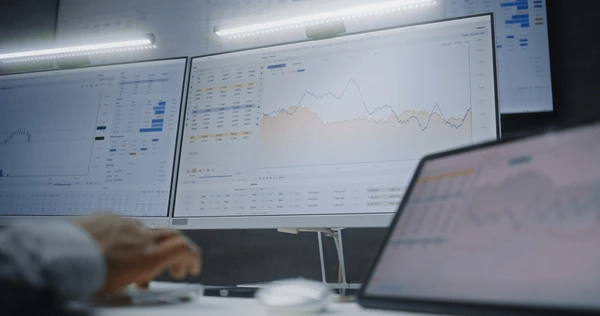
Quantitative Mastery: Top Trading Simulators for Algorithmic Practice
Bridge the Gap Between Theoretical Models and Live Market ExecutionModule Explorer
The Vital Role of High-Fidelity Simulation
The transition from a mathematical concept to a profitable trading strategy is fraught with hidden dangers. For the independent quant, the trading simulator is not merely a practice tool; it is a laboratory where theories are rigorously tested against the harsh reality of market dynamics. Unlike standard paper trading, which often ignores the complexities of execution, algorithmic simulation requires a high level of fidelity to be meaningful.
In the United States, where markets are characterized by extreme fragmentation and high-frequency participation, a simulator must do more than just record prices. It must account for the way an order interacts with the limit order book. Without this interaction, a developer might fall into the trap of "paper profits"—results that look spectacular on a spreadsheet but disintegrate the moment real capital is committed to the exchange.
The goal of advanced simulation is to fail early and often in a safe environment. By exposing a script to historical "stress events," such as the 2010 Flash Crash or more recent volatility spikes, an investor can identify the breaking points of their logic. This process of iterative refinement is what separates institutional-grade quantitative desks from retail participants who rely on intuition.
Vectorized vs. Event-Driven Systems
When selecting a simulator, you must choose between two primary architectures: Vectorized and Event-Driven. Understanding the distinction is critical for your development workflow.
Vectorized backtesting is fast and efficient. It uses entire arrays of data to calculate performance simultaneously. This is excellent for early-stage research and identifying broad statistical edges. However, vectorized systems often ignore "look-ahead bias"—accidentally using future information to make past decisions—and they struggle to model complex order types like trailing stops or fill probabilities.
Event-driven simulators, on the other hand, replicate the flow of the market tick by tick. The system sends an "event" to your algorithm, and the algorithm must respond in real-time. This is significantly slower but far more accurate. It forces the code to handle the actual sequence of events as they happen, ensuring that the logic you test is exactly the logic you will deploy in production.
High-speed calculations using libraries like Pandas. Best for initial hypothesis testing and long-term trend analysis.
Mimics live market heartbeats. Necessary for high-frequency strategies and complex execution logic.
Key Performance Benchmarks
To ensure your simulator is a reliable proxy for the real world, it must meet specific benchmarks regarding slippage modeling and latency emulation.
Execution is never instantaneous. In a live environment, the time it takes for your signal to reach the broker and for the broker to hit the exchange creates a delay. A professional-grade simulator allows you to program this "round-trip latency." Furthermore, it should simulate the "bid-ask bounce," where your market order is always filled at the unfavorable side of the spread.
| Requirement | Why it Matters | Retail Standard | Pro Standard |
|---|---|---|---|
| Data Granularity | Detects intraday stop triggers. | 1-Minute Bars | L1/L2 Tick Data |
| Order Simulation | Accurate fill pricing. | Last Price | Order Book Impact |
| Corporate Actions | Adjusts for dividends/splits. | Manual | Auto-Adjusted |
| Latency Jitter | Models network instability. | Zero | Randomized Delay |
Top-Tier Simulator Platforms
Several platforms have emerged as leaders in the quantitative space, each catering to different skill sets and strategic needs.
QuantConnect provides a robust, cloud-based event-driven engine called LEAN. It supports C# and Python and offers access to massive amounts of historical tick data for equities, forex, and crypto. Its "Alpha Streams" allow developers to license their winning algorithms to hedge funds, making it a professional ecosystem beyond just a simulator.
The TWS Paper Trading account is a perfect mirror of the Interactive Brokers live environment. While its backtesting tools are limited, its "Forward Testing" capability is unmatched. It allows you to run your production code against real-time data feeds in a sandbox, providing a final check before going live.
Alpaca offers a free paper trading API that is incredibly easy to integrate with custom Python bots. It is designed for developers who want to build their own infrastructure but need a reliable, commission-free execution simulator to test their API calls and order management logic.
Modeling Realistic Market Friction
The most common reason algorithms fail in transition is the underestimation of friction. Friction is the sum of commissions, exchange fees, and market impact.
If your strategy has a high turnover, even a small fee can turn a winning model into a losing one. Your simulator must allow for custom commission schedules. In the US, many brokers have moved to zero-commission for equities, but "payment for order flow" (PFOF) means you might get worse fills. Your simulator should be able to model this "hidden" cost.
Gross_Profit = Sum(Winning_Trades) - Sum(Losing_Trades);
Total_Friction = (Total_Trades * Commission) + (Total_Shares * Avg_Slippage);
Net_Expectancy = (Gross_Profit - Total_Friction) / Total_Trades;
Note: If Net_Expectancy is less than 0.5% of the asset price, the strategy is likely too fragile for live trading.
Tick Data and Survivorship Bias
Data integrity is the foundation of quantitative research. One of the most dangerous errors is Survivorship Bias—testing a strategy only on stocks that exist today. If your simulator doesn't include data for companies that went bankrupt or were delisted, your results will be skewed toward success, as you are only testing on "survivors."
Furthermore, "Look-Ahead Bias" occurs when the model accidentally peaks into the future. For example, using the day's closing price to calculate an entry that supposedly happened at noon. A high-quality event-driven simulator prevents this by strictly isolating the data feed from the decision engine.
The Psychological Transition to Live Capital
No simulator can perfectly replicate the psychological pressure of watching real money fluctuate. This is known as the "Paper Trading Paradox." When there is no risk, it is easy to stay disciplined and follow the algorithm. When real capital is at stake, the temptation to "override" the bot during a drawdown is intense.
To mitigate this, quants use Incubation Periods. After a strategy passes the simulator phase, it is deployed with a "micro-account"—using minimal capital to verify that the live execution metrics match the simulated metrics. Only after the "Alpha Decay" is proven to be minimal should the strategy be scaled up to full size.
Decision Matrix and Checklist
Choosing the right simulator is a function of your technical debt and capital goals. If you are a Python enthusiast, cloud-based tools like QuantConnect offer the lowest friction for setup. If you are building a proprietary HFT system, you will likely need to build a custom event-driven engine in C++ and purchase raw tick data from providers like TickData or IQFeed.
2. Can I adjust the fill logic to assume I only get filled at the "worst" price of the spread?
3. Is the order management system (OMS) separate from the signal generation logic?
4. Does the system handle dividends and stock splits automatically?
5. Can I run Monte Carlo simulations on the trade results to see the probability of ruin?
Ultimately, the best simulator is the one that forces you to be honest with your data. The machine is a tool for finding truth in noise. By utilizing these high-fidelity sandboxes, independent investors can level the playing field, ensuring that when they finally step into the arena of live capital, they do so with a battle-tested and statistically verified edge.


