
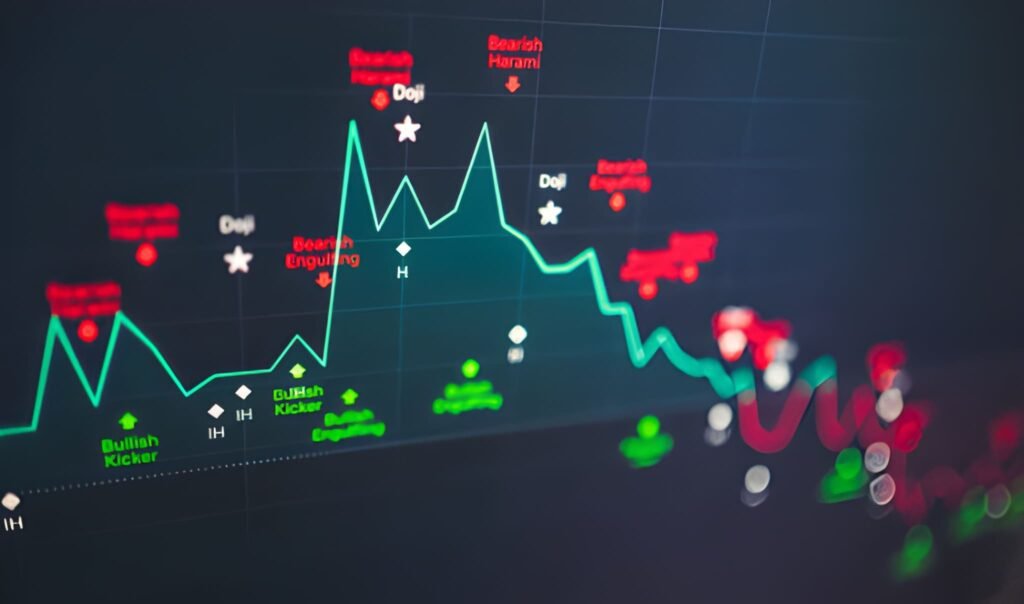
The Digital Arsonist and the Firefighter: Algorithmic Trading During Big Market Drops
Modern financial markets no longer move at the speed of human thought. In the era of high-frequency execution and autonomous portfolio management, a significant market drop occurs in milliseconds rather than hours. When the Dow Jones or S&P 500 experiences a big drop, the primary drivers are rarely humans frantically dialing their brokers. Instead, millions of lines of code interact in a hyper-compressed timeframe, creating a digital feedback loop that can either stabilize the system or push it toward a systemic collapse.
For the investment expert, understanding these events requires a departure from traditional fundamental analysis. During a crisis, earnings ratios and dividend yields matter far less than market microstructure and order book dynamics. Algorithmic trading systems act as both the arsonist that ignites the sell-off and the firefighter that provides the eventual bottom. This article examines the architectural flaws that trigger these drops and the sophisticated safeguards designed to prevent a total market evaporation.
Mechanics of the Selling Cascade
A selling cascade begins when a specific price threshold triggers a cluster of automated sell orders. In the United States, many institutional funds utilize Stop-Loss Algorithms to protect capital. When the market price hits a certain level, these algorithms execute market sell orders immediately.
The problem arises when thousands of different algorithms share similar "pain points." If the market hits a key technical level—such as a 200-day moving average—the resulting surge in sell orders overwhelms the buy-side interest. As the price drops further, it hits the next layer of stop-loss triggers. This creates a vertical drop in price, often referred to as a "waterfall" move, where the price falls through several percentage points without a single buy order being filled.
Positive Feedback Loops
In many big drop events, algorithms enter a positive feedback loop. A sell order from Algorithm A causes a price drop, which triggers Algorithm B. Algorithm B’s sell order pushes the price further, triggering Algorithm C. This cycle continues until the market hits a "liquidity pocket" or a regulatory circuit breaker stops the process.
The Phantom Liquidity Vacuum
One of the most dangerous phenomena during big drops is the Liquidity Vacuum. High-frequency market makers (HFTs) provide the vast majority of liquidity in modern markets. They place thousands of buy and sell orders at the Best Bid and Offer (BBO). However, these firms are not obligated to remain in the market.
When volatility exceeds a certain threshold, the market maker’s risk-management algorithm detects Toxic Order Flow. This indicates that the seller likely has a massive amount of shares yet to trade. To protect their own capital, the market-making algorithms pull their buy orders from the book instantly. The "bid" vanishes, and the price essentially "teleports" to the next available buy order, which might be 5% or 10% lower. This creates the "Flash Crash" effect where blue-chip stocks trade for pennies for a few seconds.
| Market Actor | Role in Big Drops | Typical Reaction |
|---|---|---|
| Market Makers (HFT) | Liquidity Providers | Withdraw quotes when volatility spikes. |
| Trend Followers | Momentum Chasers | Add selling pressure as the trend accelerates. |
| Index Arbitrageurs | Cross-Market Links | Transmit panic from futures to spot equities. |
| Risk Parity Funds | Asset Balancers | Sell equities to maintain fixed risk ratios. |
High-Frequency Trading: Hero or Villain?
The role of HFT during market events is a subject of intense debate. Critics argue that their speed exacerbates the drop by front-running large sell orders and withdrawing liquidity when it is needed most. However, data from major US market events suggests a more nuanced reality.
On May 6, 2010, the Dow Jones dropped nearly 1,000 points in minutes. While a single large sell order in the E-Mini S&P 500 futures triggered the event, HFT algorithms were the ones that provided the eventual bottom. Once the price hit a level where the "Value Seekers" identified a massive mispricing, HFTs aggressively bought the dip, returning the market to its pre-crash levels within 30 minutes. In this instance, they acted as the arsonists early on but became the primary firefighters at the bottom.
Circuit Breakers and Regulatory Gates
Following the 2010 event, the SEC and CFTC implemented the "Limit Up-Limit Down" (LULD) rule. This mechanism creates a 5-minute trading pause if a stock moves by a specific percentage. These pauses are designed to give human traders time to evaluate the data and reset their algorithms.
There are also "Market-Wide Circuit Breakers" (MWCB) that pause the entire exchange for 15 minutes if the S&P 500 drops 7% or 13%. If the market drops 20%, it shuts down for the day. These gates are essential for breaking the algorithmic death spiral, as they force the software to stop executing against a vanishing order book.
The Mathematics of Volatility Spikes
Algorithms identify big drops by monitoring the Standard Deviation of returns over a rolling window. When the realized volatility exceeds the expected volatility by several multiples (e.g., a 4-sigma event), the risk-management logic takes over.
Impact of Volatility on Position Sizing
A professional fund might target a constant Value at Risk (VaR). If volatility (V) doubles, the algorithm must cut the position size (S) by half to maintain the same risk level.
Target Exposure = (Max Risk Account) / (Asset Volatility)Example: During the 2020 COVID-19 dip, daily volatility for the S&P 500 spiked from 1% to 5%. An algorithm targeting a fixed risk profile would have automatically sold 80% of its equity holdings within three trading days, contributing to the speed of the drop.
Strategies for Navigating Big Drops
Not all algorithms lose money during big drops. Systematic Tail Risk Hedging and Volatility Arbitrage strategies thrive during these periods. These algorithms do not try to predict the crash; they position themselves to profit from the expansion of spreads and the increase in the VIX (Volatility Index).
- Dynamic Hedging: Algorithms use "Put" options to protect long positions. As the market drops, the algorithm automatically buys more protection or sells futures to "Delta Hedge" the portfolio.
- Liquidity Sourcing: Advanced algorithms use "Smart Order Routers" to find hidden liquidity in Dark Pools, avoiding the toxic "lit" exchanges where the sell-off is most aggressive.
- Mean Reversion: Once a drop exceeds statistical norms (e.g., 3 standard deviations), contrarian algorithms begin aggressively buying, betting on a technical bounce.
Building Resilient Algorithmic Ecosystems
The future of market stability lies in Machine Learning Resilience. Instead of static rules, modern algorithms use Reinforcement Learning to identify the "regime" of the market. If the system identifies a "Stress Regime," it shifts from aggressive execution to defensive capital preservation.
Furthermore, the socio-economic context of the US market continues to evolve. As retail participation increases via automated "Robo-Advisors," the potential for a coordinated retail sell-off increases. Regulators are currently exploring "Speed Bumps"—intentional delays in execution—to ensure that the fastest algorithm doesn't necessarily have the advantage during a systemic panic.
In conclusion, big market drops are an inherent feature of a high-frequency digital economy. Algorithms act as a mirror for market fear, magnifying it through automated efficiency. While they can accelerate a decline, they also provide the calculation speed necessary to find equilibrium once the panic subsides. For the investor, success in the algorithmic age requires a healthy respect for the fragility of liquidity and a commitment to the technical safeguards that keep the system functioning when the screens turn red.


