
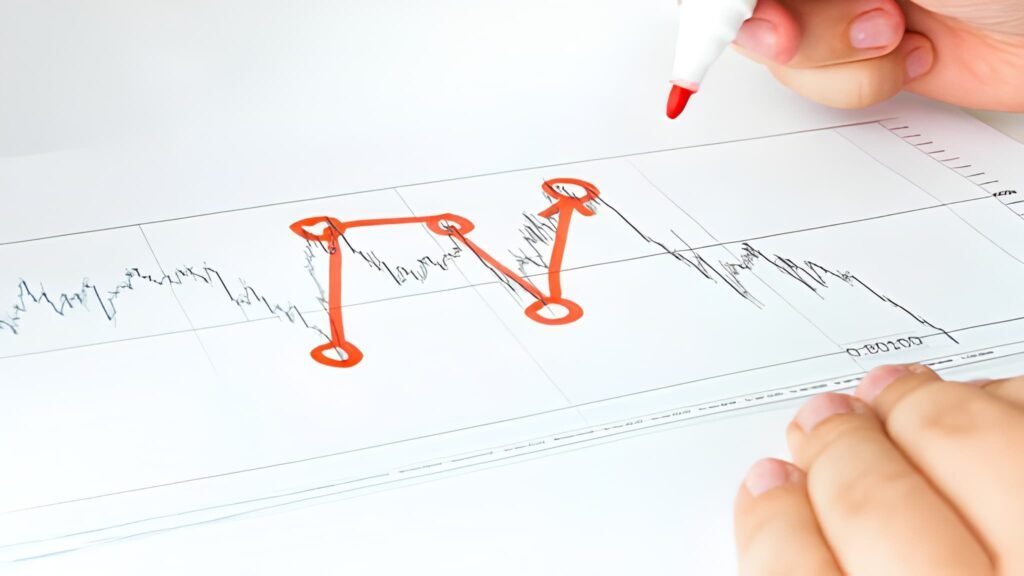
The 3/10 Architecture: Synergizing Momentum and Trend State Estimation
A Professional Framework for Capturing High-Velocity Market Regimes
- The Physics of the 3/10 Differential
- The Components: Fast Line vs. Slow Line
- Trend Regimes and Zero-Line Logic
- The Momentum Slingshot: Pullback Entries
- Divergence Architecture: Spotting Reversals
- Multi-Timeframe Fractal Confirmation
- Risk Architecture and Position Sizing
- Institutional Execution Protocols
Financial markets operate as a non-stationary system where price action oscillates between periods of directional inertia (trend) and rapid expansion (momentum). For the professional operator, the challenge lies in distinguishing between a temporary price spike and a structural trend shift. Trading both momentum and trend with the 3/10 oscillator provides a quantitative solution to this problem. Developed by Linda Raschke, this dual-line oscillator is a derivative of moving average differentials, specifically designed to visualize the conflict between short-term velocity and intermediate-term direction.
Success with the 3/10 framework requires moving beyond simple line-crossing logic. It demands a clinical understanding of "State Estimation"—identifying whether the market is in a high-momentum expansion phase or a mature trend consolidation phase. By monitoring the relationship between the Fast Line and the Slow Line, a trader can identify "Momentum Ignition" events before they reflect on lagging indicators. This guide provides the technical architecture for utilizing the 3/10 oscillator as a primary decision-making engine in high-velocity markets.
The Physics of the 3/10 Differential
The 3/10 oscillator is fundamentally a measurement of "Price Acceleration." It utilizes two Simple Moving Averages (SMA)—the 3-period and the 10-period—to create a differential. In the physical world, velocity is the rate of change of position, and acceleration is the rate of change of velocity. The 3/10 oscillator treats the 3-period SMA as the current velocity and the 10-period SMA as the baseline equilibrium.
The core philosophy is that price follows momentum. In a healthy trend, momentum (the 3/10 Fast Line) will make a new high before the price makes a new high. When this relationship holds, the trend is considered structural. When it breaks (divergence), the trend is considered speculative. Understanding this "Lead-Lag" relationship is the first step in the 3/10 architecture.
The Components: Fast Line vs. Slow Line
Unlike a single-line oscillator like RSI, the 3/10 system utilizes two distinct lines that quantify different temporal horizons. Mastering the interaction between these two lines allows for a three-dimensional view of market health.
The Fast Line (3-10)
Calculated as (3-SMA minus 10-SMA). This line represents raw momentum. It crosses the zero line when the 3-period SMA crosses the 10-period SMA. It is the most sensitive component of the framework.
The Slow Line (Signal)
A 16-period SMA of the Fast Line. This line represents the intermediate-term trend direction. It filters the "vibrations" of the Fast Line to show the structural drift of capital.
The Zero Line
The point of equilibrium. When the Fast Line is above zero, momentum is bullish. When the Slow Line is above zero, the primary trend is bullish. The zero line acts as the "Magnetic North" for mean reversion.
Trend Regimes and Zero-Line Logic
To trade the trend, we look at the Slow Line. In a professional 3/10 setup, we do not trade against the slope of the Slow Line. If the Slow Line is above zero and sloping upward, the regime is "Trend-On." Any short position taken in this environment is a high-risk counter-trend trade that carries a lower statistical expectancy.
| Market State | Fast Line Behavior | Slow Line Behavior | Strategic Action |
|---|---|---|---|
| Impulsive Trend | High above zero; making new highs. | Above zero; sloping upward. | Aggressive Long; buy any minor dip. |
| Momentum Ignition | Crosses above Slow Line vertically. | Crossing above zero for the first time. | Entry Signal: Institutional herding is starting. |
| Trend Consolidation | Pulling back toward the Zero Line. | Stays above zero; maintains slope. | The "Slingshot" Setup; prepare for entry. |
| Trend Exhaustion | Below zero or making lower highs. | Flattening out or curving down. | Exit Protocol: Take profits or move stops tight. |
The Momentum Slingshot: Pullback Entries
The highest probability trade in the 3/10 architecture is the Momentum Slingshot (often referred to as the "Anti" setup). This occurs when the momentum (Fast Line) undergoes a mean-reversion move that contradicts the primary trend (Slow Line). This setup visualizes the "Rubber Band" effect of the market.
1. Confirm Trend: The Slow Line must be clearly above zero and sloping up.
2. Identify Pullback: The Fast Line must pull back toward the zero line (or cross slightly below it). This indicates that short-term sellers have entered a bullish market.
3. Trigger: We enter long when the Fast Line "ticks up" or crosses back above the Slow Line. This confirms that the temporary pullback has exhausted and the primary trend inertia is resuming. This setup allows for a tight stop-loss below the recent technical pivot.
The power of the slingshot lies in its Asymmetry. Because we are entering in the direction of the structural trend during a period of temporary momentum weakness, we capture the "Second Wave" of the move. This is the hallmark of institutional-grade trend following: waiting for the crowd to "shake out" before participating in the next impulsive expansion.
Divergence Architecture: Spotting Reversals
While the slingshot trades continuation, Divergence identifies exhaustion. This occurs when the price of an asset makes a new high, but the 3/10 Fast Line fails to confirm it by making a lower high. This represents a "Deceleration of Conviction." While the price is rising, the rate at which it is rising is decaying.
Professional momentum traders use "Nested Divergence." If you see divergence on the 60-minute chart and the 15-minute chart simultaneously, the probability of a structural trend reversal is exceptionally high. However, a warrior trader never shorts based on divergence alone; they wait for the Slow Line to curve down, proving that the trend state has officially shifted from expansion to distribution.
Multi-Timeframe Fractal Confirmation
A momentum signal on a 5-minute chart is noise if it fights a 4-hour trend. The 3/10 architecture utilizes Fractal Alignment. We use the "Rule of Five" or "Rule of Four"—checking a timeframe that is 4 to 5 times larger than our execution frame.
The Drift Frame (Daily)
Checks the position of the Slow Line. If it's bullish, we have a long bias for the week. We only look for long setups on the intraday charts.
The Trigger Frame (15-Min)
This is where we look for the 3/10 Slingshot setups. Alignment with the Daily drift frame increases the win rate by over 20%.
The Scalp Frame (1-Min)
Used to fine-tune the entry. We enter when the 1-minute Fast Line crosses the 1-minute Slow Line in the direction of the 15-minute trend.
Risk Architecture and Position Sizing
Momentum trading with oscillators is prone to "Whipsaws" in sideways markets. To survive, the 3/10 trader must implement a Defensive Risk Frame. We utilize the Average True Range (ATR) to set stop-losses that account for the asset's specific "Noise Floor."
Position Sizing Formula:
Position Size = (Account Risk Amount) / (Entry Price - Stop Loss Price)
If you have a 50,000 dollar account and risk 0.5% (250 dollars), and your technical stop is 50 cents away, you buy 500 shares. This ensures that a series of small, inevitable losses from whipsaws does not degrade the capital base, allowing you to stay in the game until the "Momentum Ignition" winner arrives.
Institutional Execution Protocols
Execution in a 3/10 system must be clinical. We utilize Limit Orders placed a few ticks above the high of the "Ignition Candle"—the candle that coincides with the Fast Line ticking up. This ensures we are only filled if the price is moving in our direction, preventing us from entering a pullback that turns into a full reversal.
By 2026, algorithmic front-running of standard oscillators has increased. To counteract this, professional 3/10 traders often wait for the "Second Tick"—the second consecutive candle where the Fast Line moves in the trade direction. This confirms that the momentum shift is not a single-tick anomaly but a sustained change in order flow conviction.
Ultimately, The 3/10 Architecture is about participating in the market's most powerful currents while remaining shielded by disciplined risk management. It is the recognition that price action is a manifestation of mathematical velocity. By focusing on the synergy between the Fast Line's momentum and the Slow Line's trend, the technical trader moves from reactive speculation to systematic market participation. Master the slingshot, respect the zero-line, and trade the inertia that the market provides.


