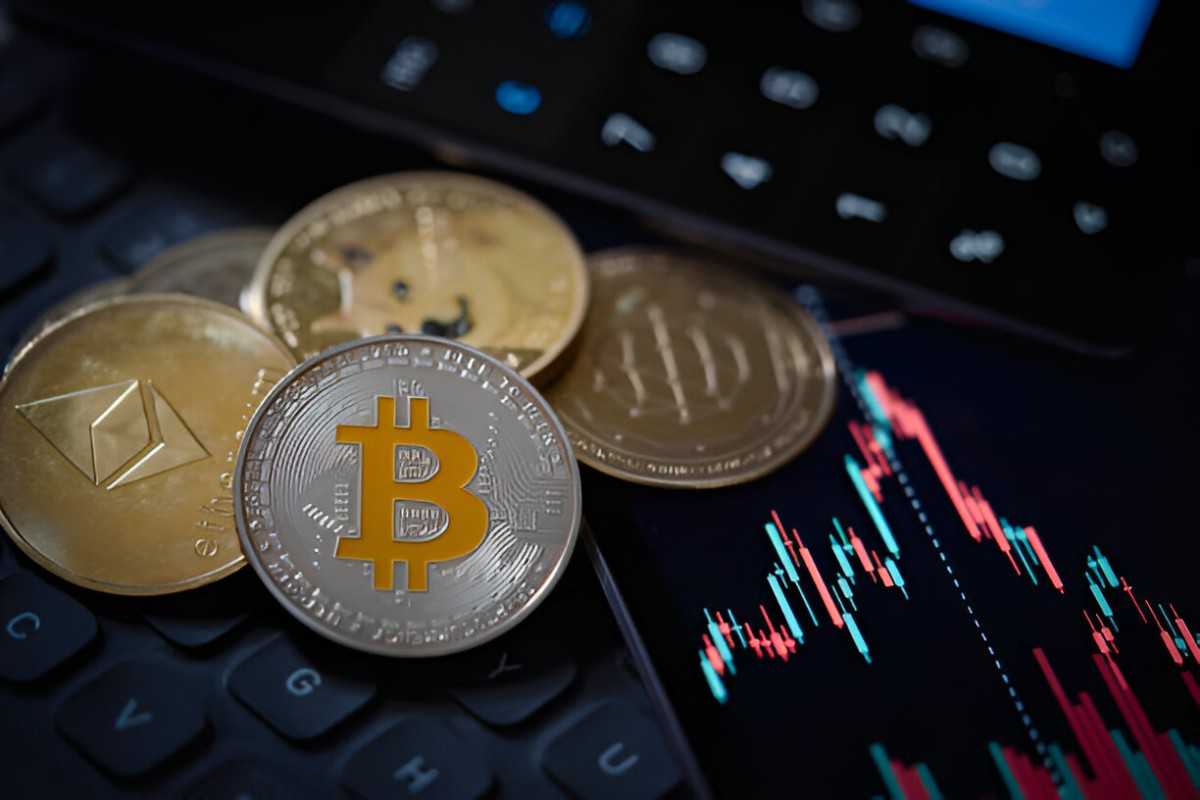
Cryptocurrencies are known for their wild price swings. Unlike traditional stocks or fiat currencies, digital assets can skyrocket or plummet in value within hours. This extreme volatility makes them both an exciting opportunity and a risky investment. But why do some cryptocurrencies experience more dramatic price fluctuations than others? Let’s explore the key factors behind this phenomenon.
1. Low Liquidity Magnifies Price Swings
Liquidity refers to how easily an asset can be bought or sold without significantly affecting its price. Bitcoin (BTC) and Ethereum (ETH) have relatively high liquidity, but many smaller cryptocurrencies suffer from low liquidity, leading to extreme price movements.
For example, if an investor places a $10 million sell order on Bitcoin, the price may drop only slightly because of the deep order books. However, if the same order is placed on a small-cap altcoin with daily trading volumes under $1 million, the price could crash significantly.
Illustration Table: Bitcoin vs. Small-Cap Altcoin Liquidity Impact
| Cryptocurrency | Daily Trading Volume | Price Impact of a $10M Order |
|---|---|---|
| Bitcoin (BTC) | $50 billion | Minor fluctuation |
| Ethereum (ETH) | $20 billion | Moderate fluctuation |
| Small-Cap Altcoin | $1 million | Extreme fluctuation or collapse |
2. Speculation and Market Sentiment Drive Prices
Cryptocurrencies are highly speculative. Unlike stocks, which are backed by cash flows and earnings, digital assets derive their value mainly from market perception. When investors expect prices to rise, they pile in, creating a self-fulfilling prophecy. Conversely, panic selling can trigger sharp declines.
Take Dogecoin (DOGE) as an example. In 2021, tweets from Elon Musk sent DOGE soaring from under $0.01 to over $0.70, only for it to crash back down as enthusiasm faded. This demonstrates how quickly sentiment can change.
3. Whale Manipulation and Pump-and-Dump Schemes
A “whale” is an entity that holds a large amount of a cryptocurrency. Since some cryptocurrencies have low trading volumes, a whale’s actions can significantly impact prices.
Whale Strategy Example
Assume a cryptocurrency has a market capitalization of $50 million, with an average daily volume of $2 million. A whale accumulating 10% of the supply might:
- Buy aggressively, pushing prices up.
- Attract retail investors who fear missing out (FOMO).
- Sell at the peak, causing a crash.
This is commonly known as a pump-and-dump scheme, where retail investors are left holding the bag while early movers cash out.
4. Algorithmic Trading and Liquidations
Many cryptocurrency traders use leverage, borrowing funds to amplify potential gains. While this increases profit potential, it also increases risk.
Margin calls and forced liquidations can create cascading effects. If a trader takes a 10x leveraged position, a 10% price drop can wipe out their entire investment. This triggers automatic sell orders, further driving prices down.
Mathematical Example of Liquidation Risk Let’s say a trader opens a $10,000 position with 10x leverage. The initial margin is:
\text{Margin} = \frac{\text{Position Size}}{\text{Leverage}} = \frac{10,000}{10} = 1,000If the price drops 10%, the position value falls to $9,000. The margin is wiped out, and the position is liquidated, forcing a sell-off.
5. Regulatory Uncertainty Creates Fear
Regulations have a huge impact on crypto volatility. Governments worldwide have different stances on digital assets. In the U.S., for instance, the SEC has taken legal action against some crypto projects, leading to massive sell-offs.
For example, when China announced a crackdown on Bitcoin mining in 2021, BTC dropped nearly 50% in just a few weeks.
6. Security Breaches and Hacks Shake Confidence
Cryptocurrency exchanges and wallets are frequent targets for hackers. When a major exchange is hacked, confidence collapses, leading to panic selling.
Historical Example:
- Mt. Gox (2014): Lost 850,000 BTC in a hack, causing Bitcoin to drop over 80% in the following months.
- FTX Collapse (2022): Liquidity issues and fraud allegations led to a rapid market downturn.
7. Bitcoin Halving and Supply Shocks
Bitcoin’s supply is controlled by a process called “halving,” which reduces the number of new BTC entering circulation every four years. Historically, halvings have triggered bull runs, followed by sharp corrections.
Bitcoin Supply Reduction Formula:
\text{New BTC per Block} = \frac{\text{Previous BTC per Block}}{2}For example, the 2020 halving reduced block rewards from 12.5 BTC to 6.25 BTC, contributing to Bitcoin’s surge past $60,000 before experiencing sharp corrections.
Conclusion
Cryptocurrency volatility is driven by several factors, including liquidity, speculation, whale manipulation, leverage trading, regulation, security risks, and supply dynamics. Understanding these forces can help investors make informed decisions and manage risk effectively. While some level of volatility is inherent, recognizing its root causes can provide a strategic advantage in navigating the market.
Key Takeaways:
- Low liquidity amplifies price swings.
- Speculation and hype drive rapid movements.
- Whale manipulation can lead to artificial spikes and crashes.
- Leverage trading accelerates liquidations and downward spirals.
- Regulatory uncertainty and hacks erode investor confidence.
- Supply mechanisms, such as Bitcoin halvings, impact price cycles.