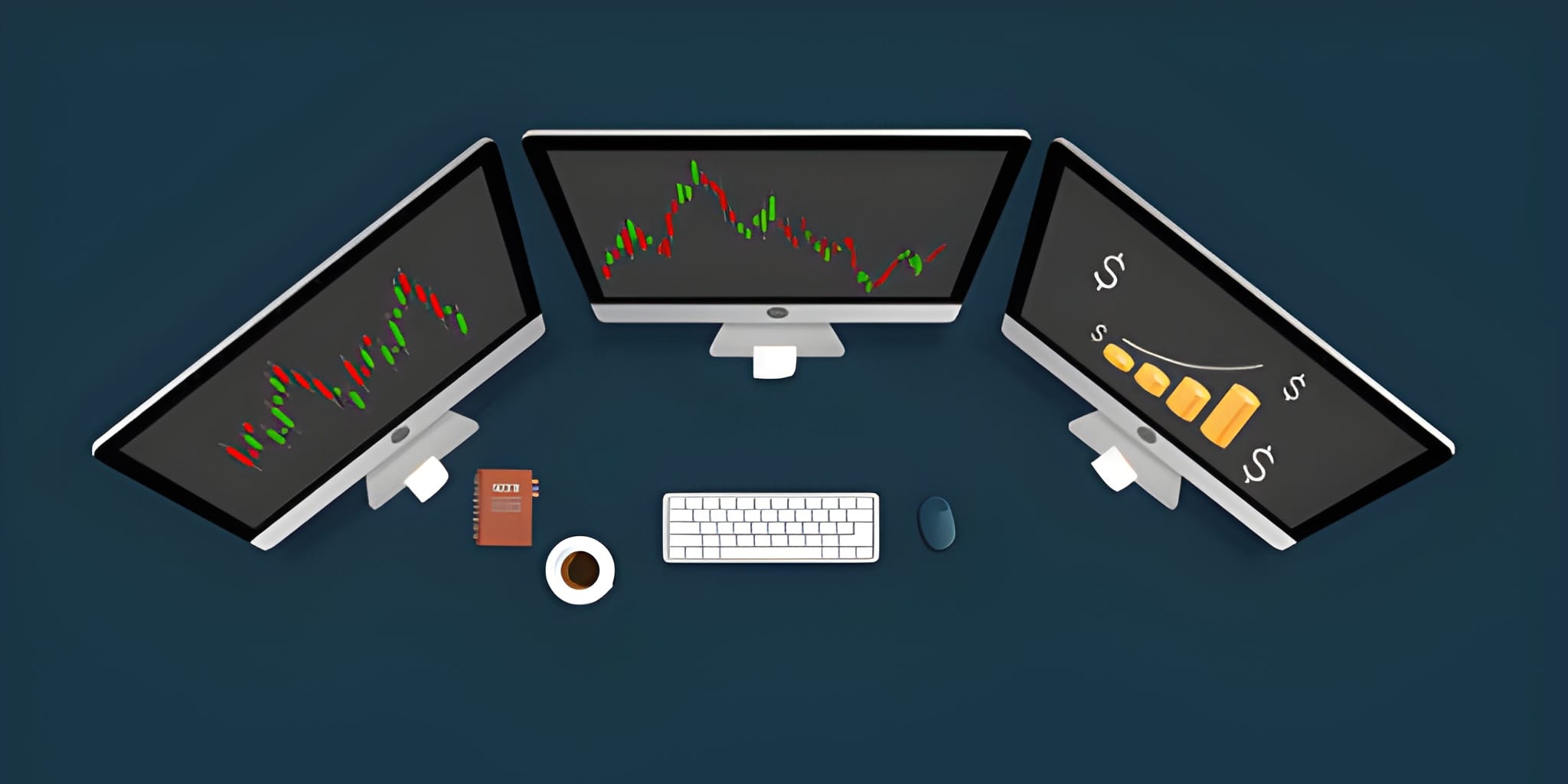
Day trading offers the potential for significant profits, but it also carries substantial risk. Success depends on a combination of skill, discipline, strategy, and understanding of the financial markets. This article provides a comprehensive guide on how to make money day trading, including strategies, technical tools, risk management, and practical considerations tailored to U.S. markets.
Understanding Day Trading
Day trading involves buying and selling financial instruments, such as stocks, ETFs, options, or futures, within the same trading day. Unlike long-term investing, day trading focuses on short-term price movements. Key aspects include:
- High Trade Frequency: Trades may last minutes to hours.
- Market Volatility: Profits arise from exploiting small price fluctuations.
- Leverage: Traders often use margin accounts to amplify gains.
- Technical Analysis: Day traders rely heavily on charts, indicators, and patterns rather than fundamental analysis.
In the U.S., the SEC and FINRA classify a pattern day trader (PDT) as an investor who executes four or more day trades in five business days in a margin account, with day trades representing more than six percent of total trades during that period. PDTs must maintain a minimum equity of $25,000.
Developing a Trading Plan
A structured trading plan is the foundation for making money day trading. It should include:
- Capital Allocation: Only use funds you can afford to lose. Start small and scale up gradually.
- Trade Selection: Identify liquid stocks or ETFs with sufficient volume for quick entries and exits.
- Time Frames: Determine whether to trade opening hours (high volatility), midday (low volatility), or afternoon sessions (trend continuation).
- Profit Targets and Stop-Losses: Define clear exit points to manage risk.
Example:
- Capital: $30,000
- Risk per trade: 2% ($600)
- Target profit per trade: 3% ($900)
This ensures controlled exposure while maintaining potential gains.
Choosing the Right Instruments
Stocks: Popular for intraday moves, especially high-volume stocks with significant news catalysts.
ETFs: Provide diversified exposure with lower volatility than single stocks, suitable for breakout or momentum strategies.
Options: Allow high leverage but require deep understanding of pricing, Greeks, and expiration dynamics.
Futures: Highly leveraged, often used for commodities and indexes; suitable for experienced traders.
Technical Indicators for Profitability
Day traders rely on technical indicators to make informed decisions. Key indicators include:
- Moving Averages (SMA & EMA): Identify trend direction and crossover signals.
SMA = \frac{P_1 + P_2 + ... + P_n}{n}
Relative Strength Index (RSI): Identifies overbought or oversold conditions.
RSI = 100 - \frac{100}{1 + RS}MACD: Detects momentum shifts and trend reversals.
MACD = EMA_{12} - EMA_{26}Bollinger Bands: Gauge volatility and potential breakout points.
Upper Band = SMA + (2 × Standard Deviation)
Lower Band = SMA – (2 × Standard Deviation)
Volume Indicators: Confirm strength of price movements and institutional participation.
Example: A trader using a 20-period EMA and RSI:
- Stock ABC trades at $105
- 20-period EMA = $102
- RSI = 35 (oversold)
- Enter long at $105, stop-loss $101, target $110
Day Trading Strategies
Scalping:
- Executes multiple trades to profit from small price changes.
- Requires fast execution and low latency platforms.
Momentum Trading:
- Follows high-volume price surges, often news-driven.
- Indicators: RSI, MACD, and volume spikes.
Breakout Trading:
- Trades stocks breaking significant support or resistance.
- Confirmation with volume surges and Bollinger Band expansions.
Mean Reversion:
- Trades against extreme price movements expecting a return to average.
- Uses moving averages and RSI to time entries and exits.
Example Calculation:
- Trade 100 shares at $50, target 3% gain:
Profit = 100 *(50 * 0.03) = 100 *1.5 = $150
Risk per trade (2% stop-loss):
Risk = 100 *(50 * 0.02) = 100 *1 = $100
Risk Management
Effective risk management is critical for profitability:
- Position Sizing: Limit individual trades to 1–3% of total equity.
- Stop-Loss Orders: Automatically exit losing trades to prevent large losses.
- Diversification: Avoid concentrating on one stock or sector.
- Leverage Management: Use margin cautiously; excessive leverage can wipe out capital.
Example:
- Account equity: $30,000
- Risk per trade: 2% ($600)
- Maximum leverage: 2:1 ($60,000 exposure)
- Stop-loss ensures losses do not exceed $600 per trade, even with leverage.
Tools and Platforms
Success in day trading requires reliable platforms:
- Fidelity Active Trader Pro: Advanced charting, Level II quotes, customizable alerts.
- TD Ameritrade thinkorswim: Real-time scanning, strategy testing, options analysis.
- Interactive Brokers: Low-cost commissions, robust execution, and API trading for algorithmic strategies.
Psychological Discipline
Profitable day trading requires strong mental discipline:
- Stick to your trading plan and avoid emotional trades.
- Limit screen time to avoid fatigue and impulsive decisions.
- Accept losses as part of the process; avoid chasing losses.
Tax Implications
Day trading profits in the U.S. are generally treated as short-term capital gains, taxed at ordinary income rates. Traders must maintain accurate records of all trades, commissions, and gains/losses for IRS reporting.
Conclusion
Making money day trading is possible with a disciplined approach, well-defined strategies, and proper risk management. Traders must combine technical analysis, strategic planning, and psychological resilience to succeed. Platforms like Fidelity, TD Ameritrade, and Interactive Brokers provide the necessary tools, but profitability ultimately depends on skillful execution, continuous learning, and adherence to strict risk controls. By integrating technical indicators, calculated trade sizing, and disciplined strategies, day traders can increase the likelihood of consistent profits in fast-paced U.S. markets.