
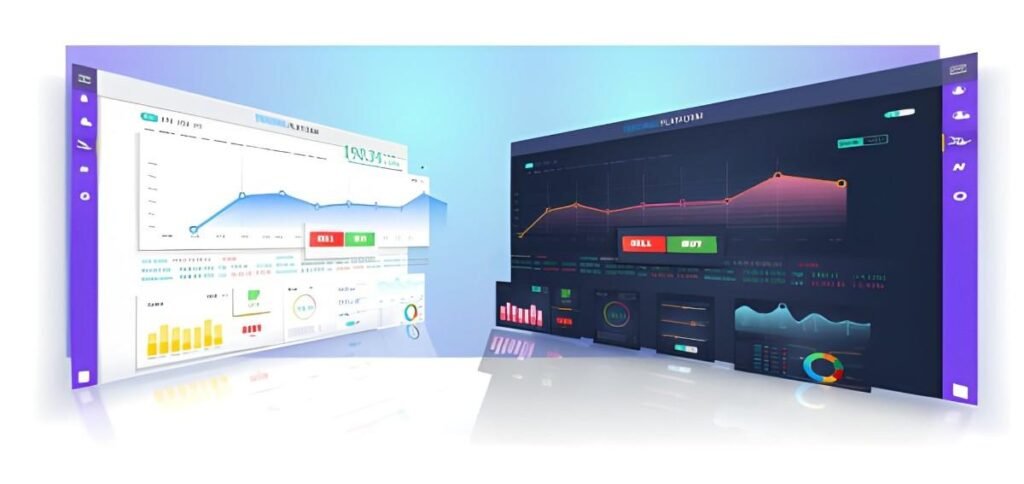
Options algorithmic trading platforms are specialized systems that automate the analysis, execution, and management of options trades based on quantitative models and market signals. These platforms empower traders—retail, institutional, and proprietary—to exploit opportunities in the derivatives markets with precision, consistency, and speed. This article explores the architecture, components, strategies, and implementation details of modern options algorithmic trading systems, with practical examples and quantitative models.
Understanding Options Algorithmic Trading
Options algorithmic trading involves deploying computer-driven strategies to trade options contracts automatically. These algorithms make data-driven decisions based on market parameters such as implied volatility, delta, gamma, theta, vega, and other Greeks, along with underlying asset movements.
Compared to equity trading algorithms, options trading algorithms must handle additional complexities like multi-leg positions, volatility surfaces, time decay, and non-linear payoffs.
Key Objectives
- Speed and Efficiency: Execute trades faster than manual intervention allows.
- Risk Management: Maintain delta-neutral or volatility-adjusted portfolios.
- Optimization: Maximize returns by optimizing strike selection, expiry, and position sizing.
- Adaptivity: React to real-time volatility shifts, order book changes, and event-driven volatility spikes.
Core Components of an Options Algorithmic Trading Platform
| Component | Function |
|---|---|
| Market Data Feed | Collects live tick data, implied volatility, and option chain details. |
| Pricing Engine | Calculates theoretical values using Black-Scholes, Binomial, or Monte Carlo models. |
| Strategy Engine | Generates buy/sell signals and constructs multi-leg option strategies. |
| Execution Engine | Interfaces with brokers/exchanges through APIs or FIX connections. |
| Risk Management Module | Monitors Greeks, margin exposure, and portfolio limits. |
| Backtesting Framework | Simulates performance using historical data for model validation. |
| Analytics Dashboard | Visualizes performance, Greeks, PnL, and exposure in real time. |
Example System Flow
Market Data Feed → Pricing Engine → Strategy Engine → Execution Engine → Risk Module → Dashboard
Each module communicates asynchronously to ensure low latency and high throughput, typically built in Python, C++, or Node.js for data handling and speed.
The Mathematics Behind Options Pricing
At the heart of any options trading platform is the pricing model. The most fundamental is the Black-Scholes-Merton model, which computes the theoretical price of a European call or put option:
C = S_0 N(d_1) - Ke^{-rT}N(d_2)
P = Ke^{-rT}N(-d_2) - S_0 N(-d_1)Where:
d_1 = \frac{\ln(\frac{S_0}{K}) + (r + \frac{\sigma^2}{2})T}{\sigma\sqrt{T}}
Here:
- S_0 = current stock price
- K = strike price
- T = time to maturity
- r = risk-free interest rate
- \sigma = volatility
- N(\cdot) = cumulative normal distribution function
The algorithm compares this theoretical price with the market price to identify mispriced options for arbitrage or trading.
Popular Strategies Used in Options Algorithmic Trading
1. Delta-Neutral Hedging
This strategy maintains a zero-delta portfolio, meaning that changes in the underlying asset’s price have minimal impact on portfolio value.
Net\ Delta = \sum_{i=1}^{n} \Delta_i \times Quantity_i = 0
The algorithm dynamically adjusts the hedge using the underlying asset whenever delta diverges from neutrality.
2. Volatility Arbitrage
Volatility arbitrage exploits the difference between implied volatility (IV) and realized volatility (RV).
If IV > RV, the strategy sells options (short volatility).
If IV < RV, it buys options (long volatility).
Profit per trade approximation:
\Pi = (IV - RV) \times Vega \times Notional\ Value
3. Options Spreads
The platform can automatically construct spreads such as Bull Call Spreads, Bear Put Spreads, Iron Condors, and Butterflies based on volatility forecasts and risk appetite.
Example – Bull Call Spread: Buy 1 Call at strike K₁ and Sell 1 Call at higher strike K₂.
Payoff Function:
Payoff = \max(S_T - K_1, 0) - \max(S_T - K_2, 0) - (Premium_{K_1} - Premium_{K_2})4. Gamma Scalping
Used by volatility traders to profit from large price movements while maintaining delta neutrality.
The algorithm continuously buys or sells the underlying asset to rebalance the portfolio when the price deviates.
Profit is captured through non-linear price reactions due to gamma exposure.
5. Event-Driven Option Strategies
Algorithms monitor earnings announcements, Fed decisions, or macroeconomic data releases to anticipate volatility surges. The system may buy straddles or strangles ahead of events and unwind after implied volatility collapses.
Platform Architecture and Technologies
| Layer | Function | Technology Example |
|---|---|---|
| Data Ingestion Layer | Streams live option chain data and order book | WebSocket, Kafka |
| Computation Layer | Calculates Greeks, implied volatility, theoretical prices | Python (NumPy, Pandas), C++ |
| Strategy Layer | Executes signal generation and optimization | Python, Rust |
| Execution Layer | Connects to broker APIs and exchanges | FIX API, REST API |
| Visualization Layer | Real-time monitoring and analytics | React, Plotly Dash |
Broker API Integration
Most options algorithmic platforms connect to brokers like Interactive Brokers, Tradier, TD Ameritrade, or Zerodha (India). API integration allows programmatic order placement, modification, and cancellation in real time.
Backtesting Options Strategies
Backtesting evaluates a strategy’s historical performance before deployment. A robust backtesting module includes:
- Historical Options Data: Includes prices, implied volatility, and Greeks.
- Transaction Costs: Commissions, slippage, and bid-ask spreads.
- Greeks Simulation: Delta, Gamma, Vega over time.
- Performance Metrics:
| Metric | Formula | Description |
|---|---|---|
| Sharpe Ratio | \frac{E[R_p - R_f]}{\sigma_p} | Risk-adjusted return |
| Max Drawdown | \frac{Peak - Trough}{Peak} | Largest capital decline |
| Win Rate | \frac{Profitable\ Trades}{Total\ Trades} \times 100 | Strategy efficiency |
Risk Management Framework
Options carry asymmetric payoffs and nonlinear exposure, making risk management critical.
The platform continuously monitors:
- Greeks Exposure: Delta, Gamma, Vega, Theta, and Rho limits.
- Stop-Loss Rules: Based on volatility-adjusted thresholds.
- Position Sizing:
Position\ Size = \frac{Account\ Capital \times Risk\ per\ Trade}{Premium \times Contract\ Size}
- Volatility Shock Controls: Limit exposure during macroeconomic or event-driven volatility spikes.
Advantages of Algorithmic Options Platforms
- Precision and Speed: Execute complex multi-leg strategies instantly.
- Advanced Analytics: Real-time computation of Greeks and PnL.
- Scalability: Handle thousands of contracts and multiple expiries simultaneously.
- Automation: Reduce manual errors and emotional biases.
- Integration: Seamless connectivity to market data and broker APIs.
Limitations
- High Complexity: Requires understanding of derivatives mathematics and system architecture.
- Data Intensity: Needs detailed option chain and implied volatility data.
- Infrastructure Costs: Low-latency systems and co-location can be expensive.
- Regulatory Compliance: Must meet requirements such as MiFID II, FINRA, or SEBI guidelines.
Practical Tips for Building an Options Trading Platform
- Start Simple: Begin with single-leg options strategies and progress to spreads and volatility trades.
- Leverage Open Source Tools: Use libraries like QuantLib, Backtrader, or Freqtrade.
- Optimize Infrastructure: Use async event-driven frameworks for real-time processing.
- Integrate Machine Learning: Use predictive models for implied volatility and delta hedging optimization.
- Monitor Continuously: Deploy dashboards for live performance and anomaly detection.
Conclusion
An options algorithmic trading platform unifies quantitative modeling, real-time data processing, and automated execution to systematically capture opportunities in the derivatives market. From pricing and volatility forecasting to hedging and spread construction, such systems allow traders to efficiently manage risk and execute complex multi-leg strategies.


