
Introduction
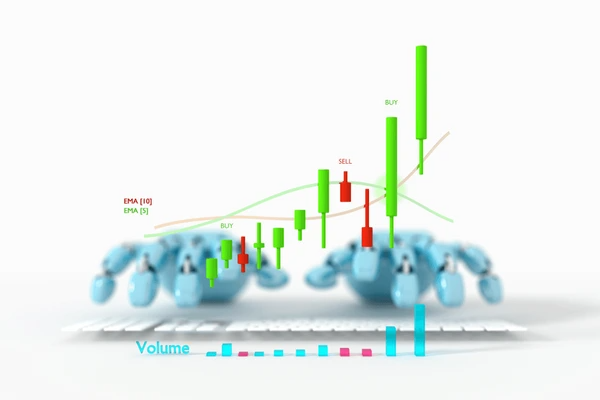
Commodity Trading Advisors (CTAs) are professional money managers who use systematic, often algorithmic, strategies to trade futures, options, and other derivative instruments. CTA trading algorithms rely on quantitative models to generate buy and sell signals, enabling automated execution of trades across multiple markets. These algorithms are central to the growth of managed futures funds and play a significant role in portfolio diversification for institutional and retail investors.
What is a CTA Trading Algorithm?
A CTA trading algorithm is a set of rules encoded in software that automatically identifies trading opportunities based on market data. These rules can be derived from technical analysis, trend-following models, statistical arbitrage, or machine learning techniques. The goal is to remove emotional bias, improve execution speed, and consistently apply the investment strategy across different market conditions.
Key Components of a CTA Algorithm
1. Signal Generation
The first step is to define entry and exit conditions. Common approaches include:
- Trend-Following: Entering trades in the direction of a sustained price trend.
- Momentum-Based: Using indicators like Moving Average Convergence Divergence (MACD) or Relative Strength Index (RSI).
- Mean Reversion: Entering positions when prices deviate from long-term averages.
2. Position Sizing
CTA algorithms use risk-based sizing rules to determine the quantity of contracts or shares:
PositionSize = \frac{AccountRisk \times Equity}{Volatility \times ContractValue}
This formula adjusts exposure based on market volatility, aiming to limit drawdowns.
3. Risk Management
Risk control is critical. Algorithms may include:
- Stop-Loss Orders: Automatically exiting trades that reach a predetermined loss level.
- Portfolio Diversification: Spreading risk across multiple asset classes, including commodities, currencies, and indices.
- Drawdown Limits: Halting trading if losses exceed a certain threshold to protect capital.
4. Execution Logic
Efficient execution is key to minimizing slippage and trading costs:
- Direct Market Access (DMA): Enables rapid order placement.
- Limit vs. Market Orders: Balancing execution speed with price certainty.
- Order Timing: Algorithms may stagger orders to reduce market impact.
Popular CTA Algorithmic Strategies
1. Trend-Following Systems
Trend-following CTAs identify and ride sustained price movements. Example:
- Buy when price exceeds the 200-day moving average.
- Sell when price falls below the 50-day moving average.
2. Breakout Strategies
Breakout CTAs monitor historical price ranges and enter trades when prices exceed key highs or lows:
- Buy when price exceeds 20-day high.
- Sell when price drops below 20-day low.
3. Multi-Asset Correlation Strategies
These algorithms exploit relationships between correlated markets:
- Buy gold futures when silver futures are trending up.
- Hedge exposure in one market using another correlated instrument.
4. Machine Learning CTAs
Advanced CTA algorithms apply machine learning to detect complex patterns:
- Predictive models analyze historical price, volume, and alternative data.
- Models are retrained periodically to adapt to evolving market conditions.
Benefits of CTA Trading Algorithms
- Consistency: Algorithms apply strategies systematically without human emotion.
- Diversification: Can trade multiple markets simultaneously, reducing portfolio risk.
- Speed: Algorithms react instantly to market signals, improving execution efficiency.
- Risk Control: Automated stop-losses and position sizing limit potential losses.
Risks and Criticisms
- Overfitting: Backtested models may perform poorly in live markets if tuned too closely to historical data.
- Market Volatility: Algorithms may exacerbate price swings during high volatility periods.
- Technology Risk: Hardware failures or software errors can lead to unintended trades.
- Transparency: Complex CTA algorithms may be opaque, making it difficult for investors to fully understand underlying risks.
Conclusion
CTA trading algorithms are a cornerstone of modern systematic trading, providing speed, discipline, and multi-market diversification. They employ trend-following, breakout, statistical, and machine learning strategies to generate consistent trading signals while managing risk. While highly effective, these algorithms carry technological and market risks, and proper monitoring and risk management are essential. For investors and fund managers, CTA algorithms represent a blend of quantitative rigor and automated execution, making them a powerful tool in portfolio management and managed futures trading.


