
Introduction
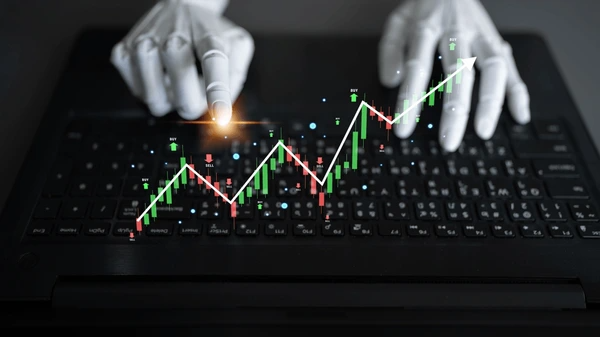
Automated trading algorithms are computer programs designed to execute trades in financial markets based on predefined rules, market data, and mathematical models. These systems have revolutionized trading by increasing speed, precision, and efficiency. They are widely used by institutional investors, hedge funds, and increasingly by retail traders who seek to optimize strategy execution while minimizing human error. This article provides a comprehensive guide to automated trading algorithms, exploring their structure, strategies, risk management, implementation, and regulatory considerations, with a focus on the U.S. market.
Understanding Automated Trading Algorithms
Automated trading algorithms, also known as algo-trading or black-box trading, operate by continuously scanning market conditions and executing trades according to pre-programmed logic. They rely on technical indicators, statistical models, and sometimes artificial intelligence to identify trading opportunities. Core components include:
- Signal Generation: Determines when to buy or sell based on market conditions or statistical criteria.
- Risk Management Rules: Automatically applies stop-loss, take-profit, or position-sizing rules.
- Execution Module: Sends orders to the brokerage or exchange with minimal delay.
- Monitoring and Reporting: Tracks performance, logs trades, and provides analytical insights.
The primary advantages of automated algorithms are speed, discipline, consistency, and the ability to backtest strategies on historical data.
Types of Automated Trading Algorithms
Automated trading algorithms can be categorized based on their strategy and execution approach:
1. Trend-Following Algorithms
These algorithms identify market trends and trade in the same direction, aiming to capture gains from sustained price movements. Common tools include moving averages, MACD, and momentum indicators.
\text{Buy Signal: MA}{short} > \text{MA}{long},\quad \text{Sell Signal: MA}{short} < \text{MA}{long}2. Mean Reversion Algorithms
Mean reversion strategies assume that asset prices will return to historical averages. Algorithms monitor deviations and execute trades when prices are significantly above or below the mean.
\text{Entry Price} = \text{Mean Price} \pm k \times \text{Standard Deviation}
3. Arbitrage Algorithms
These exploit price discrepancies between correlated assets, markets, or instruments. Examples include statistical arbitrage between pairs of stocks or currency pairs.
\text{Profit} = \text{Price}{AssetA, Exchange1} - \text{Price}{AssetA, Exchange2}4. High-Frequency Trading (HFT) Algorithms
HFT algorithms execute numerous trades within milliseconds, profiting from tiny price movements. They require ultra-low latency systems and direct market access, typically used by institutional firms.
5. AI and Machine Learning Algorithms
Some algorithms leverage machine learning models to predict market behavior based on large datasets. These algorithms continuously adapt to changing market conditions.
Implementation of Automated Trading Algorithms
Implementing an automated trading algorithm involves several stages:
- Define Strategy and Objectives: Establish trading goals, risk tolerance, asset classes, and investment horizon.
- Develop Algorithm: Write the program using languages like Python, C++, or Java. Incorporate signal generation, execution logic, and risk management rules.
- Backtesting: Test the algorithm against historical market data to evaluate profitability, drawdowns, and risk-adjusted returns.
\text{Sharpe Ratio} = \frac{E[R] - R_f}{\sigma_R}
- Paper Trading: Run the algorithm in a simulated environment using live market data to validate real-time performance.
- Deployment: Connect to a brokerage account via an API for live trading while continuously monitoring performance.
- Optimization and Monitoring: Adjust algorithm parameters based on performance metrics and market conditions.
Risk Management in Automated Trading
Automated algorithms require rigorous risk management to prevent significant losses:
- Position Sizing: Limit exposure per trade relative to the total portfolio.
- Stop-Loss Orders: Automatically exit trades when losses reach a predefined threshold.
- Portfolio Diversification: Use multiple algorithms or trade across various assets to reduce concentration risk.
- Latency and Slippage Monitoring: Ensure order execution occurs as intended without delays or partial fills.
Regulatory Considerations
In the U.S., automated trading algorithms are subject to regulatory oversight:
- SEC Regulations: Algorithms must comply with anti-manipulation and disclosure requirements.
- FINRA Oversight: Broker-dealers offering algorithmic trading services must adhere to compliance rules.
- Pattern Day Trader Rules: Retail investors using margin accounts must maintain a minimum balance of $25,000 to execute frequent trades.
- Risk Disclosure: Services must clearly inform clients about potential losses and algorithm limitations.
Choosing the Right Algorithmic Trading Service
Investors can use automated trading algorithms via different platforms and services depending on expertise and capital:
| Platform | Features | Suitable Users |
|---|---|---|
| Interactive Brokers | Advanced API, global market access | Professional and experienced retail investors |
| Alpaca | Commission-free trading, API access | Retail traders with coding experience |
| QuantConnect | Cloud-based algorithm development | Developers and quantitative traders |
| MetaTrader | Pre-built scripts and indicators | Forex and CFD traders |
Conclusion
Automated trading algorithms provide investors with powerful tools to execute trades efficiently, reduce human error, and implement sophisticated strategies. Success requires thorough strategy development, backtesting, robust risk management, and adherence to regulatory standards. Whether using trend-following, mean reversion, arbitrage, HFT, or AI-driven algorithms, investors must continuously monitor and optimize performance to adapt to changing market conditions.


