
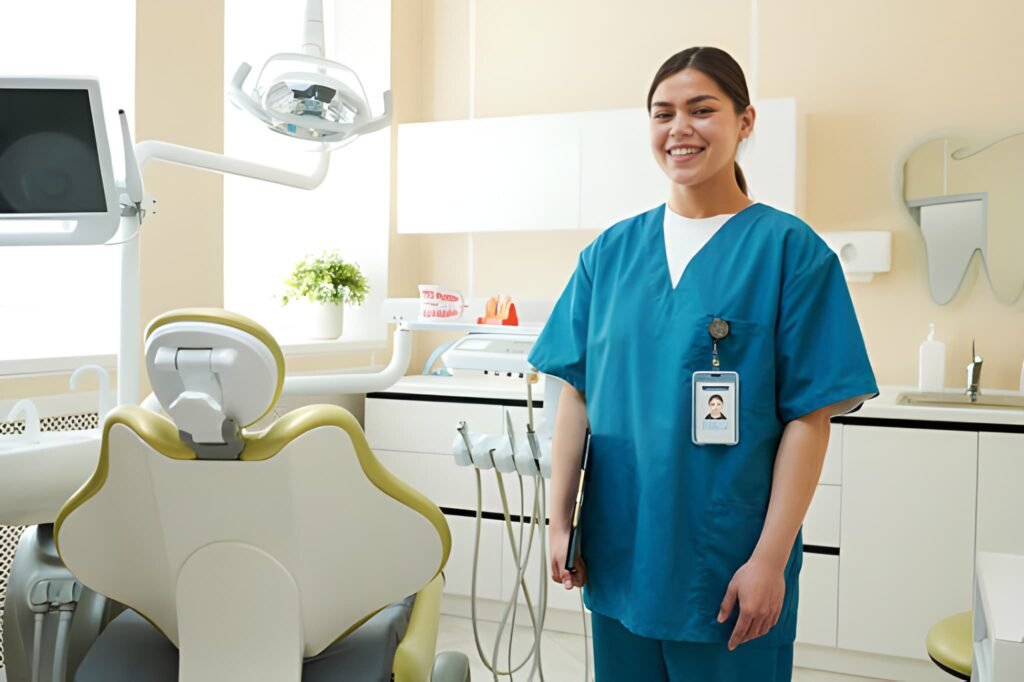
Introduction to Retirement Planning for Dental Assistants
Dental assistants, as essential members of the dental care workforce, often face unique retirement planning challenges. Many dental assistants work in private dental practices or small clinics where employer-sponsored retirement benefits vary significantly. Unlike large corporations that may offer robust 401(k) plans, dental assistants frequently rely on a combination of personal savings, limited employer contributions, and government programs such as Social Security to fund their retirement. Understanding the available retirement plan options and strategies is critical to ensuring long-term financial security.
Common Retirement Plan Options for Dental Assistants
Dental assistants have access to several types of retirement plans, depending on the size and resources of their employer. These plans can be broadly categorized as employer-sponsored plans, individual retirement accounts (IRAs), and supplemental savings strategies.
1. Employer-Sponsored Plans
a. 401(k) Plans
- Some dental practices offer 401(k) plans to employees.
- Employees can contribute a portion of their salary pre-tax or after-tax (Roth), with potential employer matching contributions.
- Contribution limits for 2025 are $23,000 for individuals under 50, with an additional $7,500 catch-up contribution for employees 50 and older.
Example Calculation:
A dental assistant earning $50,000 annually contributing 5% with a 50% employer match:
\text{Employee Contribution} = 50,000 \times 0.05 = 2,500
\text{Employer Match} = 2,500 \times 0.50 = 1,250
b. SIMPLE IRA Plans
- Ideal for small dental practices with fewer than 100 employees.
- Employees can contribute up to $15,500 annually (2025 limit) with a 3% employer match or 2% non-elective contribution.
- Less administrative complexity compared to a 401(k).
2. Individual Retirement Accounts (IRAs)
a. Traditional IRA
- Contributions may be tax-deductible depending on income and access to an employer plan.
- Taxes are deferred until withdrawals during retirement.
b. Roth IRA
- Contributions are made with after-tax dollars, but withdrawals during retirement are tax-free.
- Income limits apply; for 2025, eligibility begins to phase out at $144,000 for single filers and $214,000 for married couples filing jointly.
Example Growth Calculation:
A dental assistant contributing $3,000 annually to a Roth IRA at an average 6% annual return for 30 years:
3. Supplemental Savings Options
Health Savings Accounts (HSAs):
- Available if enrolled in a high-deductible health plan.
- Contributions are tax-deductible, grow tax-free, and can be withdrawn tax-free for qualified medical expenses, including dental care in retirement.
Taxable Investment Accounts:
- Provide flexibility for retirees who have maxed out tax-advantaged accounts.
- Investments can include stocks, bonds, ETFs, and mutual funds.
Strategic Planning Considerations
Dental assistants should consider several factors when designing a retirement plan:
- Starting Early: Even small contributions can grow substantially due to compounding.
- Employer Matching: Maximizing employer contributions significantly enhances long-term savings.
- Investment Diversification: Balance growth-oriented investments (stocks) with conservative assets (bonds) as retirement approaches.
- Tax Optimization: Decide between pre-tax contributions and Roth accounts based on expected future tax brackets.
- Emergency Fund: Maintain liquidity for unexpected medical or personal expenses to avoid early withdrawals that trigger penalties.
Example Retirement Projection
Consider a dental assistant who starts contributing $3,000 annually to a 401(k) with a 50% employer match at age 30, planning to retire at 65 with an average annual return of 7%.
- Annual Contribution:
Future Value After 35 Years:
\text{Future Value} = 4,500 \times \frac{(1+0.07)^{35}-1}{0.07} \approx 680,000This scenario demonstrates how consistent contributions, employer matching, and compounded growth can produce substantial retirement savings even with modest income.
Insurance and Risk Management
Dental assistants should also consider insurance as part of retirement planning:
- Disability Insurance: Protects income in case of illness or injury before retirement.
- Life Insurance: Provides financial security for dependents.
- Long-Term Care Insurance: Protects assets from high costs associated with extended healthcare needs in retirement.
Considerations for Self-Employed Dental Assistants
Some dental assistants operate as independent contractors or work in small practices without employer-sponsored retirement plans. Options include:
- Solo 401(k): High contribution limits and flexibility for self-employed individuals.
- SEP IRA: Simplified Employee Pension plans allow contributions of up to 25% of net earnings, with a maximum of $66,000 in 2025.
Example SEP IRA Contribution:
Net earnings of $70,000 with a 20% SEP contribution:
This approach allows self-employed dental assistants to save significantly for retirement while reducing taxable income.
Integrating Dental and Vision Health into Retirement Planning
Dental and vision expenses increase with age, and Medicare does not cover routine dental or vision care. Dental assistants should account for these costs in their retirement projections, potentially using HSAs or supplemental insurance to cover:
- Dental exams, cleanings, fillings, crowns, and dentures.
- Vision exams, glasses, and contact lenses.
Planning for these expenses helps preserve retirement savings and ensures access to necessary healthcare.
Conclusion
Retirement planning for dental assistants requires careful consideration of available employer-sponsored plans, individual retirement accounts, and supplemental savings strategies. Early contributions, maximizing employer matches, diversified investments, and planning for healthcare costs are critical components of a secure retirement. Self-employed dental assistants have additional options such as Solo 401(k)s and SEP IRAs to build substantial retirement savings. By integrating strategic financial planning with proactive healthcare considerations, dental assistants can achieve long-term financial stability and maintain quality of life throughout retirement.



