
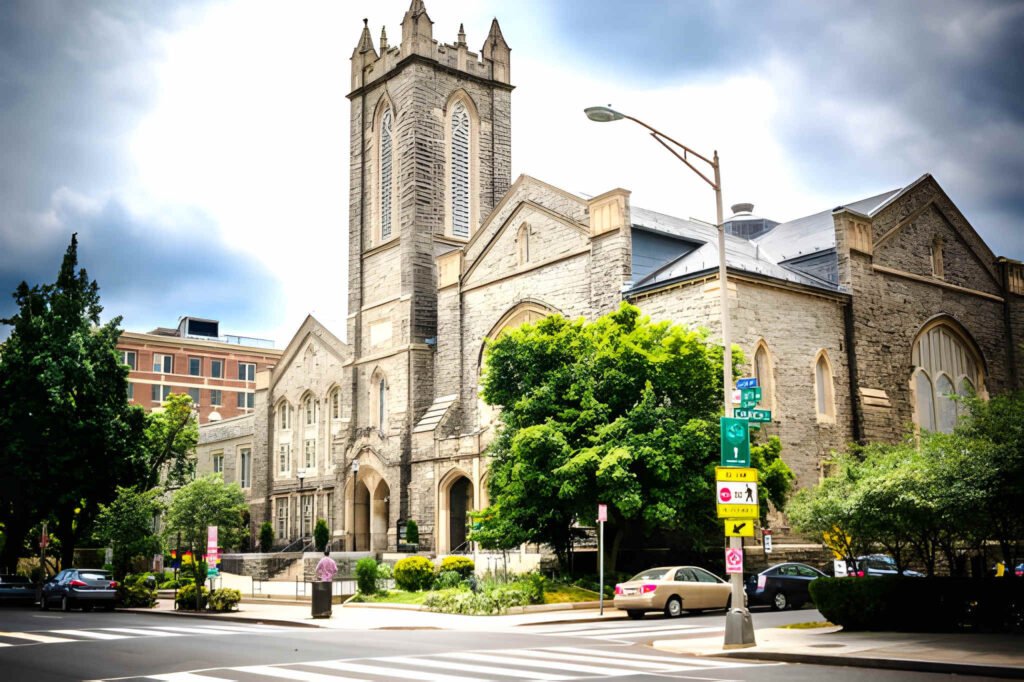
Introduction
Retirement planning is a cornerstone of financial security for employees in all sectors. For clergy and church staff, retirement planning presents unique challenges and opportunities. Churches and affiliated organizations in Washington DC employ numerous individuals, including pastors, teachers, administrators, and lay workers. These employees often dedicate decades of service to their communities, and their financial well-being in retirement depends heavily on church-sponsored plans.
Washington DC churches must navigate legal exemptions, denominational traditions, tax rules, and financial constraints when designing retirement benefits. The high cost of living in the nation’s capital, coupled with changing congregational demographics, makes sustainable planning especially important. This article explores the landscape of church retirement plans in Washington DC, examining structures, legal frameworks, denominational practices, financial modeling, and practical implementation.
Overview of Church Retirement Plans
Churches in Washington DC typically use one of three retirement plan structures:
| Plan Type | Main Feature | Advantages | Risks | Common Use in DC |
|---|---|---|---|---|
| Defined Benefit (DB) | Guaranteed lifetime income stream based on years of service and salary | Predictable income, long-term security | Underfunding, actuarial assumptions, no PBGC insurance | Catholic Archdiocese, Episcopal Church |
| Defined Contribution (DC) | Individual retirement accounts funded by employer and employee contributions | Flexibility, portability, easier funding | Investment risk borne by employees | Evangelical churches, independent ministries |
| Hybrid / Cash Balance | Combines DB and DC features, account-style balances backed by employer guarantees | Balance of predictability and portability | Complexity, communication challenges | United Methodist Church, Lutheran synods |
The selection depends on denominational affiliation, financial capacity, and long-term objectives.
Legal Framework Governing Washington DC Church Plans
Federal Regulations
Under the Internal Revenue Code §414(e), a “church plan” is generally exempt from ERISA. This exemption allows flexibility but removes PBGC insurance for DB church plans. Church retirement plans commonly use 403(b)(9) accounts, which allow clergy to receive housing allowances exempt from taxable income when properly designated.
Local Considerations
Washington DC respects church plan exemptions but requires fiduciary duties consistent with nonprofit governance. Churches must maintain proper accounting, reporting, and contractual compliance. Local taxation applies to some retirement distributions; participants should incorporate this into their retirement planning.
Denominational Practices in Washington DC
- Roman Catholic Archdiocese of Washington: Clergy pensions are managed at the archdiocesan level. Priests typically participate in DB pension systems funded by parish contributions. Lay employees may access diocesan 403(b) plans.
- Episcopal Church (Diocese of Washington): Offers retirement benefits for clergy and lay staff, combining DC accounts with health and disability plans.
- United Methodist Church (Baltimore-Washington Conference): Provides the United Methodist Personal Investment Plan (UMPIP), a 403(b)(9) plan with employer contributions and immediate vesting.
- Southern Baptist Convention (GuideStone): Offers 403(b)(9), 403(b)(7), and 401(k) plans. Clergy may designate part of retirement income as housing allowance for tax benefits.
- Disciples of Christ: Employer-sponsored DB plans provide lifetime benefits and death/disability coverage, with contributions from both employer and employee.
- Independent Evangelical Churches: Often use 403(b)(9) DC plans administered by providers such as Servant Solutions or GuideStone.
Practical Design Considerations
Eligibility and Coverage
Plans may cover only clergy or include lay employees. Broader coverage promotes equity but increases funding needs.
Contribution Structure
Employer contributions can match employee contributions or provide a fixed percentage of salary. Recommended contribution levels are 5–10% of salary.
Investment Options
Diversified, low-fee options such as index funds or target-date funds help reduce investment risk.
Housing Allowance
Clergy may exclude a designated housing allowance from taxable income. For example, a retired pastor receiving $70,000 annually may designate $25,000 as housing allowance, leaving $45,000 taxable.
Vesting
Vesting schedules determine when employees gain full rights to employer contributions. Three-year cliff vesting is common.
Administrative Support
Professional plan administrators or denominational offices manage compliance, contributions, and investment strategy.
Example Calculations
Defined Contribution Projection
A pastor earns $80,000 annually, contributes 6% of salary, receives a 4% employer match, expects 3% annual salary growth and 6% investment return, retiring at 65 starting at age 35.
Annual salary at year t:
S_t = 80,000(1.03)^tAnnual contribution:
C_t = 0.10 \times S_tFuture value after 30 years:
FV \approx 0.10 \times 80,000 \times \frac{(1.06)^{30} - (1.03)^{30}}{0.06 - 0.03} \times (1.03)Approximate result: $1,060,000 at retirement.
Defined Benefit Projection
A priest with 35 years of service and final salary of $95,000 under a DB plan with 1.5% accrual per year:
Annual pension:
Benefit = 0.015 \times 35 \times 95,000 = 49,875Present value over 20 years at 5% discount:
PV = 49,875 \times \frac{1 - (1.05)^{-20}}{0.05} \approx 583,000Urban vs. Suburban Church Comparison
| Factor | Suburban Church | Urban DC Church |
|---|---|---|
| Budget | Smaller, local donations | Larger, diverse membership base |
| Plan Type | DC with modest contributions | DB or hybrid via denominational pooling |
| Risk Management | Simplicity, low overhead | Professionalized administration |
| Employee Coverage | Often clergy only | Broader coverage including lay staff |
Strengths and Risks
Strengths
- Tax advantages for clergy housing allowance
- Denominational pooling reduces administrative costs
- Attracts and retains clergy and staff
- Flexible plan types accommodate church size
Risks
| Risk | Description | Mitigation |
|---|---|---|
| Underfunding DB plans | Contributions may fall short | Conservative assumptions, actuarial reviews |
| DC investment volatility | Employees bear market risk | Diversified target-date funds, financial education |
| Lack of PBGC insurance | No federal backstop | Maintain reserves, denominational guarantees |
| Administrative burden | Compliance complexity | Partner with denominational administrators |
| Equity concerns | Lay staff may be excluded | Extend coverage to all employees |
Historical Perspective
Washington DC churches have transitioned from DB-dominant plans to DC and hybrid plans over the decades, reflecting national trends. Urban congregations often pool resources for stronger benefits, while smaller suburban or neighborhood churches adopt simpler DC structures.
Policy and Ethical Considerations
Churches have a moral responsibility to ensure retirement security for employees. ERISA exemptions allow flexibility but require careful funding and ethical stewardship. Equity among clergy and lay staff is essential to maintain morale and trust.
Best Practices
- Contribution rates of 5–10%
- Vesting within 3 years
- Diversified, low-cost investment options
- Document housing allowances annually
- Provide clear communication and projections to employees
- Conduct annual funding adequacy reviews
- Partner with denominational offices or professional administrators
Conclusion
Church retirement plans in Washington DC combine complex legal exemptions, denominational traditions, and urban financial realities. Clergy and lay employees deserve secure retirement after decades of service. Sustainable plan design, clear communication, and professional administration ensure financial stability and reflect both fiscal responsibility and moral stewardship.



