
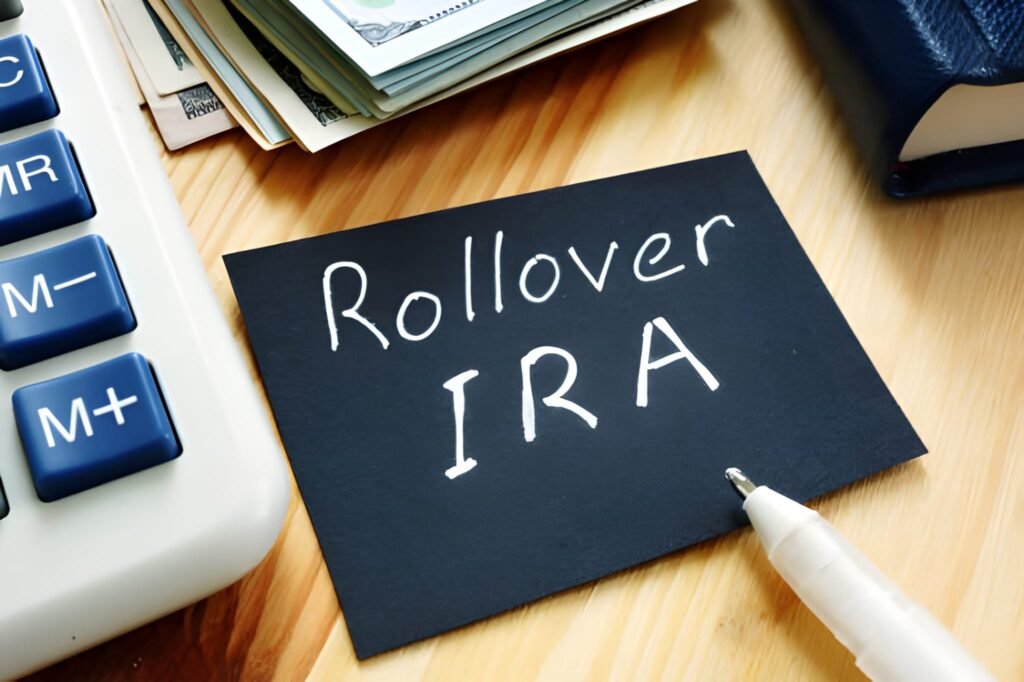
Throughout my career, I have witnessed few financial decisions as consequential and as fraught with complexity as the retirement plan rollover. It is a crossroads moment—a choice that can either solidify your financial foundation or unravel decades of careful saving. The landscape is crowded with advisors, institutions, and educational entities like the Bradford Tax Institute, all offering guidance. My purpose here is not to review any single organization, but to arm you with the independent, critical framework I use myself to evaluate rollover advice. The decision to move your retirement savings is not about finding a catchy slogan; it is about navigating a web of taxes, penalties, investment options, and costs that will impact your financial security for the rest of your life.
A rollover is the process of moving funds from a qualified employer-sponsored retirement plan (like a 401(k), 403(b), or pension) into an Individual Retirement Account (IRA) or into a new employer’s plan. The impetus is usually a job change, retirement, or the desire for more control over your investments. While the transaction itself can be simple, the implications are anything but.
Table of Contents
The Pillars of Sound Rollover Advice
Any credible source of guidance, be it the Bradford Tax Institute, a financial advisor, or a brokerage firm, must center its advice on a few non-negotiable principles. This is the lens through which you must evaluate all recommendations.
1. An Ironclad Fiduciary Standard:
This is the most important filter. You must determine if the advice you are receiving is coming from a source legally obligated to put your best interests first. A fiduciary is legally bound to act in your best interest. A suitability standard, which governs many brokers, only requires that an investment be “suitable” for you, even if it is not the best option and generates higher commissions for the advisor.
Any advice that does not come from a acknowledged fiduciary should be treated with extreme skepticism. Your first question to any advisor or institution should always be: “Are you a fiduciary, and will you acknowledge that in writing?”
2. A Rigorous Focus on Fees and Costs:
The primary stated reason for many rollovers is to gain access to a wider array of investments. However, wider selection does not automatically mean better outcomes. The advice you receive must include a meticulous comparison of all costs involved:
- Current 401(k) Fees: Your old plan likely charges administrative recordkeeping fees and has investment options with specific expense ratios. Some large company plans have access to institutional share classes with incredibly low fees that are difficult to find as an individual investor.
- New IRA Fees: An IRA may have account maintenance fees, trading fees, and—most importantly—the expense ratios of the new funds you will be investing in.
- Advisor Fees: If you are rolling over into an IRA managed by an advisor, you will likely pay an assets under management (AUM) fee, typically ranging from 0.50% to 1.50% annually.
Let’s illustrate the impact with a calculation. Assume you have a \$500,000 portfolio.
- Option A (Old 401k): weighted average expense ratio of 0.25%.
- Option B (IRA with Advisor): fund expense ratio of 0.20% + a 1% AUM fee = total fees of 1.20%.
The annual cost difference is 1.20\% - 0.25\% = 0.95\%. Annually, that costs you an additional:
0.0095 \times \$500,000 = \$4,750Over 20 years, that fee drag can cost you hundreds of thousands of dollars in lost compounding. Good rollover advice will transparently model these costs and justify why paying more is in your best interest.
3. Tax and Penalty Mitigation as the Highest Priority:
The cardinal sin of a rollover is triggering a taxable event. Sound advice will have one overriding goal: to execute a direct trustee-to-trustee transfer.
- Direct Rollover: The funds are sent directly from your old plan custodian to the new IRA custodian. You never touch the money. This is not a taxable event.
- Indirect Rollover: A check is made payable to you. You have 60 days to deposit it into a new IRA. However, your old plan administrator is required by law to withhold 20% for federal taxes. To avoid taxes and penalties on the entire amount, you must come up with that withheld 20% from other savings to deposit into the new IRA. It is a bureaucratic and financial nightmare waiting to happen. Any advice that suggests you take possession of the funds should be immediately dismissed.
The Valid Reasons to Roll Over
Even after applying the filters above, there are legitimate reasons to execute a rollover. Good advice will help you identify if your situation warrants it.
- Superior Investment Options: Your old plan may offer only a handful of high-cost, underperforming mutual funds. Rolling into an IRA can give you access to a full universe of low-cost index funds, ETFs, and individual securities.
- Consolidation: Managing multiple old 401(k) accounts from previous employers is administratively burdensome. Consolidating them into a single IRA simplifies your financial life and provides a unified view of your asset allocation.
- Need for Flexible Withdrawal Strategies: IRAs often offer more flexibility than 401(k)s for withdrawal strategies in retirement, particularly for Roth conversions or executing certain estate planning techniques.
- Access to Professional Guidance: If your old plan offers no advice and you feel you need a comprehensive financial plan, rolling over to an IRA with a fiduciary advisor can be beneficial—if the value of the advice outweighs the added cost.
The Valid Reasons to Stay Put or Roll into a New 401(k)
Often, the best advice is to do nothing. A credible source will acknowledge these scenarios:
- Lower Fees in the Old Plan: As calculated above, your old 401(k) might be cheaper than any IRA you can open.
- Creditor Protection: Assets in a 401(k) plan have unlimited protection from creditors under federal law (ERISA). IRA protection varies by state and is often limited to \$1 million in federal bankruptcy proceedings.
- Rule of 55: If you leave your job in the year you turn 55 or later, you can withdraw funds from that specific employer’s 401(k) without paying the 10% early withdrawal penalty. If you roll those funds into an IRA, you lose this exception and must wait until age 59½ to avoid penalties.
- Company Stock: If your 401(k) holds highly appreciated company stock, you may be eligible for the Net Unrealized Appreciation (NUA) tax strategy upon distribution. Rolling the stock into an IRA eliminates the potential for this significant tax benefit.
The Final Assessment: Your Checklist for Evaluating Advice
When consuming advice from the Bradford Tax Institute or any other source, use this checklist to determine its merit:
- [ ] Does it emphasize a direct trustee-to-trustee transfer?
- [ ] Does it provide a clear, mathematical comparison of all fees involved?
- [ ] Does it disclose the fiduciary status of the advice-giver?
- [ ] Does it discuss reasons not to roll over, like the Rule of 55 or creditor protection?
- [ ] Is it focused on education rather than product promotion?
Retirement plan rollover advice is not a commodity. It is a specialized, conflict-ridden area of finance. The best advice is holistic, transparent, and focused exclusively on preserving your hard-earned capital from unnecessary taxes, penalties, and fees. It empowers you to make a decision based on your unique circumstances, not on the business goals of a financial institution. Your retirement savings are too important to be treated as anything less than the cornerstone of your financial future.



