
I have seen countless investors chase the holy grail of market timing. They are drawn to technical indicators like Bollinger Bands with the promise of a system—a logical, almost mechanical way to outsmart the market’s chaos. For over two decades, I have analyzed these strategies, run the backtests, and counseled clients who have tried them. My conclusion is unwavering: while Bollinger Bands are a fascinating tool for understanding market volatility, they are a perilous foundation for a long-term investment strategy. When pitted against the simple, relentless discipline of buying and holding a low-cost index fund, the evidence overwhelmingly favors the latter. The choice, in my view, is between the seductive illusion of control and the proven, humble path of participation.
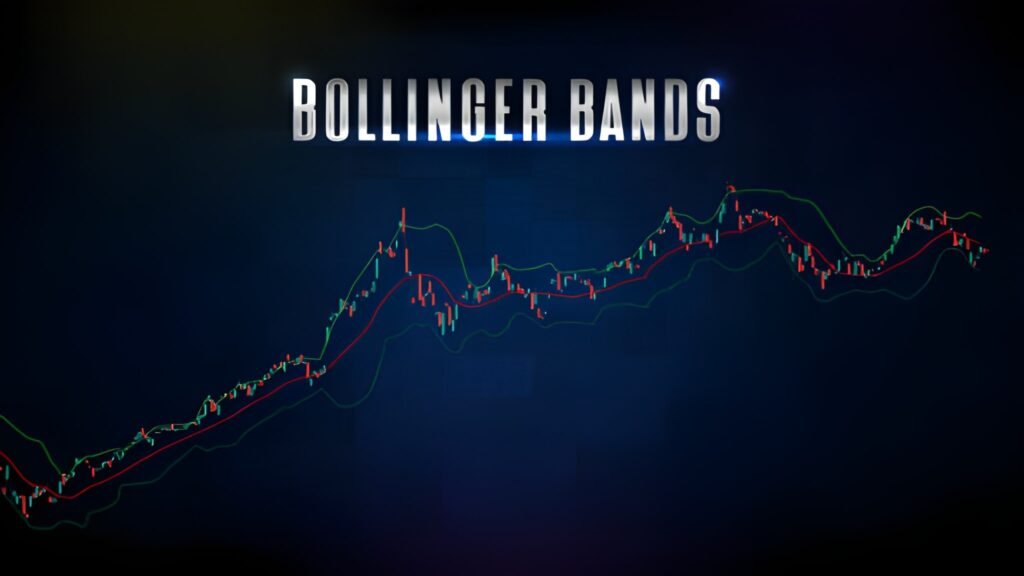
Bollinger Bands, developed by John Bollinger in the 1980s, are a volatility channel placed above and below a moving average of a security’s price. Typically, the bands are set two standard deviations away from a 20-period simple moving average. The core premise is that price tends to stay within the bands, and moves to the outer bands suggest potentially overbought or oversold conditions. The visual signal is simple: price near the upper band suggests a potential sell (overbought), and price near the lower band suggests a potential buy (oversold). This mechanic appeals to our deepest psychological desire to buy low and sell high with precision.
Buying and holding requires no such precision. It is an admission that we cannot consistently time these highs and lows. Instead, we accept the market’s long-term average return by owning a diversified basket of assets forever. We forgo the thrill of calling the turns for the certainty of compounding. One strategy is active and complex; the other is passive and simple. The results of this divergence are not even close.
Table of Contents
The Mathematical and Practical Shortcomings of a Bollinger Band Strategy
The theoretical appeal of Bollinger Bands crumbles under the weight of transaction costs, taxes, and the nature of market trends.
1. The Problem of “The Squeeze” and False Breakouts:
Bollinger Bands contract during periods of low volatility, known as a “squeeze.” The classic interpretation is that a period of high volatility will follow. But it provides no signal for the direction of the breakout. A trader might buy in anticipation of a move, only to see the price break downward, triggering a loss. Conversely, a strong, sustained trend—the kind that creates real wealth—will see price “walk the band.” During the historic bull market run from 2009 to 2020, an investor using a simple “sell when price touches the upper band” rule would have been ejected from the market repeatedly, missing the vast majority of the gains. The bands are designed to contain price approximately 95% of the time, but the 5% of the time they don’t contain it is when the most significant, life-changing gains occur.
2. The Tyranny of Costs and Taxes:
A strategy based on Bollinger Bands generates signals. Signals require action. Action incurs costs. Every buy and sell order comes with a bid-ask spread and potentially a commission. More devastatingly, in a taxable account, every profitable sale triggers a capital gains tax bill. This immediately removes capital from your account that can no longer compound. The mathematical hurdle this creates is immense. The Bollinger Band strategy must outperform the buy-and-hold strategy by a wide margin just to break even after accounting for these frictional costs.
Let’s illustrate with a simplified example. Assume two investors start with $10,000.
- Investor A (Buy and Hold): Buys a total stock market index fund (expense ratio 0.03%) and does nothing for 20 years.
- Investor B (Bollinger Bands): Actively trades the same fund based on band signals, generating enough turnover to realize 50% of their gains annually, putting them in the 15% capital gains tax bracket each year.
Assume both portfolios achieve an identical 7% gross annual return before costs and taxes.
Investor A’s Future Value:
FV = 10,000 \times (1 + (0.07 - 0.0003))^{20} = 10,000 \times (1.0697)^{20} \approx \$38,188Investor B’s Future Value: This is harder to calculate due to the annual tax drag. We can model the annual after-tax return. If 50% of the 7% gain is taxed each year, the annual tax drag is 0.5 \times 0.07 \times 0.15 = 0.00525 or 0.525%. The net return is approximately 0.07 - 0.00525 - 0.0003 = 0.06445 or 6.445%.
FV = 10,000 \times (1.06445)^{20} \approx \$34,800The active strategy, even if it matches the market’s return before costs, ends up with over $3,300 less simply due to taxes and fees. In reality, it is likely to underperform before costs, making the deficit even larger.
The Behavioral Chasm Between Theory and Practice
Theoretical backtests of Bollinger Band strategies often look compelling. The fatal flaw is that they assume a robot is executing the trades. Human beings are not robots.
- The Pain of Being Early: A Bollinger Band buy signal often occurs when the news is worst and the market feels like it is in freefall. Buying into that fear requires superhuman discipline. Most investors hesitate, wait for a “better” price, and miss the signal altogether.
- The Agony of Missing the Rally: Similarly, selling on an upper band touch during a strong bull market feels foolish as prices continue to climb. The investor is likely to break their own rule and FOMO (Fear Of Missing Out) back in at a higher price, locking in a loss.
- Strategy Abandonment: After a few whipsaws—buying a lower band only to see the price fall further, or selling an upper band only to see it rise further—most humans abandon the strategy at the worst possible time. They then jump to another technical indicator, creating a cycle of failure.
Buying and holding has one behavioral instruction: hold. It is not easy, but it is simple. It requires you to endure volatility without action. It transforms market downturns from a threat to your strategy into an inevitable feature of the long-term landscape. There is no signal to misinterpret, no rule to break under emotional duress.
A Comparative Framework
The following table contrasts the two approaches across critical dimensions:
| Factor | Bollinger Bands (Active Timing) | Buy and Hold (Passive Investing) |
|---|---|---|
| Primary Goal | Outperform the market by capitalizing on volatility. | Match the market’s return by continuous participation. |
| Activity Level | High. Requires constant monitoring and frequent decisions. | Low. Requires initial setup and periodic rebalancing. |
| Costs & Tax Efficiency | Very Low. High turnover generates trading costs and tax liabilities. | Very High. Minimal turnover minimizes costs and defers taxes. |
| Psychological Demand | Extreme. Requires strict discipline to follow signals against emotional urges. | High, but simpler. Requires patience and tolerance for volatility without action. |
| Key Risk | Underperformance due to mistiming, whipsaws, and cost drag. | Underperformance relative to a specific asset class, but capture of broad market returns. |
| Historical Evidence | Poor. The vast majority of active traders underperform simple index funds over time. | Strong. Consistently places an investor in the top percentile of performers after costs. |
| Required Skill | Technical analysis, rapid execution, emotional control. | Patience, discipline, and a long-term perspective. |
The choice between Bollinger Bands and buying and holding is not a choice between two competing strategies of equal merit. It is a choice between a complex, high-effort path that has a very low probability of success and a simple, low-effort path that has a very high probability of success. Bollinger Bands can tell you a great deal about past volatility, but they offer no reliable map for future price movements.
I choose buying and holding. I choose to accept that I cannot time the market. I choose to own the entire market through a low-cost index fund and let the collective growth of American and global business work for me over decades. I forfeit the chance to boast about a perfectly timed trade. In exchange, I gain the near-certainty of building substantial wealth over time, the freedom from constantly watching charts, and the psychological peace that comes from knowing my strategy is designed to endure any market condition. For me, that is the only trade that matters.



