
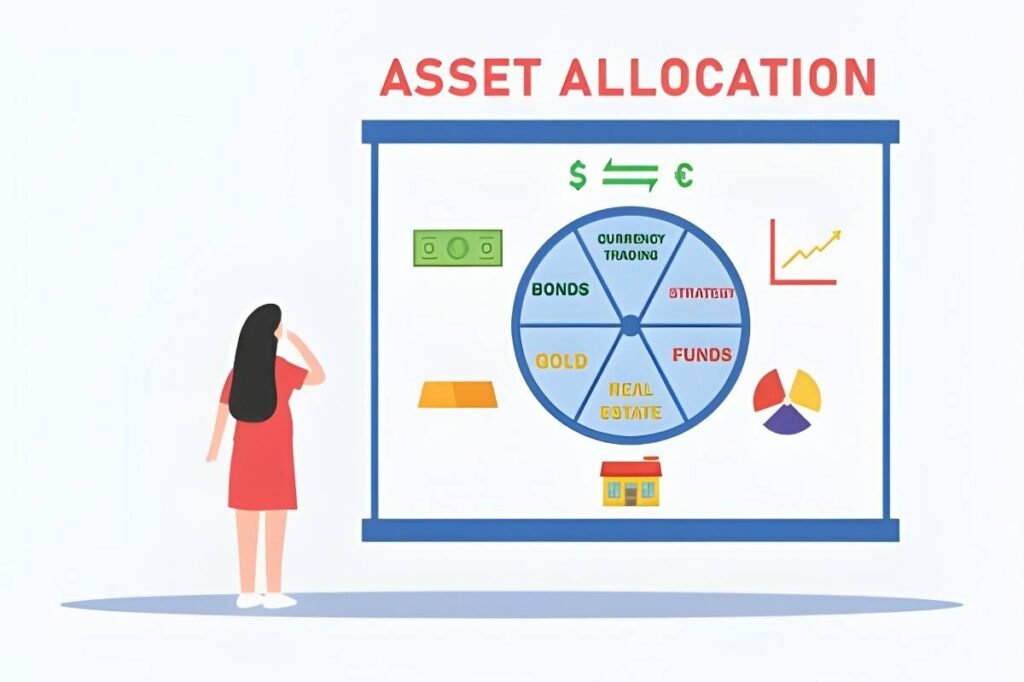
As a finance professional, I have spent countless hours analyzing investment strategies, dissecting performance data, and observing investor behavior. In that time, I have developed a profound respect for the principles of simplicity, discipline, and cost efficiency. No firm embodies these principles more than Vanguard, and their suite of funds provides the perfect toolkit for constructing a robust, long-term portfolio. However, the question of the “best performing” allocation is a trap. Performance is a rearview mirror metric; it tells you where you’ve been, not where you’re going. Chasing the best performer of the last decade is a surefire strategy for disappointment in the next. Instead, I focus on identifying the most appropriate and effective asset allocation for a given set of goals and risk tolerances, using Vanguard’s unparalleled low-cost index funds as the building blocks.
Table of Contents
The true measure of a portfolio’s performance is not its raw return, but its risk-adjusted return and, more importantly, its ability to help an investor achieve their specific financial objectives without succumbing to behavioral errors like panic selling or performance chasing. The “best” Vanguard allocation is the one you can stick with through bull markets, bear markets, and everything in between. It is a personal equation, balancing the mathematics of finance with the psychology of the individual. In this analysis, I will move beyond past performance charts to explore the frameworks for building a durable allocation, analyze specific Vanguard funds that serve as optimal core holdings, and demonstrate how to tailor a portfolio to your unique financial profile. My goal is to provide you with the compass, not just a map, for navigating your investment journey with Vanguard.
The Foundational Framework: Modern Portfolio Theory and the Core Four
My approach to asset allocation is grounded in Modern Portfolio Theory (MPT). The central tenet of MPT is that diversification across asset classes with low correlation to one another can maximize returns for a given level of risk. For the individual investor, this translates into a simple, elegant strategy: build a diversified core portfolio and hold it relentlessly.
The most effective implementation of this for a Vanguard investor is the “Core Four” portfolio, popularized by forum communities like Bogleheads.org. This allocation expands upon the classic Three-Fund Portfolio (Total US Stock, Total International Stock, Total US Bond) by adding a fourth asset class: Real Estate Investment Trusts (REITs). This addition provides further diversification, as real estate often has a different return driver than the broader stock market.
A generic, moderate-risk Core Four allocation might look like this:
- 40% Vanguard Total Stock Market Index Fund (VTSAX)
- 20% Vanguard Total International Stock Index Fund (VTIAX)
- 30% Vanguard Total Bond Market Index Fund (VBTLX)
- 10% Vanguard Real Estate Index Fund (VGSLX)
This is not a recommendation, but a starting point for analysis. The “best” allocation adjusts these percentages based on the single most important variable: your ability and willingness to take risk.
Determining Your Allocation: The Role of Risk Tolerance
Your ideal stock/bond split is the primary determinant of your portfolio’s risk and return profile. While age is a common proxy, it is an incomplete metric. A 60-year-old with a large pension and a high risk tolerance has a very different profile than a 60-year-old with no other assets and a fear of market declines.
A classic starting point is the “110 minus your age” rule for stock allocation. A 40-year-old would be 70% stocks. However, I find this too aggressive for most. I often use “100 minus age” as a more conservative anchor. The following table outlines the general risk and return expectations for different allocations using Vanguard’s index funds as proxies.
| Allocation Type | Sample Stock/Bond Split | Potential Vanguard Fund Equivalents | Risk Profile | Long-Term Expected Annual Return* |
|---|---|---|---|---|
| Aggressive Growth | 90% / 10% | VASGX (LifeStrategy Growth) | Very High | ~9.0% |
| Growth | 80% / 20% | Vanguard 500 Index (VFIAX) + VBTLX | High | ~8.5% |
| Moderate | 60% / 40% | VSMGX (LifeStrategy Moderate) | Moderate | ~7.5% |
| Conservative | 40% / 60% | VSCGX (LifeStrategy Conservative) | Low | ~6.5% |
| Income | 20% / 80% | Vanguard Target Retirement Income (VTINX) | Very Low | ~5.5% |
Table Note: Expected returns are hypothetical estimates based on historical long-term averages and are not guarantees of future performance. Assumptions: Stocks ~10%, Bonds ~5%, Inflation ~3%.
The most accurate way to determine your risk tolerance is to conduct a thought experiment: how would I react if my portfolio lost 25% of its value in a single year? If the thought of a \$100,000 portfolio dropping to \$75,000 causes you to lose sleep, your stock allocation is too high. Your allocation must be grounded in emotional comfort, not financial theory alone.
Analyzing the Premier Vanguard All-in-One Funds
For the vast majority of investors, the “best” allocation is one they don’t have to manage. Vanguard’s all-in-one funds provide a professionally managed, globally diversified portfolio in a single ticker. They are the ultimate set-it-and-forget-it solution and, in my view, are superior to most custom-built portfolios because they eliminate behavioral error.
1. Vanguard Target-Date Funds (e.g., VTIVX for 2045, VFIFX for 2050)
These funds are the default option in most retirement plans for a reason. They provide a complete glide path. They start aggressively and automatically become more conservative as the target date (e.g., 2045, 2050) approaches and passes. They are a truly autopilot solution.
- Pros: Automatically rebalanced, glide path manages risk over time, extremely diversified.
- Cons: Slightly higher expense ratio than building yourself (though still very low), glide path may be too aggressive or conservative for some individuals.
2. Vanguard LifeStrategy Funds (VASGX, VSMGX, VSCGX, VASIX)
These are static allocation funds. They hold a fixed mix of stocks and bonds and are perfect for investors who know their desired risk level and want to maintain it indefinitely.
- Pros: Fixed risk level, automatic rebalancing, low cost.
- Cons: No automatic glide path; you must decide when/if to shift to a more conservative fund.
For an investor who does not want to manage individual funds, simply choosing the LifeStrategy fund that matches their risk tolerance is arguably the single best investment decision they can make.
Building a Custom Core Allocation
For investors who desire more control, building a portfolio from individual funds allows for tax optimization (e.g., placing bonds in tax-advantaged accounts) and slight tilts. Here is my analysis of the best Vanguard funds for each core asset class:
- U.S. Stocks: Vanguard Total Stock Market Index Fund (VTSAX)
This is the ultimate U.S. equity holding. It owns every publicly traded company in the U.S., from mega-caps to small-caps. It is more diversified than an S&P 500 fund and has a marginally higher expected long-term return due to its small-cap exposure. It is the foundation of any U.S. portfolio. - International Stocks: Vanguard Total International Stock Index Fund (VTIAX)
This is the VTSAX for the rest of the world. It includes developed and emerging markets and is the most efficient way to gain international diversification. The correlation between U.S. and international stocks is not perfect, providing a valuable diversification benefit over time. - U.S. Bonds: Vanguard Total Bond Market Index Fund (VBTLX)
This fund provides broad exposure to the U.S. investment-grade bond market, including government, corporate, and mortgage-backed securities. It is the workhorse of bond investing—diversified and intermediate-term. - Inflation Protection: Vanguard Inflation-Protected Securities Fund (VAIPX)
For a portion of your bond allocation, I often recommend TIPS, especially for those in or near retirement. They provide a direct hedge against unexpected inflation, which is a primary risk to a fixed-income portfolio.
The Verdict: It’s About the Investor, Not the Allocation
After years of analysis, my conclusion is clear. The best performing Vanguard asset allocation is not a specific percentage of stocks and bonds. It is the one that is:
- Appropriate for your risk tolerance and time horizon.
- Diversified across domestic and international stocks and high-quality bonds.
- Low-Cost, built with Vanguard index funds.
- Automated, either through all-in-one funds or automatic rebalancing.
- Stick-to-able, meaning you can hold it without deviation for decades.
For most, this means a Vanguard Target-Date Fund or a Vanguard LifeStrategy Fund. For the engaged investor, it means a simple Three-Fund or Core-Four portfolio. The magic is not in the specific ingredients, but in the recipe of discipline, diversification, and cost control that Vanguard has perfected. By choosing a rational allocation and adhering to it, you are not chasing performance; you are ensuring that you capture the market’s returns, which, over the long term, have always been sufficient for those who stay the course.



