Introduction
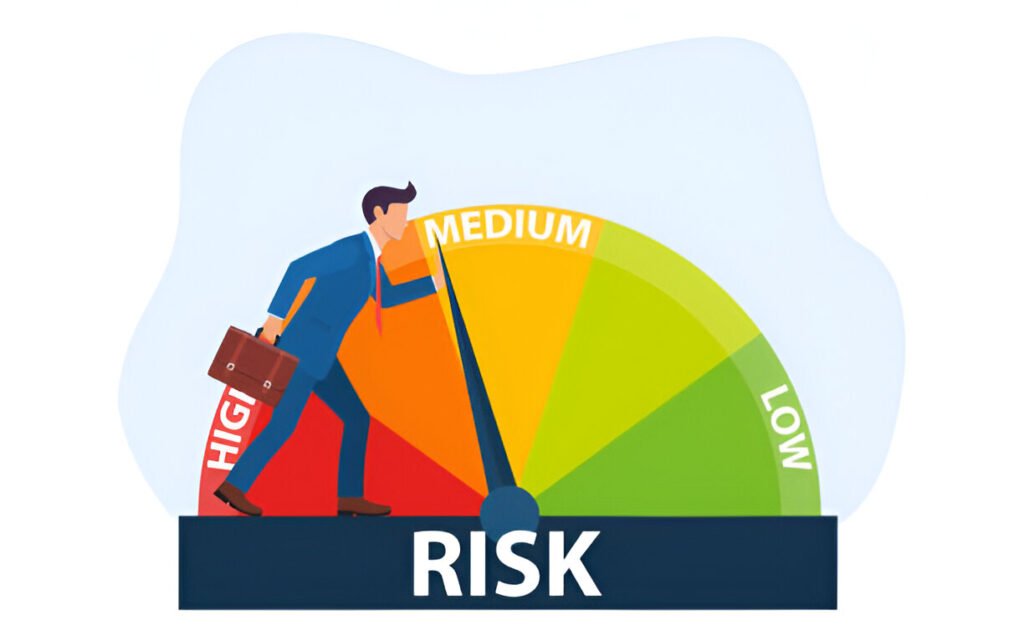
Investing always involves risk, but the level of risk should not remain static. Markets evolve due to economic cycles, interest rate changes, geopolitical events, and investor sentiment. Adjusting risk levels based on market conditions is essential for long-term success. In this article, I will walk through strategies to manage risk dynamically, using historical examples, calculations, and comparisons to provide actionable insights.
Understanding Risk in Market Conditions
Risk in investing can be broadly categorized into systematic (market) risk and unsystematic (specific) risk. Systematic risk affects the entire market and includes factors like recessions, inflation, and interest rate changes. Unsystematic risk is specific to individual stocks or sectors and can be mitigated through diversification.
Market Conditions and Their Impact on Risk
| Market Condition | Characteristics | Investor Sentiment | Risk Level |
|---|---|---|---|
| Bull Market | Rising stock prices, strong GDP growth, high earnings | Optimistic | Moderate to High |
| Bear Market | Falling stock prices, economic downturn, negative earnings growth | Pessimistic | Very High |
| Recession | Negative GDP growth, high unemployment, declining corporate profits | Fearful | Extreme |
| Recovery | Early signs of growth, improving corporate earnings | Cautiously Optimistic | Moderate |
| Sideways Market | Lack of trend, uncertainty, low volatility | Neutral | Low |
Adjusting risk exposure means recognizing these phases and taking appropriate action.
Adjusting Risk Exposure: A Step-by-Step Guide
1. Assessing Risk Tolerance and Investment Goals
Risk tolerance varies by investor. A retiree may need capital preservation, while a young investor can take more risks. Understanding this helps in adjusting exposure based on market cycles.
Example: Suppose an investor has a 70% equity and 30% bond portfolio. If a bear market is likely, reducing equity exposure to 50% and increasing bonds to 50% may help preserve capital.
2. Using Asset Allocation to Control Risk
Different asset classes respond differently to market conditions. Adjusting the mix can help manage volatility.
| Asset Class | Performance in Bull Market | Performance in Bear Market |
|---|---|---|
| Stocks | High returns | Significant losses |
| Bonds | Moderate returns | Defensive; provides stability |
| Commodities | Inflation hedge | Mixed performance |
| Real Estate | Appreciates with economic growth | Can decline with high interest rates |
| Cash | Minimal growth | Safe haven |
3. Implementing a Tactical Allocation Strategy
Instead of a fixed allocation, tactical shifts based on economic indicators can enhance returns.
Example: Suppose the Federal Reserve signals rate hikes. Since rising rates often hurt growth stocks, shifting towards value stocks and bonds may reduce downside risk.
4. Using the Volatility Index (VIX) as a Guide
VIX measures market expectations for volatility. A rising VIX suggests uncertainty and may indicate a need for defensive positioning.
| VIX Level | Market Interpretation | Suggested Action |
|---|---|---|
| Below 15 | Low volatility | Maintain risk exposure |
| 15-25 | Normal volatility | Monitor trends |
| 25-35 | High volatility | Reduce risk, increase defensive assets |
| Above 35 | Extreme fear | Shift to cash, bonds, or hedging strategies |
5. Rebalancing to Maintain Risk Tolerance
Portfolio drift can increase unintended risk exposure. Regular rebalancing ensures alignment with investment objectives.
Example Calculation: Suppose an investor starts with:
- 60% stocks ($60,000 in a $100,000 portfolio)
- 40% bonds ($40,000)
If stocks rise to $75,000 and bonds stay at $40,000, the new allocation is: New Stock Allocation=
\text{New Stock Allocation} = \frac{75,000}{115,000} = 65.2\%To rebalance back to 60% stocks, selling $5,000 worth of stocks and reinvesting in bonds may be necessary.
6. Incorporating Hedging Strategies
Hedging reduces downside risk. Common strategies include:
- Buying put options to protect against stock declines.
- Using inverse ETFs to profit from market drops.
- Allocating to gold or Treasury bonds as safe havens.
Historical Lessons: Risk Management in Different Eras
Dot-Com Bubble (1999-2002)
Tech stocks soared before crashing in 2000. Those who reallocated to value stocks or bonds preserved capital. The lesson: Reduce exposure to overvalued sectors.
2008 Financial Crisis
Excessive risk-taking in housing and financials led to collapse. Investors with diversified portfolios including bonds and international assets fared better.
COVID-19 Market Crash (2020)
A sharp decline followed by a rapid recovery. Investors who held quality assets and avoided panic selling saw gains.
| Crisis | Equity Market Decline | Recovery Time |
|---|---|---|
| Dot-Com Bubble | -78% (Nasdaq) | 14 years |
| 2008 Crisis | -56% (S&P 500) | 5 years |
| COVID-19 | -34% (S&P 500) | 5 months |
Conclusion: A Dynamic Approach to Risk Management
Risk is ever-changing, and so should portfolio strategies. Adjusting allocations, using volatility indicators, rebalancing, and employing hedging techniques can help navigate market fluctuations effectively. The key is staying informed, disciplined, and flexible in adapting to evolving market conditions.