
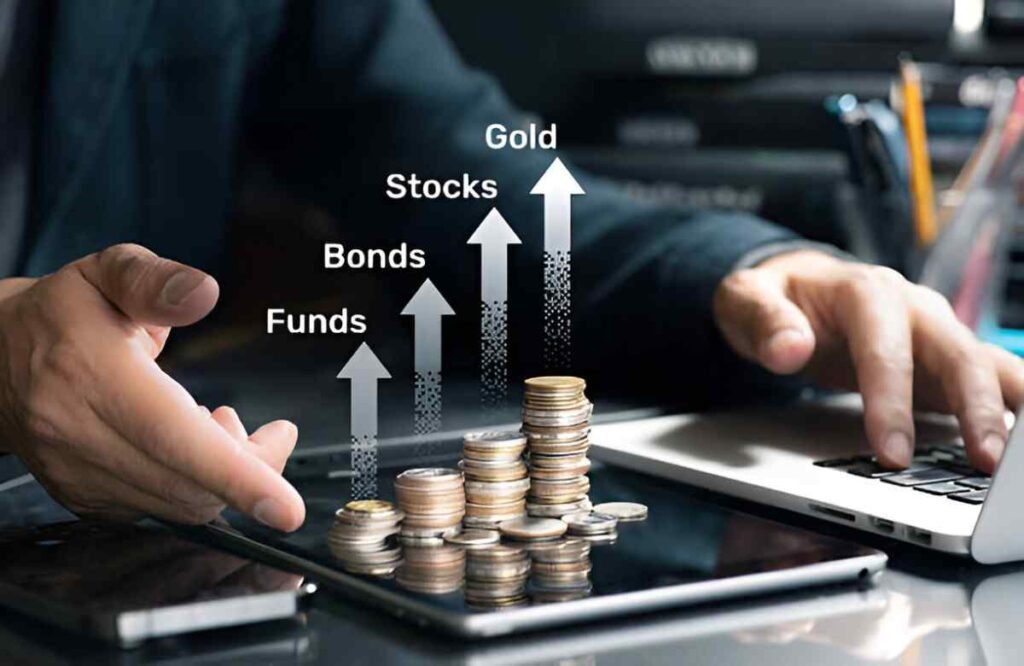
As an investor, I know that asset allocation shapes the foundation of any successful investment strategy. It determines how I spread my capital across different asset classes—stocks, bonds, real estate, and cash—to balance risk and reward. But beyond domestic markets, international investments offer a compelling way to enhance diversification and tap into global growth. In this article, I explore the principles of asset allocation, the role of international investments, and how to construct a resilient portfolio.
Table of Contents
Understanding Asset Allocation
Asset allocation is the process of dividing investments among different categories to optimize returns while managing risk. The right mix depends on my financial goals, risk tolerance, and investment horizon. A common framework is the 60/40 portfolio, where 60% goes to equities and 40% to bonds. However, this is just a starting point.
The Mathematics of Diversification
Diversification reduces risk without necessarily sacrificing returns. The expected return of a portfolio E(R_p) is the weighted average of individual asset returns:
E(R_p) = \sum_{i=1}^n w_i E(R_i)where w_i is the weight of asset i and E(R_i) is its expected return.
The portfolio risk (standard deviation) \sigma_p is more nuanced because it accounts for correlations between assets:
\sigma_p = \sqrt{\sum_{i=1}^n \sum_{j=1}^n w_i w_j \sigma_i \sigma_j \rho_{ij}}Here, \rho_{ij} is the correlation coefficient between assets i and j. If two assets have low or negative correlation, combining them reduces overall volatility.
Historical Performance of Asset Classes
To illustrate, I examine historical returns (1970–2023) of major asset classes:
| Asset Class | Avg. Annual Return | Standard Deviation |
|---|---|---|
| US Large-Cap Stocks | 10.2% | 15.1% |
| US Bonds | 6.5% | 6.8% |
| International Stocks | 8.9% | 17.3% |
| Emerging Markets | 11.4% | 22.6% |
| Real Estate (REITs) | 9.7% | 18.9% |
This table shows that while equities offer higher returns, they come with greater volatility. Bonds provide stability but lower growth. International and emerging markets introduce additional diversification benefits.
Why International Investments Matter
Investing solely in US markets limits exposure to global opportunities. International diversification helps mitigate country-specific risks and taps into faster-growing economies.
Benefits of International Diversification
- Reduced Concentration Risk – The US represents about 60% of global market capitalization. Over-reliance on a single economy increases vulnerability to domestic downturns.
- Currency Diversification – Foreign investments expose me to currency fluctuations, which can hedge against dollar weakness.
- Access to Growth Markets – Emerging economies like China and India often outpace developed markets in GDP growth.
Risks to Consider
- Political and Regulatory Risks – Unstable governments or sudden policy changes can impact returns.
- Currency Risk – Exchange rate movements can amplify or erode gains.
- Higher Costs – International funds often have higher expense ratios than domestic ones.
Strategic Asset Allocation with International Exposure
I use a core-satellite approach to integrate international investments:
- Core (70%): Broad US index funds (e.g., S&P 500) and investment-grade bonds.
- Satellite (30%): International equities (developed and emerging markets), global REITs, and commodities.
Example Portfolio Allocation
| Asset Class | Allocation (%) |
|---|---|
| US Stocks | 50 |
| US Bonds | 20 |
| International Stocks (Developed) | 15 |
| Emerging Markets | 10 |
| Real Estate | 5 |
Calculating Expected Portfolio Return
Assume the following expected returns:
- US Stocks: 8%
- US Bonds: 3%
- International Stocks: 7%
- Emerging Markets: 9%
- Real Estate: 6%
The portfolio’s expected return is:
E(R_p) = (0.50 \times 0.08) + (0.20 \times 0.03) + (0.15 \times 0.07) + (0.10 \times 0.09) + (0.05 \times 0.06) = 0.0675 \text{ or } 6.75\%Currency Risk and Hedging Strategies
When investing abroad, currency fluctuations affect returns. If the US dollar strengthens, foreign investments lose value when converted back. To manage this, I consider:
- Unhedged Funds – Allow natural currency exposure, which can be beneficial if the dollar weakens.
- Hedged Funds – Use derivatives to neutralize currency risk, ideal for reducing volatility.
Currency Impact Example
Suppose I invest $10,000 in a European stock with a 10% return, but the euro depreciates 5% against the dollar. My net return is:
\text{Net Return} = (1 + 0.10) \times (1 - 0.05) - 1 = 0.045 \text{ or } 4.5\%Tax Implications of International Investments
The US taxes global income, but foreign tax credits can offset double taxation. Many countries withhold taxes on dividends, which I can claim as a credit on my IRS return.
Final Thoughts
Asset allocation and international investments form a robust strategy for long-term wealth growth. By diversifying across geographies and asset classes, I reduce risk while positioning my portfolio to capture global opportunities. The key is balancing domestic stability with international growth, adjusting allocations as my financial goals evolve.



